The 1970s File Feature
It's Time For Love
"It's Time For Love" — The Chi-Lites' Velvet Groove in the Winter of 1975 Chicago Soul's Quiet Survivors By November 1975, the era that had made the Chi-Lite…
01 The Story
"It's Time For Love" — The Chi-Lites' Velvet Groove in the Winter of 1975
Chicago Soul's Quiet Survivors
By November 1975, the era that had made the Chi-Lites household names was fading. The smooth, orchestrated Chicago soul of the early 1970s, the same current that had produced "Oh Girl" and "Have You Seen Her" and made the group one of the most commercially successful vocal groups in the country, was giving way to the harder grooves and flashier production of disco. The cultural landscape was shifting under everyone's feet, and groups whose identities were rooted in the more tender, romantic traditions of soul music found themselves navigating an increasingly uncertain mainstream. The Chi-Lites had been recording together for over a decade by this point, and their survival instinct and vocal discipline were intact even as the commercial winds changed direction.
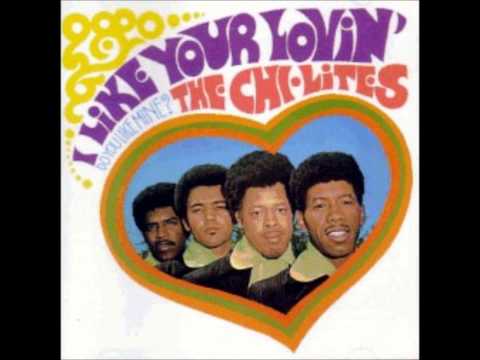
The group was rooted in Chicago's South Side, a community that had produced an extraordinary range of soul and R&B talent in the 1960s and 1970s. Their particular gift was harmony; Eugene Record's falsetto lead over a precisely tuned vocal background created a sound of almost aching delicacy that could carry romantic lyrics into emotional territory that more aggressive performers simply could not access. By 1975, Record was still the heart of the group's sound, even as the commercial environment required some adjustment to their approach.
The Sound of the Record
It's Time For Love landed precisely in the middle of that transitional moment. The production maintained the warm, orchestrated quality of their classic period while incorporating enough of the rhythmic vocabulary of mid-1970s soul and funk to sound contemporary rather than nostalgic. The string arrangements and the overall production sensibility positioned the track as exactly the kind of sophisticated adult R&B that the group's core audience had come to expect, even if the broader commercial landscape was beginning to prioritize a different kind of energy.
Eugene Record's lead vocal carried the kind of lived-in tenderness that had always defined the Chi-Lites at their best. The group's background harmonies provided the cushion that made Record's leads land as powerfully as they did; it was a relationship between voices that had been developed over years of live performance and studio work, and the ease and precision of it was evident throughout the track. This was the sound of a group that knew exactly what it was and how to execute it.
A Brief but Real Chart Presence
It's Time For Love entered the Billboard Hot 100 on November 8, 1975, at position 99. It moved to 98 the following week before reaching its peak of number 94 on November 22, 1975. The track spent three weeks on the chart in total. By the strict measures of chart performance, this was a modest showing, particularly for a group with the commercial history the Chi-Lites carried into the mid-1970s. Three weeks on the Hot 100 reflected a changing commercial environment as much as any judgment on the quality of the recording itself.
The R&B charts told a slightly different story. The Chi-Lites maintained a more consistent presence on the soul and R&B chart throughout this period even as their Hot 100 showings became more irregular. Their audience, concentrated in urban radio markets and among listeners who had followed them since the early 1970s, remained loyal in ways that did not always translate into the broad pop chart numbers that the Hot 100 measured. Three weeks on the Hot 100 in late 1975 still represented a genuine commercial placement in an era when the chart was highly competitive and many worthy recordings never managed to appear on it at all.
The Chi-Lites' Place in Soul History
Evaluating It's Time For Love requires keeping the group's overall legacy in view. The Chi-Lites were one of the defining vocal groups of early-1970s soul, and their influence on subsequent R&B harmony groups ran deep. Their willingness to address romantic and emotional subjects with direct tenderness rather than masculine posturing opened creative space that many later artists would occupy. The sophistication of their harmonic arrangements and the quality of Record's songwriting and lead vocals placed them at the upper tier of their genre and generation.
By 1975, they were working through a period of commercial difficulty that would eventually see them rebuild on new artistic ground in the late 1970s and beyond. It's Time For Love belongs to that transitional period, a record made by artists who had not lost their craft even as the market for it was temporarily shifting away. That kind of artistic persistence is its own form of dignity.
Rediscovering the Groove
Whatever the chart numbers said in 1975, It's Time For Love holds up as a sincere, beautifully executed piece of Chicago soul. The harmonies are impeccable, the production warm and considered, and the performance carries the effortless professionalism of a group that had spent years learning exactly how to deliver this kind of material. Play it and remember what Chicago soul sounded like at its most graceful.
"It's Time For Love" — The Chi-Lites' singular moment on the 1970s charts.
02 Song Meaning
The Tender Invitation: Meaning in The Chi-Lites' "It's Time For Love"
Love as a Declaration of Readiness
The phrase "it's time for love" carries a specific kind of emotional weight, an assertion not just of desire but of preparedness. The Chi-Lites, across their best work, specialized in this kind of nuanced romantic address, the suggestion that love was not merely something that happened but something one could be ready for, could invite, could declare a moment for. The song's central claim is an act of emotional courage, the willingness to say directly, without hedging or pretense, that the right conditions exist and the right feelings are present. In a genre often defined by indirection and implication, that directness was itself a kind of artistic choice.
The lyrical tradition the Chi-Lites worked within was one of the richest in American popular music. Chicago soul in the early to mid 1970s had developed an emotional vocabulary for male romantic expression that was tender without being weak, direct without being crude, sophisticated without being distant. Groups like the Stylistics and the Delfonics occupied adjacent territory, but the Chi-Lites had their own particular quality, rooted in Eugene Record's songwriting instincts and the group's distinctive harmonic approach.
The Harmony Tradition and Its Meaning
To understand what the Chi-Lites were communicating emotionally, one has to understand what harmonic singing meant in the context of African American musical tradition. Group harmony carried connotations of community and shared experience that solo performance simply could not replicate. When five voices found the same pitch and held it, or moved together through a chord progression, the effect was one of collective testimony, of a truth being affirmed by more than one witness. The Chi-Lites used this quality brilliantly throughout their career, and It's Time For Love benefited from the accumulated trust that their harmonizing had built over years of recordings.
Eugene Record's falsetto lead over the group's background harmonies created an emotional dynamic that was part of the group's signature. The falsetto register in male R&B singing carried traditional associations with vulnerability and sincerity, a willingness to reach beyond the conventionally masculine vocal range in order to hit an emotional truth. Record deployed that register with extraordinary control, and the effect on a song organized around an emotional declaration of readiness for love was to make the declaration feel completely genuine.
Late 1975 and the Changing Landscape
The cultural context of late 1975 gave It's Time For Love a particular resonance that the song's lyrics did not need to explicitly address. Disco was ascending rapidly, bringing with it a different set of values about what dancing, romance, and music were for. Against the flashier, more anonymous pleasures of the discotheque, the Chi-Lites' intimate, personal address offered something that a portion of the R&B audience clearly still valued: the sense of being spoken to individually, of hearing in a song a voice that was addressing its emotion to you specifically rather than to a crowd in general.
This distinction between intimate address and collective experience was one of the defining tensions in R&B music of the mid-1970s, and the Chi-Lites clearly stood on the intimate side of that divide. Their music had always prioritized the one-on-one emotional exchange over spectacle, and It's Time For Love maintained that priority even as the commercial landscape began to reward a different approach.
What the Song Leaves Behind
The lasting significance of It's Time For Love within the Chi-Lites' catalog is partly historical and partly purely aesthetic. Historically, it represents the group navigating a difficult transition with their craft and identity intact. Aesthetically, it simply sounds like a beautifully made piece of romantic soul music, delivered by voices at the peak of their technical confidence. Those qualities do not expire with the passing of a particular musical era; they remain available to any listener willing to find them.
→ More from The Chi-lites
View all The Chi-lites hits →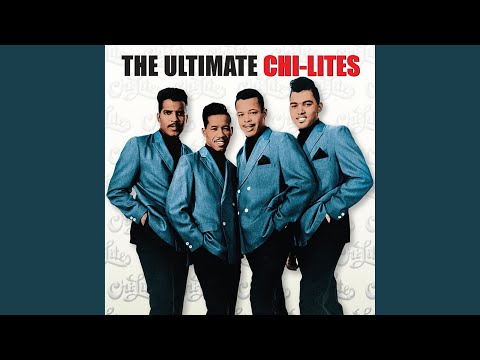
→ More from the 1970s File
View all 1970s hits →




Keep digging