The 1970s File Feature
Are You My Woman? (Tell Me So)
Are You My Woman? (Tell Me So) — The Chi-Lites: Brunswick Soul and the Birth of a Sample Legacy When The Chi-Lites released "Are You My Woman? (Tell Me So)" …
01 The Story
Are You My Woman? (Tell Me So) — The Chi-Lites: Brunswick Soul and the Birth of a Sample Legacy
When The Chi-Lites released "Are You My Woman? (Tell Me So)" in 1970 on Brunswick Records, they were a Chicago soul group with a growing reputation but not yet the commercial juggernaut they would become in the early 1970s. The record arrived during a transitional moment for Black popular music, as the sweeping orchestral soul of the late 1960s gave way to something tighter, more percussive, and more emotionally immediate. The Chi-Lites, under the direction of producer and group member Eugene Record, had been quietly developing a sound that emphasized layered vocal harmonies atop snapping rhythm tracks, and "Are You My Woman?" distilled that approach into one of their most kinetic recordings.
The group at the time consisted of Eugene Record, Marshall Thompson, Robert "Squirrel" Lester, and Creadel Jones. Record was the principal creative architect, writing and producing the majority of their material at Brunswick's Chicago studios. His instinct was to push the horn arrangements to the front of the mix rather than leave them buried beneath strings, and the result on "Are You My Woman?" was a brass riff so aggressive and rhythmically memorable that it would outlive the recording by decades. The arrangement was credited to arranger Sonny Sanders, who had long experience with Brunswick's roster, and the interplay between the horns and the rhythm section gave the track a forward momentum that set it apart from smoother contemporaries.
The single entered the Billboard Hot 100 and made its presence felt in the soul market, charting on the R&B Singles chart and reinforcing the group's standing as one of Brunswick's most reliable acts. The label itself had an interesting history, having been an important home for Jackie Wilson in the 1950s and 1960s, and by the time The Chi-Lites arrived, it was operating as an independent with distribution through Decca. This gave the group slightly less promotional muscle than Motown or Atlantic acts, but Brunswick's Chicago identity gave their records a gritty authenticity that resonated with radio programmers in major urban markets.
"Are You My Woman?" is historically significant not only as a strong example of Chicago soul craft but also because it anticipated the horn-driven, sample-ready aesthetic that would prove enormously valuable decades later. The record's horn riff, that short, declarative brass phrase anchoring the groove, became one of the most recognized samples in modern pop history when Beyoncé used it as the foundation of "Crazy in Love" in 2003. Produced by Jay-Z and Rich Harrison, "Crazy in Love" built its entire sonic identity around the Chi-Lites' horn arrangement, and the sample's reappearance on one of the best-selling singles of the 2000s introduced a whole new generation to the Chi-Lites' original recording.
The legacy of the sample credit meant that "Are You My Woman?" received renewed scrutiny and commercial attention. The Chi-Lites, and particularly Eugene Record's estate and publishing interests, benefited from the extraordinary success of "Crazy in Love," which reached number one on the Billboard Hot 100 and became a cultural touchstone of the early 2000s. That kind of retroactive visibility is rare for a soul record that was not a crossover smash in its original release, and it cemented "Are You My Woman?" in the canon of important soul recordings regardless of its original chart position.
It is worth noting that The Chi-Lites would go on to much bigger commercial success in the years immediately following this record. Their 1971 single "Have You Seen Her" reached the top five on the Hot 100, and their 1972 hit "Oh Girl" went all the way to number one. These records demonstrated that the group's formula, Eugene Record's falsetto lead over lush arrangements, could cross over to white audiences as well as dominate the R&B charts. "Are You My Woman?" belongs to the period just before that breakthrough, when the group was operating at full artistic capacity while still finding the wider audience that their talent merited.
In the context of Chicago soul, the record sits alongside the work of Curtis Mayfield, Jerry Butler, and the Impressions as evidence that the city's music scene in the late 1960s and early 1970s was producing some of the most sophisticated popular music in the country. Brunswick may have lacked Motown's promotional infrastructure or Atlantic's critical prestige, but records like "Are You My Woman?" demonstrate that the label's artists were operating at a comparably high level. The combination of tight ensemble playing, inventive horn writing, and Eugene Record's distinctive production approach made the Chi-Lites' Brunswick output a rich archive that producers and musicians have continued to revisit.
The song's double life, as a respectable soul single in 1970 and as the DNA of a blockbuster hit more than thirty years later, is one of the more vivid illustrations of how sample culture has rewritten the commercial histories of older recordings. Songs that might have settled quietly into the catalog of a working soul group instead find themselves thrust into global cultural conversations they could not have anticipated at the time of their creation. "Are You My Woman?" is now inseparable from that broader story, a reminder that the creative decisions made in a Chicago recording studio in 1970 could still be generating cultural energy well into the twenty-first century.
02 Song Meaning
The Emotional Architecture of "Are You My Woman? (Tell Me So)"
"Are You My Woman? (Tell Me So)" operates on a deceptively simple emotional premise: a man seeking direct confirmation of a woman's commitment. The song asks its central question plainly and repeatedly, placing the entire dramatic weight of the performance on the act of waiting for an answer. Eugene Record's lead vocal carries this tension with characteristic restraint, projecting vulnerability without melodrama, which was a hallmark of his approach throughout the Chi-Lites' best work.
The thematic core is the need for reassurance in a romantic relationship. The narrator does not accuse or threaten; he simply asks, persistently and openly, whether this woman considers herself his. There is something psychologically honest about that framing. The song does not dress up the question in metaphor or indirect language. It is a direct appeal for emotional clarity, and that directness gives the recording a disarming quality. Soul music of the early 1970s frequently dealt with romantic uncertainty, but many records approached it from a position of masculine self-assertion or wounded pride. The Chi-Lites' version presents vulnerability as the primary emotional stance, and Record's falsetto gives that vulnerability a particular kind of exposure.
The call-and-response structure embedded in the title itself, the question followed by the parenthetical instruction "Tell Me So," establishes the song's dialogic character. The narrator is not content to simply wonder; he is explicitly requesting a spoken answer, making the song feel less like a ballad and more like a conversation frozen mid-exchange. This rhetorical structure was a common device in soul music, drawing on the tradition of gospel call-and-response, but The Chi-Lites use it here to amplify the sense of romantic urgency rather than communal affirmation.
The horn arrangement, which would later become globally famous through the "Crazy in Love" sample, functions in the original recording as a kind of sonic underlining of the narrator's emotional state. The riff is aggressive and insistent in a way that mirrors the question being posed. There is no patience in those horns; they press forward rhythmically as if they too are waiting for the answer. Arranger Sonny Sanders gave the brass section a role that is almost confrontational, pushing against the smoother vocal lines and creating a productive tension between the song's surface gentleness and its underlying emotional urgency.
Within Eugene Record's catalog as a writer and producer, "Are You My Woman?" represents a particular strand of his creative sensibility: the song that asks rather than declares. Many of his other compositions for the Chi-Lites, including "Have You Seen Her" and "Oh Girl," deal with loss, longing, and the aftermath of relationships. This record sits at an earlier moment in that emotional narrative, before the loss has occurred, when the relationship is still in progress but the narrator's anxiety about its stability is already present. That anxiety is not neurotic or controlling in the song's framing; it is simply human and recognizable.
The fact that this recording became the source material for one of the most emotionally charged pop songs of the 2000s speaks to something durable in its construction. Beyoncé's "Crazy in Love" borrowed the horn riff and built around it a song about the overwhelming, destabilizing experience of falling deeply in love. The thematic connection between the two songs is not incidental: both are concerned with the intensity of romantic feeling and the desire for that feeling to be mutual and acknowledged. The Chi-Lites' original plants the seed of that emotional territory, asking quietly whether love is real and reciprocated. The 2003 version answers that question in the most maximalist terms possible, presenting love as something that removes rational control entirely. Together they form an interesting diptych across three decades of popular music.
For the Chi-Lites as a group, "Are You My Woman?" also signaled the kind of song they did best: intimate in emotional content, bold in sonic presentation, and grounded in the specific texture of Chicago soul production. It did not try to be something it was not, and that honesty of purpose is part of what has allowed it to retain its identity even after being absorbed into the machinery of contemporary pop.
→ More from The Chi-lites
View all The Chi-lites hits →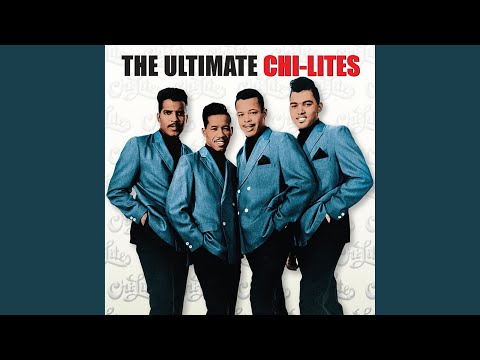
→ More from the 1970s File
View all 1970s hits →




Keep digging