The 1970s File Feature
Dog Eat Dog
"Dog Eat Dog" — Ted Nugent and the Sound of 1976 Hard Rock The Motor City Madman at Full Velocity The autumn of 1976 was a good time to be Ted Nugent. The De…
01 The Story
"Dog Eat Dog" — Ted Nugent and the Sound of 1976 Hard Rock
The Motor City Madman at Full Velocity
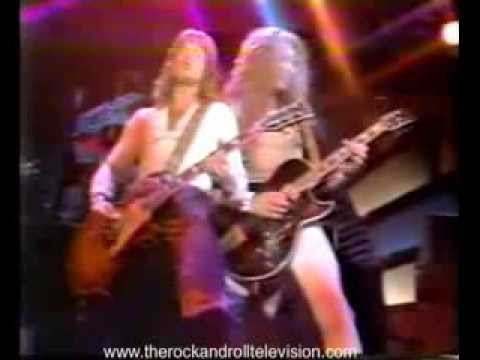
The autumn of 1976 was a good time to be Ted Nugent. The Detroit-born guitarist had spent the early part of the decade leading the Amboy Dukes through a series of increasingly heavy records, but it was his 1975 self-titled solo debut and its follow-up that truly established him as a mainstream force. The rock landscape of 1976 was broad enough to accommodate everything from prog to punk, but at the stripped-down, loud, guitar-forward end of the spectrum, Nugent was operating with a confidence that bordered on volcanic. His live shows were already becoming the stuff of arena legend, built on sheer volume and the kind of physical performance that left audiences simultaneously exhilarated and slightly frightened.
Free-for-All and Its Chart Ambitions
Released in 1976 on Epic Records, Free-for-All was Nugent's second solo studio album and a significant commercial step forward. The album featured notable guest contributions, including vocals from Meat Loaf, who sang on several tracks before his own solo career exploded the following year. "Dog Eat Dog" emerged from that album as a single, channeling the record's themes of raw competitive survival into a guitar-driven stomp. The production was lean by design, the kind of record that wanted to sound like it was coming through a wall of Marshall amplifiers at the back of a hockey arena.
A Brief but Real Chart Presence
"Dog Eat Dog" debuted on the Billboard Hot 100 on November 27, 1976, at position 91, and then climbed one position the following week to number 90. Two weeks was the extent of its chart run, which might seem modest, but for a hard rock track in the mid-1970s, any presence on a chart that still heavily favored pop and soul represented genuine crossover traction. Hard rock bands of this era often built their success almost entirely through album sales and touring, with singles serving more as radio calling cards than commercial weapons in themselves.
The Guitar at the Center
What drove the track was the same thing that drove everything Ted Nugent made in this period: the guitar. Nugent's playing style combined blues-rooted phrasing with an almost violent physicality, producing solos that felt less like melodic statements and more like acts of aggression. "Dog Eat Dog" gave that approach a theme to match its sonic character, the idea of survival in a competitive, predatory world rendered in music that sounded appropriately feral. Radio in 1976 was still figuring out where to place artists like Nugent, who occupied a space between the heavier end of mainstream rock and the emerging arena metal that would dominate the following decade.
The Arena Rock Circuit
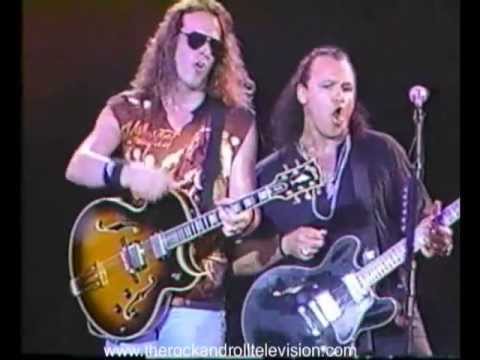
By 1976, Nugent had built one of the most reliable touring operations in American hard rock. His live shows were events in the genuine sense, drawing audiences who came specifically for the physical spectacle of his performances rather than simply to hear familiar songs reproduced faithfully. This reputation gave his studio recordings a commercial context that pure chart numbers cannot capture: "Dog Eat Dog" was a calling card for a concert experience that tens of thousands of fans had already discovered and hundreds of thousands more were about to. The single and the tour worked in tandem, each reinforcing the other's reach in ways that were characteristic of how hard rock built its audience in the pre-MTV era.
Legacy in the Nugent Catalog
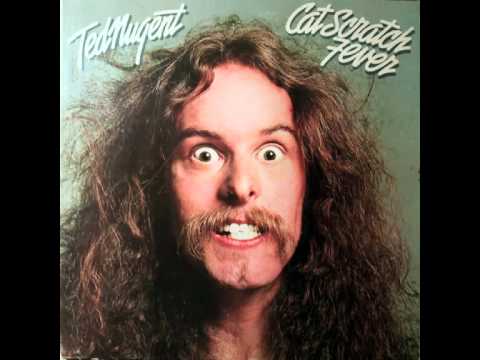
Within Nugent's broader body of work, "Dog Eat Dog" sits comfortably alongside the tracks that defined his commercial peak period. The Free-for-All album went platinum, confirming that his audience was real and growing. He would reach even greater commercial heights in 1977 with Cat Scratch Fever, which gave him his biggest album hit. Revisiting "Dog Eat Dog" today reveals a track that captures a particular moment of American hard rock at its most unadorned: loud, fast, thematically blunt, and built to be experienced at maximum volume. The song remains a sharp document of 1976 rock, when the genre was still finding the vocabulary that would eventually produce heavy metal. Put it on and you can hear an era forming.
"Dog Eat Dog" — Ted Nugent's singular moment on the 1970s charts.
02 Song Meaning
"Dog Eat Dog" — Survival, Competition, and 1970s Rock Attitude
The World as a Competition
Few phrases in the English language communicate the harshness of competitive existence as efficiently as "dog eat dog." The idiom had been in common use long before Ted Nugent put it on a record sleeve, but its translation into hard rock in 1976 gave the concept a sonic form that matched its meaning almost perfectly: aggressive, loud, and uninterested in mercy. The song's thematic territory was the social and professional world understood as a zero-sum contest, where only the fastest and most determined survive.
American Machismo and the Rock Context
Ted Nugent had built his artistic persona around a version of American masculinity that was unambiguously physical, outdoors-oriented, and proudly combative. That persona gave "Dog Eat Dog" its cultural grounding: this was not abstract philosophizing about competition, but a lived worldview expressed by an artist who genuinely seemed to believe in it. The mid-1970s, still absorbing the shocks of Vietnam, Watergate, and an economic downturn, were a moment when this kind of hard-edged individualism resonated with a segment of the rock audience that felt the social promises of the 1960s had not been kept.
Hard Rock as Working-Class Voice
The genre that Nugent inhabited in 1976 had strong roots in working-class American and British communities, and its most enduring themes, resilience, self-reliance, distrust of soft sentiment, mapped onto the anxieties of listeners who felt left behind by the decade's cultural conversations. "Dog Eat Dog" spoke directly to that sensibility, offering neither comfort nor nuance, but an honest acknowledgment that the world was competitive and that surviving it required toughness. For many listeners, this was more honest than the idealism of the counterculture that had preceded it.
The Sound as Argument
One of the underappreciated aspects of hard rock from this era is how thoroughly the music itself makes the argument the lyrics present. The production choices, the volume, the distortion, the physical demands placed on performers and audiences alike, all reinforce the thematic content. You do not simply hear "Dog Eat Dog"; you feel the pressure of it. Nugent's guitar work functions as pure assertion, making the case through tone and attack in ways that words alone cannot accomplish. This was rock as experience rather than message.
Why It Still Matters
Listening to "Dog Eat Dog" decades later, what remains vivid is its period specificity. It captures a mood that existed in American popular culture in the mid-1970s, a mood of competitive hardness that would evolve through the end of the decade and find its fullest commercial expression in the arena rock and early heavy metal of the late 1970s and early 1980s. As a document of that transition, the song is genuinely valuable: a single data point in the longer story of how hard rock developed its identity and its audience in the years before it became the dominant commercial form it would be by 1980.
→ More from Ted Nugent
View all Ted Nugent hits →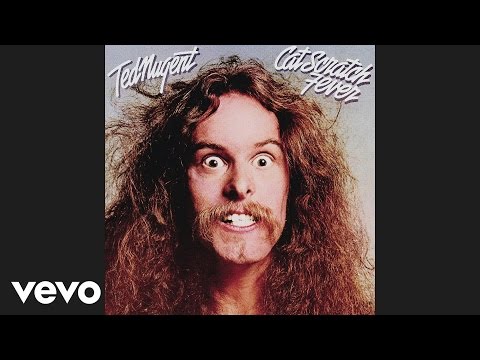
→ More from the 1970s File
View all 1970s hits →




Keep digging