The 1970s File Feature
Cat Scratch Fever
Cat Scratch Fever by Ted Nugent Picture a sweaty arena in the summer of 1977, the air thick with cigarette smoke and feedback, and a wild-eyed guitarist in a…
01 The Story
"Cat Scratch Fever" by Ted Nugent
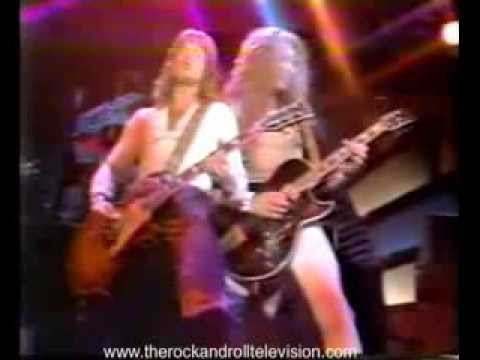
Picture a sweaty arena in the summer of 1977, the air thick with cigarette smoke and feedback, and a wild-eyed guitarist in a loincloth charging across the stage like he means to set the whole building on fire. That was the world Ted Nugent built for himself, and at the center of it sat a riff so blunt and so instantly recognizable that it became shorthand for everything loud and unruly about American hard rock. This was the song that turned a regional cult favorite into a household name, and it did it with about as much subtlety as a chainsaw.
The Motor City Madman Comes Into Focus
By the time this single arrived, Nugent had already spent years building a reputation as one of the hardest-touring, least-compromising figures in rock. He had come up through Detroit's ferocious club and ballroom scene, leading the Amboy Dukes through the psychedelic late 1960s before striking out on a solo path that doubled down on volume and showmanship. His 1975 self-titled solo album had announced him as a force, and 1976's Free-for-All kept the momentum building. He was not chasing radio polish or trends; he was selling intensity, and audiences were buying. What he needed was a calling card, a song that could stand for the entire spectacle, and he found it on his third solo record.
A Riff Built Like a Hook
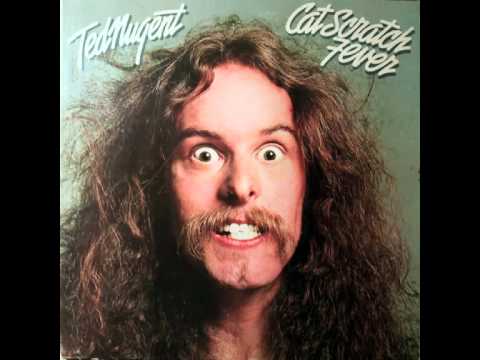
The track opens with one of the most economical guitar figures in the hard rock canon, a slinky, almost lewd lick that struts before the band even kicks in. The album Cat Scratch Fever was released in 1977 and became the commercial high point of Nugent's career, eventually certified multi-platinum on the strength of its title cut. The sound is lean and aggressive, built around Nugent's biting Gibson Byrdland tone and a rhythm section that hits like a closed fist. There is no orchestration, no studio trickery to hide behind. The appeal lives entirely in that central riff, the kind of part a beginner guitarist learns in an afternoon and never forgets. It is rock reduced to its rowdiest essentials.
Climbing the Hot 100
The single made its move on the Billboard Hot 100 in the late summer of that year. It debuted at number 70 on August 13, 1977, and began a steady, businesslike climb up the survey week after week. By early September it had cracked the top 40, and it kept pushing toward its ceiling. The song reached its peak position of number 30 on October 8, 1977, and in total it spent 11 weeks on the Hot 100. Those numbers tell only part of the story. For an artist whose real currency was the concert stage and album sales rather than singles-chart dominance, a top 30 hit was a genuine breakthrough that pushed his name far beyond the rock faithful and onto mainstream radio playlists across the country.
From Single to Signature
What the chart figures cannot fully capture is how thoroughly this track embedded itself in the culture. It became Nugent's permanent encore, the song every fan waited for, and a staple of classic rock radio that has never really left the airwaves. Decades later it surfaced in films, television shows, and countless arena montages, its riff functioning as instant shorthand for swaggering, slightly dangerous fun. The number that once climbed to number 30 has long outgrown that modest peak. The video has gathered more than 9 million YouTube views, a sign that new generations keep finding their way to that opening lick. Few songs from 1977 have proven so durable as pure adrenaline.
Press Play
Crank the volume, let that opening riff snake out of the speakers, and you will understand in about four seconds why this became the calling card of one of rock's most combustible performers. It is loud, it is shameless, and it does exactly what it sets out to do.
"Cat Scratch Fever" — Ted Nugent's singular moment on the 1970s charts.
02 Song Meaning
The Meaning Behind "Cat Scratch Fever"
Strip away the riff and the swagger, and you find a song that is essentially one long, winking double entendre. Ted Nugent never claimed to be writing poetry, and that honesty is part of why the track endures. It traffics in innuendo, in the language of desire dressed up as a feverish affliction, and it delivers that message with a leer rather than a wink. Understanding the song means accepting it on its own brazen terms.
Desire as a Sickness
The central conceit treats attraction as a kind of contagious illness, something caught rather than chosen. The lyrics frame infatuation and lust as a fever that takes hold and refuses to break, a condition the narrator has lived with as long as he can remember. The metaphor of an unshakable, almost feral craving runs through the whole song, turning physical wanting into something half comic and half primal. There is no romance here in the traditional sense, no tenderness or longing for connection. The track is about appetite, plain and unembarrassed.
The Cartoon of Macho Rock
It would be easy to read too much menace into the song, but it works better understood as cartoonish bravado. Nugent built a persona around untamed wildness, and the lyric leans into that image with a kind of theatrical exaggeration. The song functions as a self-portrait of the rock-and-roll alpha male, a character so over the top that it borders on parody. That comic excess is exactly what has let the track survive changing tastes. Listeners do not approach it as a sincere statement so much as a piece of high-energy showmanship, a wrestling promo set to a guitar riff.
The Sound Carries the Message
Crucially, the meaning lives as much in the music as in any line of lyrics. The strutting, suggestive main riff communicates the song's swagger before a single word lands, and the propulsive rhythm gives the innuendo its forward momentum. The instrumental attitude does the heavy lifting, conveying confidence and physicality in a way that words alone could never match. This is a song you feel in your chest more than you parse in your head.
Why It Stuck Around
Part of the track's longevity comes from its sheer lack of pretension. In an era when rock was growing increasingly grand and conceptual, here was a song that wanted nothing more than to make you grin and turn it up. Its appeal rests on energy and attitude rather than depth, and audiences have always understood the difference. It asks nothing of the listener except a willingness to enjoy the ride. That simplicity, combined with one of the most memorable riffs of its decade, is why a modest top 30 single from 1977 still blares out of car stereos and stadium speakers today.
The song endures not because it says something profound but because it commits so fully to saying something brash. It is rock as pure id, and it has never apologized for it.
→ More from Ted Nugent
View all Ted Nugent hits →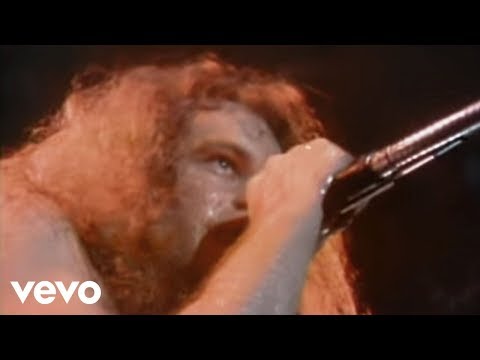
→ More from the 1970s File
View all 1970s hits →




Keep digging