The 1970s File Feature
Heaven Must Be Missing An Angel (part 1)
Heaven Must Be Missing An Angel: Tavares and the Sound of Disco's Sophistication The five Tavares brothers from New Bedford, Massachusetts, had been performi…
01 The Story
Heaven Must Be Missing An Angel: Tavares and the Sound of Disco's Sophistication
The five Tavares brothers from New Bedford, Massachusetts, had been performing together since the early 1960s under various names before signing with Capitol Records and beginning to record under their family name in the early 1970s. By 1976, they had built a solid reputation as a soul vocal group capable of delivering sophisticated harmonies with genuine emotional conviction. "Heaven Must Be Missing An Angel (Part 1)," released in the summer of 1976 on Capitol Records, represented a significant commercial breakthrough, climbing to number fifteen on the Billboard Hot 100 and demonstrating that the group could succeed in the disco-inflected soul market that was reshaping American popular music.
The song was written and produced by Freddie Perren and Keni St. Lewis, a songwriting and production team with a strong track record in soul and pop. Perren had worked extensively with Motown-affiliated projects and had co-written Jackson 5 hits earlier in the decade, giving him a deep understanding of how to build a record that balanced vocal performance with commercial arrangement. His partnership with St. Lewis brought a fresh energy to the track's composition, and the resulting song had a melodic appeal that worked equally well on dance floors and on radio. The production process for "Heaven Must Be Missing An Angel" reflected the mid-1970s trend toward more elaborate, string-heavy arrangements that gave soul records a lushness capable of crossing over to pop audiences.
The arrangement of the track places the Tavares vocal blend at the center, but surrounds it with a full disco-era instrumental palette that includes prominent strings, a driving rhythm section, and carefully placed horn accents. This sonic environment was characteristic of the Philadelphia-influenced sound that had become dominant in soul music by 1976, though the Tavares recording has its own distinct character derived from the Perren-St. Lewis production approach. The rhythm track maintains a steady, dance-floor-oriented pulse throughout while the harmonic richness of the arrangement keeps the record from feeling mechanical, a balance that was more difficult to achieve than it might appear.
Capitol Records released the single during the height of the 1976 summer season, timing that proved commercially advantageous. Disco was at the peak of its first major commercial wave, and a record with this groove and this level of vocal polish was well-positioned to capitalize on both the dance-floor market and the adult contemporary radio audience. The song's Hot 100 performance of number fifteen confirmed that Tavares had the commercial reach to compete at the highest level of the soul and pop market, not merely as a respected group with a loyal following but as genuine chart contenders.
The Tavares brothers, Chubby, Pooch, Ralph, Butch, and Tiny, brought genuine vocal credibility to the material. Their harmonies had been refined through years of live performance before their Capitol recording career, and that live-performance discipline gave their studio recordings an organic quality that was increasingly valuable as more mechanically produced disco records began to fill the charts. The group's ability to modulate between lead and harmony voices with flexibility and nuance gave their records a human warmth that distinguished them from more formulaic productions of the period.
The song's chart success accelerated the group's visibility on television variety programs and in live performance venues, helping to expand their audience beyond the core soul radio constituency. During 1976 and 1977, Tavares became a regular presence on the kind of network television programs, including variety shows and award broadcast specials, that could translate chart success into broader cultural recognition. This visibility contributed to the record's commercial performance by extending its reach beyond the formats where it had initially broken.
In the longer view of their career, "Heaven Must Be Missing An Angel" stands as the track that demonstrated Tavares could navigate the transition from classic soul to disco-era pop without sacrificing the vocal quality that had earned them their reputation. The song reached audiences that had not previously been exposed to their work and gave the group a commercial calling card that opened doors in live performance and licensing markets. Their subsequent recordings on Capitol continued to reflect the polished, dance-floor-conscious approach that "Heaven Must Be Missing An Angel" had helped to establish as their signature sound during this period. The song remains one of the defining disco-soul records of 1976, remembered both for its vocal performances and for its production's achievement in making sophistication feel exhilarating rather than merely tasteful.
02 Song Meaning
The Divine Beloved: Celestial Metaphor in Heaven Must Be Missing An Angel
"Heaven Must Be Missing An Angel" belongs to a tradition in soul and pop music in which the intensity of romantic feeling is expressed through elevated, quasi-religious imagery. The conceit of the song is that the beloved is so extraordinary, so far beyond ordinary human experience, that her presence on earth can only be explained as a loss in heaven itself. This kind of hyperbolic romantic assertion was a well-established device in soul songwriting by 1976, drawing on the genre's roots in gospel music and its long history of adapting devotional language for secular romantic purposes. Freddie Perren and Keni St. Lewis worked within this tradition while giving the conceit a fresh melodic and rhythmic setting that felt immediately current.
The emotional register of the song is one of joyful astonishment rather than yearning or desperation. The narrator has found someone remarkable and wants to communicate the scale of that feeling, but the mode is celebratory rather than anxious. This distinguishes "Heaven Must Be Missing An Angel" from many soul ballads of the period, which tended toward the anguished end of the romantic spectrum. The disco-era production context reinforces this celebratory quality; the driving rhythm and the lush arrangement create a sonic environment that feels festive and open, inviting the listener into a shared experience of delight rather than soliciting sympathy for a narrator in pain.
The use of angelic and heavenly imagery carries specific cultural weight in the context of African American popular music. The gospel tradition from which soul music descended had established a rich vocabulary of celestial reference, and soul artists throughout the 1960s and 1970s regularly drew on that vocabulary to give their secular recordings a sense of depth and seriousness. When Tavares sing about heaven being diminished by an angel's departure, they are engaging that vocabulary in a playful but sincere way, using it to elevate the subject of the song to a status commensurate with the intensity of the narrator's feeling.
Within the context of Tavares's catalog, the song reflects the group's ability to balance genuine emotional expression with sophisticated stylistic awareness. They were a group formed in the tradition of close vocal harmony, and their investment in the harmonic blend rather than in a single dominant lead voice gives their version of the celestial beloved conceit a communal quality. The love being described is not only the experience of one narrator but something that the entire group, and by extension the audience, can participate in celebrating. This communal dimension is part of what made the song work so effectively in the disco context, where collective experience was central to the social function of the music.
The song's longevity, its continued presence on classic soul and disco compilations and its recognition by audiences who discovered it decades after its 1976 release, reflects the durability of its core emotional proposition. Romantic astonishment, the feeling that the person one loves is somehow more than ordinary reality should be able to contain, is an experience that does not age. By setting that experience within a production framework that remains energetically engaging, Perren and St. Lewis created something that continues to communicate across temporal and cultural distance. "Heaven Must Be Missing An Angel" is, at its core, a song about the way romantic love makes the ordinary world seem insufficient, a theme that carries regardless of the decade in which it is heard.
→ More from Tavares
View all Tavares hits →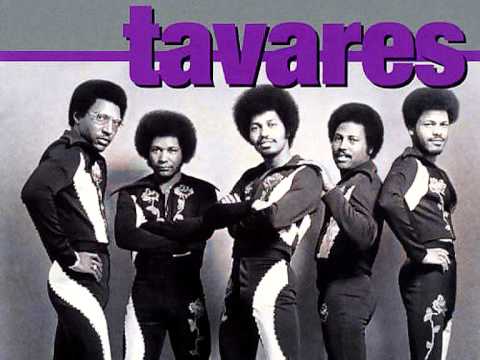




→ More from the 1970s File
View all 1970s hits →




Keep digging