The 1970s File Feature
Don't Take Away The Music
Don't Take Away The Music: Tavares and the Peak of Disco-Soul By 1976, the five brothers who recorded as Tavares had already established themselves as one of…
01 The Story
Don't Take Away The Music: Tavares and the Peak of Disco-Soul
By 1976, the five brothers who recorded as Tavares had already established themselves as one of the more polished vocal groups working within the commercial soul landscape. Their blend of tight harmonies and uptown production values had served them well on Capitol Records, and "Don't Take Away The Music" arrived as confirmation that the group had found the precise sonic coordinates of the era's dominant commercial current.
Tavares originated from New Bedford, Massachusetts, which placed them geographically outside the Southern soul tradition that had dominated rhythm and blues through the 1960s, but very much within the urban Northern experience that shaped the sound of the 1970s. The five brothers, Ralph, Pooch, Chubby, Butch, and Tiny Tavares, had been performing together since childhood, and by the time "Don't Take Away The Music" was recorded, their vocal interplay had the quality of musicians who have worked together long enough to anticipate each other instinctively.
The production of the track reflected the mid-1970s moment with precision. The arrangement incorporated the string orchestration, gliding bass lines, and rhythmic momentum that defined the disco-inflected soul sound of the period. Capitol Records released the single in 1976, placing it within a market environment where dance music was in the process of a rapid commercial expansion that would peak with the success of Saturday Night Fever the following year. Tavares were well positioned to benefit from this expansion, combining credibility as a genuine vocal group with the sonic accessibility that disco demanded.
The song climbed to number 34 on the Billboard Hot 100, a performance that reflected the song's genuine commercial traction while also suggesting that Tavares' audience remained more concentrated in the R&B market than the broader pop mainstream. On the R&B singles chart, the track performed considerably more strongly, reaching the upper regions of the chart and confirming the group's status as a reliable commercial presence within that format. The single appeared on the album Sky High!, which itself charted and helped establish the group's commercial momentum heading into the late 1970s.
The lyrical premise of the song, a direct address to whoever or whatever might deprive the speaker of music's consoling and unifying power, was ideally suited to the cultural moment. Disco culture in 1976 was not yet the subject of the backlash that would arrive in 1979 with the infamous Disco Demolition Night at Comiskey Park. Dance music still carried an atmosphere of liberation and communal pleasure, particularly for its core audiences among Black, Latino, and gay communities for whom the dance floor represented a space of genuine social freedom. A song that declared music's importance and resisted its removal spoke directly to those who relied on it most.
Tavares had already shown their chart instincts with their 1974 cover of the Four Tops' song "Remember What I Told You to Forget" and the significant 1975 success of "It Only Takes a Minute," which had reached number 10 on the Billboard Hot 100 and demonstrated the group's ability to generate genuine pop crossover impact. "Don't Take Away The Music" built on that momentum and helped cement the group's reputation as one of Capitol's most reliable soul-disco properties.
The production team assembled for the Sky High! sessions understood how to arrange for a vocal group without burying the voices in unnecessary sonic clutter. The track's instrumental elements served the harmonies rather than competing with them, and this restraint was not universal in an era when some producers allowed the dance floor imperative to overwhelm the human element entirely. Tavares retained their identity as a vocal group even as the production aesthetics around them shifted decisively toward the disco mainstream.
Critical reception at the time was characteristically mixed in the way that disco-era soul reception often was, with mainstream critics sometimes dismissing the genre even as its commercial figures climbed to historic heights. Looking back from a later vantage point, "Don't Take Away The Music" reads as a genuinely accomplished piece of mid-1970s commercial soul, executed with the kind of professional polish that only comes from years of rigorous group rehearsal and studio experience. It belongs to a distinct chapter in American popular music history, a period when the integration of soul and dance culture produced records of both commercial reach and genuine emotional impact.
The group's commercial peak arrived the following year with their contribution to the Saturday Night Fever soundtrack, but "Don't Take Away The Music" represents the moment just before that peak, when Tavares were building the momentum that would carry them to their widest audience.
02 Song Meaning
The Meaning Behind Tavares' "Don't Take Away The Music"
The emotional argument at the center of "Don't Take Away The Music" is both simple and culturally specific to its moment. The song articulates music's role not merely as entertainment but as a necessary condition of emotional and social life. The speaker addresses a potential absence, a world in which music might be removed, and responds with something that functions as protest, petition, and declaration simultaneously. For its 1976 audience, this argument landed with particular weight.
The disco and soul culture of the mid-1970s was bound up with questions of community, belonging, and survival in ways that mainstream critical discourse often failed to appreciate. For the Black, Latino, and gay audiences who populated the dance floors where this music lived, the dance hall or the club was not merely a place of entertainment but a space of relative safety and collective affirmation. Music was not decorative in that context; it was structural. A song that insisted on music's irreplaceability was, in that environment, also insisting on the irreplaceability of the communities that gathered around it.
Tavares delivered this argument through the specific medium of tight vocal harmony, a choice that itself carries meaning. The harmony group format is a technology of togetherness, a form that requires multiple voices to subordinate individual expression to a collective sound. When a harmony group sings about the necessity of music, the medium reinforces the message: the song demonstrates, in real time, what shared music can create.
The track's dance floor orientation is also inseparable from its meaning. By situating the declaration within a musical framework designed for communal physical movement, the arrangement ensures that the song's audience would experience its argument bodily rather than merely intellectually. People dancing together to a song about music's importance were enacting the very thing the song was defending, a closed loop of musical meaning that disco culture, at its best, made possible with some regularity.
The emotional register of the piece is ultimately one of joyful insistence rather than desperate pleading. There is no grief in the performance, no sense that the music has actually been taken away. Instead, the singers assert its value from a position of evident abundance, surrounded by lush instrumentation and the warmth of their own interlocking voices. This tone of confident celebration rather than defensive anxiety makes the song's argument more persuasive: the performers are not trying to convince the audience that music matters; they are demonstrating it.
Within Tavares' catalog, "Don't Take Away The Music" represents a thematic distillation of what the group's entire career was about: the power of voices joined in service of shared feeling. The brothers had spent their professional lives making the case, implicitly, that music and togetherness were inseparable goods, and this song made that implicit argument explicit. It belongs in the tradition of recordings that use the dance floor as a platform for something larger than mere entertainment, songs that celebrate their own medium with enough sincerity to make that celebration feel earned.
→ More from Tavares
View all Tavares hits →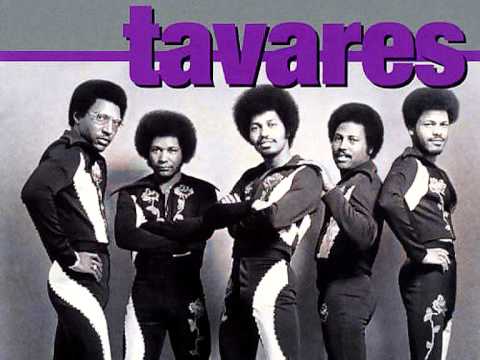




→ More from the 1970s File
View all 1970s hits →




Keep digging