The 1970s File Feature
Ride With Me
Ride With Me — Steppenwolf By the summer of 1971, the counterculture's golden hour was over and everyone in rock music knew it, even if no one wanted to say …
01 The Story
Ride With Me — Steppenwolf
By the summer of 1971, the counterculture's golden hour was over and everyone in rock music knew it, even if no one wanted to say so plainly. Woodstock was already being mythologized; Altamont was an open wound. The radical optimism that had coursed through the late 1960s had curdled into something harder to name, and the bands that had thrived on that energy were now navigating a very different emotional terrain. Steppenwolf, the Canadian-German rock outfit that had given the era "Born to Be Wild" and "Magic Carpet Ride," arrived at this moment with Ride With Me, a single that made the Billboard Hot 100 in July 1971 and climbed steadily through the summer.
After the Golden Era
Steppenwolf had been one of the defining bands of the late 1960s biker and counterculture rock scene. Their sound was built on John Kay's gravelly vocals, hard blues-influenced guitar, and a willingness to engage with the politics and anxieties of their moment in direct, unsubtle terms. By 1971, the band was in its third distinct lineup, having gone through significant personnel changes that reshaped their sound and commercial fortunes. The tight unit that had produced their biggest commercial moments had dissolved and reformed, and the music they were making in 1971 reflected both the continuities and the ruptures of that transition. They were still recognizably Steppenwolf, but something in the voltage had changed.
The Record and Its Sound
In the context of Steppenwolf's catalog, Ride With Me belongs to the harder-edged rock territory the band had always favored. The track maintained the group's characteristic sense of forward motion, a quality appropriate to a band whose signature song had soundtracked motorcycle sequences in Easy Rider. The production of their 1971 material reflected the sonic preferences of the era: warmer, heavier, with a rhythm section that held the bottom while the guitars worked above. Steppenwolf's music was always more about feel than technical complexity, and Ride With Me operated in that same register.
The Chart Run
Ride With Me debuted on the Hot 100 on July 17, 1971, at number 90. It climbed with consistent momentum over the following weeks, moving to 80, then 70, then 58, then 55, and finally reaching its peak position of number 52 during the week of August 21, 1971. The eight-week chart run tells the story of a record that built its audience steadily rather than exploding on impact. That kind of gradual climb was often the sign of a record finding its listeners through word of mouth and consistent airplay rather than a major promotional push, and it reflected the way Steppenwolf's music had always traveled: from the devoted outward rather than from the mainstream inward.
Rock in Transition
The early 1970s were a period of genuine stylistic turbulence in rock music. The psychedelic experimentation of the late 1960s was giving way to heavier sounds on one end and more polished singer-songwriter material on the other. Hard rock was beginning to consolidate as a distinct commercial genre, with bands like Led Zeppelin and Black Sabbath establishing sonic templates that would define the decade. Steppenwolf occupied a generational position slightly ahead of this wave, one of the bands that had laid conceptual groundwork for the harder rock that was coming while finding their own commercial footing shifting under new market conditions. Ride With Me appeared at exactly this crossroads.
John Kay and the Band's Identity
Through all the lineup changes, John Kay remained the constant at the center of Steppenwolf's identity. His voice, immediately recognizable and impossible to mistake for anyone else's, gave the band a continuity that the personnel shifts might otherwise have disrupted. Born in East Germany and raised partly in Canada, Kay brought a perspective shaped by displacement and survival that inflected the band's music with something other than the suburban American restlessness that powered much of 1960s rock. That different angle was part of what made Steppenwolf distinctive, and it persisted through the 1971 period even as the band's commercial circumstances evolved.
A Legacy of the Open Road
Steppenwolf's place in rock history is secured by a handful of songs that became cultural artifacts rather than just chart entries. Ride With Me sits at a further remove from those monuments, but it documents a band refusing to accept irrelevance during a transitional period and producing music that found a genuine audience on its own terms. The eight weeks on the Hot 100 represent a chart presence earned through the force of the music and the loyalty of a fanbase that had followed the band since the late 1960s. The open road metaphor that runs through so much of Steppenwolf's work found new expression here, relevant to a generation that was processing the end of one era and trying to imagine what might come next.
Turn up the volume and let the engine turn over.
"Ride With Me" — Steppenwolf's singular moment on the 1970s charts.
02 Song Meaning
The Road as Philosophy: What "Ride With Me" Means
There is a long tradition in American popular music of the road as both literal journey and emotional metaphor, from the blues highways of the Mississippi Delta through the Beat poets' cross-country odysseys to the motorcycle anthems of 1960s rock. Steppenwolf had already staked out a commanding position in this tradition with "Born to Be Wild," a song so thoroughly identified with road freedom that it became a cultural shorthand. Ride With Me returned to that same imaginative territory in 1971, though the context had changed considerably from the optimistic late 1960s that had originally charged the metaphor with such energy.
Freedom in a Post-Idealist Key
By 1971, the idea of the open road as a space of liberation carried different connotations than it had three years earlier. The counter-cultural project had failed to transform society in the ways its proponents had hoped; instead, the early 1970s offered economic uncertainty, political cynicism, and a general sense that the social experiments of the previous decade had run their course. The road remained as a symbol of escape, but escape from something more specific and less easily named. Steppenwolf's music in this period catches that shift in emotional register, the freedom it invokes is still real but it exists against a darker background.
The Invitation Structure
The title's phrasing is worth sitting with. "Ride With Me" is an invitation, directed outward at a listener or a companion, and that grammatical choice has implications. The singer is not riding alone and not inviting passive observation; they are asking for participation, for a companion willing to share the motion. That communal impulse is central to Steppenwolf's emotional appeal. Their best music always communicated a sense of belonging to a particular community defined by shared values and shared motion, the biker as tribal identity rather than isolated rebel.
Masculinity and the Machine
Steppenwolf's music has always been deeply coded in a particular version of masculine identity: physical, outdoors, built around vehicles and motion and a kind of stoic engagement with difficulty. Ride With Me participates in this coding without questioning it, which was characteristic of the era's rock culture. In 1971, the critique of this kind of masculinity was just beginning to emerge in the broader culture, but hard rock's emotional vocabulary was still largely built around its celebration. The song's meaning is partly inseparable from this cultural moment, when certain images of freedom were being contested in ways the music did not yet register.
Why It Resonated
The appeal of Steppenwolf's road music was never primarily conceptual. It was physical: the kick of the rhythm, the rasp of the vocal, the sense that the music itself was in forward motion and dragging you along with it. The emotional directness of the approach is its own form of honesty: no complicated metaphors or ironic distance, just the claim that movement feels good, that the company of a trusted companion on an open road is something worth celebrating. In 1971, when much of the surrounding culture felt heavy and confusing, that directness had real appeal.
The Legacy of the Open Road
Steppenwolf's road mythology belongs to a larger American cultural tradition that equates movement with vitality and stasis with defeat. That tradition runs deep enough to survive any particular era's disillusionment with it; each generation rediscovers the metaphor and charges it with its own specific content. Ride With Me contributed to that ongoing project in 1971, adding another verse to a story that American music had been telling for decades. The road, in this telling, is never just a road: it is the ongoing project of finding a way to live that feels genuinely free, whatever that means in a given historical moment.
→ More from Steppenwolf
View all Steppenwolf hits →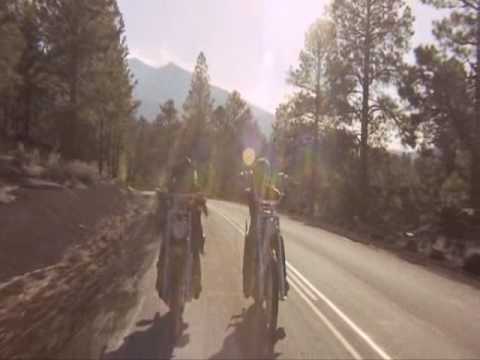
→ More from the 1970s File
View all 1970s hits →




Keep digging