The 1960s File Feature
It's Never Too Late
It's Never Too Late — Steppenwolf The Hard-Rock Machine in Contemplative Mode The spring of 1969 was Steppenwolf's spring. The band from Los Angeles had deto…
01 The Story
It's Never Too Late — Steppenwolf
The Hard-Rock Machine in Contemplative Mode
The spring of 1969 was Steppenwolf's spring. The band from Los Angeles had detonated across American pop culture the previous year with recordings that seemed to arrive already forged in fire: Born To Be Wild had given the counterculture its official motorcycle anthem and lodged itself permanently in the cultural vocabulary of the era. Magic Carpet Ride had followed with equal force. For a band that had formed only in 1967 from the remnants of the Canadian group Sparrow, the velocity of their rise was extraordinary. By 1969, they were one of the defining sounds of a generation navigating between the optimistic psychedelia of 1967 and the harder, more confrontational rock that the decade's end was demanding.
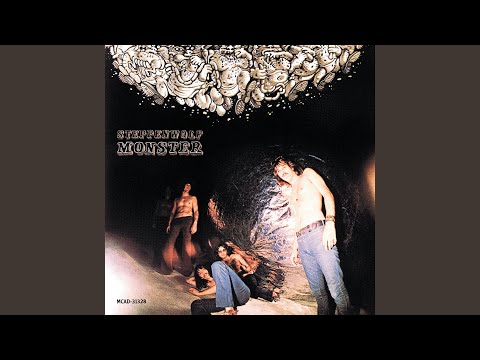
Against that backdrop, It's Never Too Late represented a different side of what the band could do. It appeared on their 1969 album Monster, one of their most ambitious records, a collection that addressed social and political themes with the directness that had become the group's trademark. John Kay, the German-born vocalist and primary creative force behind Steppenwolf, possessed a voice that could roar through hard-rock arrangements without losing its fundamental quality of human sincerity, and on a track with a more reflective character, that sincerity came through in a different register.
The Recording and Its Place on the Album
Monster was produced by Richard Podolor, who had worked with the band on their earlier recordings and understood how to serve their musical ambitions within a studio context. Podolor's production on the band's key albums found ways to translate the sheer physical force of Steppenwolf's live performances into recorded sound without losing the energy that made those performances compelling. The album was one of the most politically direct commercial rock records of the era, addressed explicitly to the state of American society in 1969, a year of assassinations still fresh in memory, of the Vietnam War grinding through its most difficult phase, and of a counterculture in the process of reckoning with its own limits.
It's Never Too Late within that context offered a note of possibility. Where the album's more overtly political material catalogued failures and corruptions, this track opened space for the idea that change, renewal, and redemption remained available. The arrangement builds around the band's characteristic combination of organ, guitar, and rhythm section, delivering the song's message with the full weight of Steppenwolf's sonic vocabulary without overwhelming the lyrical content's more tender emotional register.
Five Weeks on the Hot 100
The single debuted on the Billboard Hot 100 on May 10, 1969, entering at position 76. Its chart movement was modest in duration but consistent in direction: 63, 59, and then to its peak of number 51 on May 31, 1969. The following week it slipped to 70, ending what turned out to be a five-week chart run. That trajectory reflected the particular competitive pressures of May and June 1969, a period when the Hot 100 was exceptionally crowded with major commercial releases from artists at the height of their powers.
A peak of 51, just outside the top 50, was a modest showing by the standard of the band's biggest hits, but context matters. Steppenwolf's core commercial strength in this period was rooted in album sales and FM radio play rather than AM pop chart performance, and the Hot 100 captured only part of the picture. The Monster album itself was a significant commercial and cultural moment, even when individual singles from it did not reproduce the explosive chart performance of Born To Be Wild.
Steppenwolf in the Context of 1969 Rock
The spring and summer of 1969 were pivotal months in the history of rock music. Woodstock was still months away, but the cultural currents that would culminate there were already running strong. The genre was in the process of bifurcating into hard rock on one side and the softer sounds of singer-songwriters on the other, with plenty of acts trying to navigate both simultaneously. Steppenwolf landed firmly in the harder camp while maintaining the political consciousness that connected them to the broader counterculture.
Their influence on the development of hard rock was substantial, particularly in the use of heavy guitar riffs as primary compositional material rather than as embellishment over a standard pop structure. That approach had been present from their earliest recordings and would feed directly into the heavy metal developments of the early 1970s. It's Never Too Late shows the band capable of restraint within that vocabulary, which demonstrated range and artistic confidence.
The Optimism That Survived the Era
What is most interesting about the track in retrospect is precisely its refusal to succumb to the period's darkening mood. The spring of 1969 offered many reasons for cultural pessimism, and plenty of artists responded to those reasons directly and powerfully. But a song about possibility and renewal, about the idea that transformation remained available regardless of past failure, served a need that the grimmer records could not serve. Music in every era requires some proportion of hope alongside its harder truths, and It's Never Too Late provided that in a form consistent with Steppenwolf's fundamental character.
Put it on and hear the band operating with conviction across a wider emotional range than their reputation might suggest. 647,000 YouTube views represent a continuing discovery of a discography that goes deeper than its anthems.
"It's Never Too Late" — Steppenwolf's singular moment on the 1960s charts.
02 Song Meaning
It's Never Too Late — Meaning, Themes, and Legacy
Redemption as a Rock Argument
Heavy rock and philosophical optimism are not obvious companions, but Steppenwolf had always been a more intellectually engaged band than their most famous recordings might suggest. Born To Be Wild encoded a specific kind of freedom, but freedom in Steppenwolf's world was never purely about velocity and noise; it was connected to an idea about how human beings could and should live. It's Never Too Late develops that implicit philosophy into an explicit argument: the past does not determine the future, and transformation remains possible regardless of what has already happened.
That argument carries particular weight when delivered within the harder sonic vocabulary of rock music. A gentle folk ballad about second chances operates in an expected register; listeners do not have to work to accept its message. When John Kay's lived-in voice delivers the same message over Steppenwolf's characteristic guitar-and-organ backing, the argument has to earn its credibility differently. The roughness of the delivery becomes a form of authenticity, the suggestion that this is not naive optimism but hard-won possibility.
The Political Dimension
The track's home album, Monster, was one of the most explicitly political commercial rock records of the era, and the political dimension of the song's message operated on multiple levels simultaneously. At the personal level, the song addressed individual transformation. At the political level, released in a year when American society seemed to many observers to be in crisis, the assertion that it was never too late carried an argument about collective as well as individual possibility.
Steppenwolf's audience in 1969 was deeply invested in questions of political and social change. The counterculture had staked considerable moral capital on the belief that transformation, at every level from personal to political, was not only desirable but achievable. By 1969, the evidence for that belief was complicated by assassinations, political setbacks, and the continued grinding of the Vietnam War. A song that maintained the possibility of change in the face of that evidence was making an argument that required some courage.
John Kay and the Immigrant's Perspective
John Kay, born Joachim Fritz Krauledat in East Prussia and raised in West Germany before emigrating to North America as a teenager, brought a perspective to his music that differed from that of American rock musicians formed entirely within domestic experience. His life had already demonstrated the possibility of transformation and reinvention before he ever wrote a song about it. The biographical context of Kay's own emigration and reinvention gave his handling of themes about new starts and second chances an experiential grounding that purely intellectual engagement could not have produced.
That background also gave Kay's work a particular awareness of how precarious ordinary social arrangements could be, and how important it was to maintain the possibility of change as both personal philosophy and political value. His music was never simply countercultural performance; it was connected to lived understanding of what the alternatives to freedom looked like.
Why the Message Still Lands
The core claim of It's Never Too Late is one of the most enduring in the repertoire of human wisdom traditions. Versions of it appear in religious teaching, therapeutic practice, philosophical argument, and folk wisdom across cultures and centuries. Pop music's ability to deliver that claim with the immediacy and emotional directness that a three-minute recording demands is one of the genre's genuine contributions to the broader cultural conversation about how people navigate their lives.
Steppenwolf's version of that message has the particular virtue of not softening the difficulty of what it is asserting. The music does not suggest that transformation is easy or that second chances come without cost. It simply maintains, with the conviction that characterized their best work, that the door remains open. In any era, that is a message worth hearing.
→ More from Steppenwolf
View all Steppenwolf hits →
→ More from the 1960s File
View all 1960s hits →




Keep digging