The 1960s File Feature
Rock Me
"Rock Me" — Steppenwolf's 1969 Top-Ten Charge Steppenwolf at the Height of Their Power There is a specific energy that Steppenwolf carried into 1969 that is …
01 The Story
"Rock Me" — Steppenwolf's 1969 Top-Ten Charge
Steppenwolf at the Height of Their Power
There is a specific energy that Steppenwolf carried into 1969 that is worth pausing on. The band had exploded into the American consciousness the previous year with "Born to Be Wild," a track that would become one of the most recognizable recordings in rock history and help define the very concept of heavy rock. Following that with "Magic Carpet Ride," another major hit, the band entered 1969 as one of the most commercially potent hard rock acts in the country. Their audience knew exactly what it wanted from them: driving rhythms, distorted guitars, and John Kay's gravel-and-grease vocals delivering lyrics that felt connected to the restless, rebellious spirit of the time. "Rock Me" was the next contribution to that catalog.
The Making of the Track
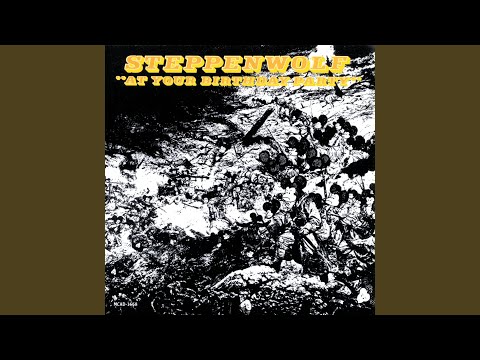
The recording appeared on the album At Your Birthday Party, released in 1969. Steppenwolf's approach to recording during this period was built around their live strengths, a band that played with a physical commitment and volume that translated effectively to tape. John Kay's songwriting on the track drew on the blues traditions that underpinned much of the band's musical vocabulary, even as the production channeled those influences through the amplification and studio techniques of late-1960s hard rock. The track's rhythmic drive and structural clarity made it immediately accessible as a radio single while retaining enough raw energy to satisfy the band's harder-edged audience. Guitarist Michael Monarch and keyboardist Goldy McJohn contributed to the track's sonic texture alongside Kay's lead work.
The Chart Ascent
"Rock Me" debuted on the Billboard Hot 100 on March 1, 1969, entering at number 63. The climb was steady and substantial, moving through the 40s and 30s before breaking into the top 20. By the end of March the track had reached number 15, and it continued upward through early April, arriving at its peak of number 10 during the week of April 19, 1969. Ten weeks on the Hot 100 represented a strong chart performance for a rock track at a moment when the singles market was increasingly complex, with competition from acts across multiple genres. The top-ten peak confirmed Steppenwolf's commercial standing in the year following their breakthrough.
The Landscape of Rock Radio in 1969
The radio environment of 1969 was in genuine transition. AM pop radio, the dominant hit-making machine of the decade, was sharing cultural authority with FM progressive rock stations that had begun operating on different principles: longer songs, album tracks, a self-conscious distinction from the commercial mainstream. Steppenwolf occupied an interesting position in this landscape. Their records were short enough and hook-driven enough to function as singles, yet their sound and image aligned with the counterculture credentials that progressive rock fans prized. "Rock Me" straddled this divide effectively, charting on the Hot 100 while also receiving play from FM stations that served the growing album-rock audience. This dual currency was not something every artist of the period managed.
Place in the Steppenwolf Legacy
The band's commercial run from 1968 through the early 1970s produced a series of recordings that collectively defined one approach to hard rock before that genre fully consolidated its identity. "Rock Me" is one of the less-cited entries in the Steppenwolf canon, sitting in the shadow of "Born to Be Wild" and "Magic Carpet Ride" in the popular memory, but its top-ten performance on the Hot 100 makes it one of the band's strongest commercial achievements. The recording demonstrates the consistency of the band's craft during their peak period, applying the same energy and structural intelligence to a new track that had made their breakthrough recordings so effective.
For anyone interested in what hard rock sounded like in the season of Woodstock, the track is an essential piece of evidence. Press play and you are immediately back in that particular spring, when everything felt loud and kinetic and wide open.
"Rock Me" — Steppenwolf's singular moment on the 1960s charts.
02 Song Meaning
"Rock Me" — Themes and Cultural Force of Steppenwolf's 1969 Single
The Request as Manifesto
The title is a command framed as an invitation, two words that carry enormous idiomatic weight in the blues and rock traditions. "Rock me" belongs to a family of phrases rooted in African American vernacular music that use physical movement as a proxy for emotional and erotic experience. The blues tradition out of which early rock and roll grew was rich with this coded language, and Steppenwolf's use of it in 1969 connected the track to a lineage that stretched back decades even as the band's sound pushed forward into territory that blues purists might not have recognized. The request for rocking is simultaneously romantic, physical, and a declaration about music itself, the need for sound that moves the body as well as the emotions.
Hard Rock and Liberation Narrative
Steppenwolf's music in 1969 carried a specific cultural charge that is inseparable from the broader climate of the late 1960s. The counterculture, the antiwar movement, the sexual revolution, and the civil rights struggle all contributed to a social atmosphere in which music that sounded urgent and uncompromising felt politically meaningful as well as aesthetically satisfying. Hard rock as a genre in 1969 was still defining itself, and bands like Steppenwolf were writing its earliest chapters in real time. The sound's volume and aggression were partly aesthetic choices and partly statements about what kind of music the moment required. "Rock Me" operated within this framework without being explicitly political, channeling the era's energy into a more personal register.
The Blues Inheritance
John Kay and Steppenwolf were part of a generation of rock musicians, many of them Canadian or British, who came to the blues as students and then transformed what they learned into something new. This dynamic produced the hard rock and heavy blues boom of the late 1960s, in which the emotional directness and structural clarity of the blues provided a foundation that amplification and rock energy could be built upon. "Rock Me" demonstrates this inheritance clearly, with its rhythmic drive and call-and-response sensibility drawing on blues conventions while the production and performance style belong entirely to its own moment. The song is both backward-looking, in its debts to tradition, and urgently contemporary in its execution.
Physical and Communal Music
A track like "Rock Me" was designed to work in physical spaces, at the outdoor festivals that were becoming the defining social events of the late 1960s, in ballrooms, at live performances where the music's volume created a shared physical experience for everyone present. The Steppenwolf approach to performance was built for scale and impact. Their chart success with singles did not fully capture what the band meant to audiences who experienced them live, but the recordings transmitted enough of that energy to function as effective artifacts of the live experience. The track's rhythmic insistence gives it a quality that demands physical response, connecting it to the communal, body-based experience of music that defined the festival era.
Lasting Position in the Hard Rock Catalog
While "Rock Me" does not occupy the same position in the popular memory as "Born to Be Wild," its top-ten chart performance and the quality of its execution make it an essential piece of the Steppenwolf story. The song connects the band's earliest blues influences to the hard rock sound they helped create, and it demonstrates that their commercial success in 1968 was not accidental but the product of genuine artistic coherence. For listeners discovering Steppenwolf beyond their most famous track, "Rock Me" reveals the depth of a catalog that deserves more sustained attention than nostalgia alone tends to grant it.
→ More from Steppenwolf
View all Steppenwolf hits →
→ More from the 1960s File
View all 1960s hits →




Keep digging