The 1970s File Feature
Thank You Falettinme Be Mice Elf Agin/Everybody Is A Star
"Thank You Falettinme Be Mice Elf Agin / Everybody Is A Star" — Sly it is historically significant, a technique in the process of being invented in real time…
01 The Story
"Thank You Falettinme Be Mice Elf Agin / Everybody Is A Star" — Sly & The Family Stone at the Summit
A Band at the Top of the World
Picture the first weeks of 1970. The previous decade had ended in exhaustion and wonder, and the music that had defined the cultural upheaval of the late 1960s was searching for new directions. In this charged atmosphere, Sly & The Family Stone occupied a unique position, a racially integrated, gender-inclusive band from San Francisco that had crashed through the pop charts with a philosophy of inclusion that felt genuinely radical in the context of American social division. Their performance at Woodstock in August 1969 had been one of the defining moments of that extraordinary weekend, and the group entered 1970 at the absolute peak of their commercial and cultural influence.
The double A-side single they released to inaugurate the new decade announced that arrival with unmistakable authority. "Thank You (Falettinme Be Mice Elf Agin)" backed with "Everybody Is A Star" combined two contrasting statements of the band's musical and philosophical range: the first a fiercely funky, rhythm-forward celebration of selfhood, the second a gentler, more melodic expression of collective affirmation. Together, they constituted one of the most compelling singles in the group's catalog.
The Sound of Funk at Its Origin Point
Musicologically, "Thank You (Falettinme Be Mice Elf Agin)" holds a special place in the history of popular music. The record's bass line, driven with extraordinary authority by Larry Graham, is widely credited as one of the founding documents of the slap bass technique, the percussive, rhythmically aggressive approach to the electric bass that would become fundamental to funk and later to hip-hop production. Larry Graham's bass work on this track is not merely impressive; it is historically significant, a technique in the process of being invented in real time.
Sly Stone wrote and produced the track, and his production choices reflect a sophistication about rhythm and texture that set the template for the funk explosion that would follow through the 1970s. The arrangement is lean and locked-in, with every instrument serving the groove rather than decorating around it. The horns punctuate rather than swell; the drums are insistent and precise. This was funk music in its most focused, disciplined form.
The Chart History: A Number One Arrival
The single debuted on the Billboard Hot 100 on January 3, 1970, entering at number 59. Its ascent was rapid and confident. By January 17 it had reached number 22; by January 31 it had climbed to number 8. The momentum continued without pause, and the record reached number 1 on the Billboard Hot 100 on February 14, 1970, the most fittingly symbolic date for a record about gratitude, self-expression, and universal connection. It spent 13 weeks on the chart in total, a strong performance that confirmed the group's status as one of the premier chart acts in America at the turn of the decade.
The B-side, "Everybody Is A Star," received its own significant airplay, with radio programmers frequently treating the double A-side as exactly what the label designated it: two equally valid choices, serving different musical moods from the same record.
What the Band Was Saying
The message embedded in these two recordings extended well beyond the musical. Sly & The Family Stone as a unit embodied a social vision: Black and white musicians performing together as equals, men and women sharing the stage and the spotlight, music rooted in Black American tradition but made available to the broadest possible audience without apology or dilution. In 1970, that vision carried political weight that its pop chart success did not diminish but rather amplified.
"Everybody Is A Star" in particular articulated an egalitarian philosophy that addressed the social divisions of the era with a simplicity that proved persuasive to an enormous number of people. The message was not naive: it was offered by a band that understood exactly the world it was living in. The combination of political consciousness and musical sophistication was the Family Stone's particular genius, and this double single captured it at its fullest expression.
The Legacy That Followed
The recordings that Sly & The Family Stone made around this period would prove foundational to the next fifty years of popular music. The funk language that "Thank You" helped to establish became the bedrock of soul music throughout the 1970s, the source material for disco's rhythmic architecture, and one of the primary sample sources for hip-hop production from its earliest days to the present. Larry Graham's bass innovations alone influenced a generation of musicians across multiple genres.
The group's subsequent trajectory was complicated by internal tensions, personal difficulties for Sly Stone, and a darker artistic turn that produced the brilliant but troubled There's a Riot Goin' On in 1971. But the music they made at their peak, including this extraordinary double A-side, remains as vital as anything the era produced. If you want to understand where contemporary popular music's rhythmic DNA comes from, press play and listen to Larry Graham lay down those bass lines at the dawn of a new decade.
"Thank You Falettinme Be Mice Elf Agin/Everybody Is A Star" — Sly & The Family Stone's singular moment on the 1970s charts.
02 Song Meaning
"Thank You Falettinme Be Mice Elf Agin / Everybody Is A Star" — Freedom, Funk, and the Family Stone's Vision
Gratitude as Radical Act
The title alone announces something unusual. "Thank You (Falettinme Be Mice Elf Agin)" is written in the phonetic approximation of vernacular speech, a deliberate stylistic choice that positions the song outside the conventions of mainstream pop language and within a tradition of Black American expressive culture that prizes authenticity of voice over grammatical propriety. Sly Stone's decision to render the title this way was a statement: this music comes from a specific place and a specific community, and it does not intend to smooth away those origins for the comfort of a broader audience.
The song's central theme is the freedom to be oneself without apology, expressed as gratitude toward the community that made that freedom possible. The relationship between individual selfhood and collective support runs through both sides of the single. "Thank You" celebrates the freedom earned; "Everybody Is A Star" extends that celebration outward, declaring that the capacity for radiance belongs to everyone, not just the famous or the talented or the conventionally successful.
The Politics of Joy
It would be a mistake to read the exuberance of these recordings as an escape from political reality. Sly & The Family Stone operated in a social context where the assertion of Black dignity and the celebration of integrated community were inherently political acts, and they were fully aware of that context. The decision to make joyful, celebratory music in 1970, at a moment when much Black popular music was engaging directly with the language of confrontation and resistance, was itself a choice with ideological content.
Joy as a form of resistance has a long tradition in Black American culture: the insistence on full, expressive human life in the face of systems designed to constrain or diminish it. The Family Stone's music embodied this tradition without requiring its audience to engage with it at that level of abstraction. You could dance to it, feel good listening to it, and be moved by it without consciously understanding the social significance embedded in a racially integrated band choosing to perform together and invite everyone in.
The Universal Star and Sixties Inheritance
"Everybody Is A Star" operates in the territory of what might be called democratic affirmation: the idea that the capacity for specialness, for beauty, for significance, is not limited to those who achieve conventional celebrity but belongs to every person who has ever lived. This was a theme that had run through the cultural radicalism of the 1960s in various forms, and the Family Stone gave it a pop-music expression of unusual directness.
The melodic simplicity of the track was a deliberate choice. A message about universal possibility required a musical form that itself felt universally accessible. The gentle, open-hearted quality of the melody invited participation rather than observation, suggesting that the song belonged to everyone who heard it rather than being performed at them from a stage.
Funk's Philosophy and Its Lasting Reach
The musical innovations in these recordings, particularly the funk language that "Thank You" helped crystallize, carried their own philosophical content. Funk as a musical philosophy prioritizes the collective over the individual: the groove belongs to the whole band, and no single instrument dominates at the expense of the whole. Larry Graham's bass was extraordinary, but it served the rhythm section rather than transcending it. The horns punctuated rather than dominated. Every element worked in relationship to every other element, a musical embodiment of the communal values the lyrics expressed.
This integration of form and content gives the recordings their particular coherence and explains much of their lasting influence. The music does not merely advocate for community and inclusion; it enacts those values in its structure, in the way the instruments relate to one another, in the way the voices of multiple singers blend without any single voice consuming all the space. Half a century later, the recordings still communicate those values with a clarity that has not dimmed.
→ More from Sly & The Family Stone
View all Sly & The Family Stone hits →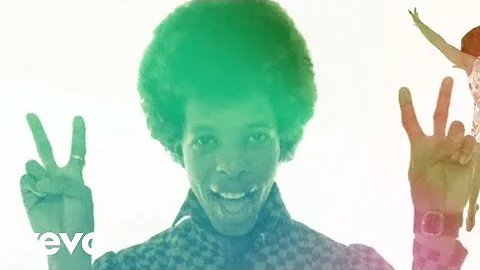


→ More from the 1970s File
View all 1970s hits →




Keep digging