The 1970s File Feature
Don't Stop Believin'
Don't Stop Believin' — Olivia Newton-John Australian Gold in a Summer of American Pop The summer of 1976 was a peculiar season in American popular music. The…
01 The Story
Don't Stop Believin' — Olivia Newton-John
Australian Gold in a Summer of American Pop
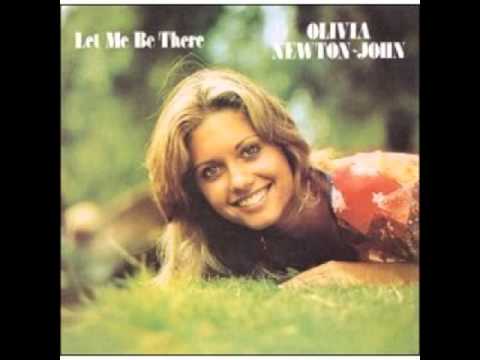
The summer of 1976 was a peculiar season in American popular music. The bicentennial mood wrapped everything in bunting and nostalgia, yet the charts were restless, already pulling toward the disco revolution that would fully detonate within a year. Against that backdrop, Olivia Newton-John was one of the most commercially potent figures in the business: a Australian-born, British-raised singer who had conquered country crossover with "Let Me Be There" and pop with "I Honestly Love You," winning Grammy Awards and television specials along the way.
By 1976, Newton-John occupied an almost singular position in American pop: she was wholesome enough to reassure parents and tuneful enough to hold teenagers. Her records sold in enormous quantities, and her voice, a clear, clean soprano with remarkable control in its upper registers, was immediately identifiable on radio. The question for her team was always what to put that voice in service of.
A Song Tailor-Made for the Moment
Don't Stop Believin' (not to be confused with the Journey anthem of 1981, which shares a title but nothing else) was a soft-pop confection designed to capture what Newton-John did best: an uplifting melodic hook, lyrics that promised emotional warmth, and a production sheen that made everything feel safe and inviting. The arrangement sits comfortably within the mid-1970s light pop aesthetic, with gentle orchestration and a rhythm track that suggests energy without demanding it.
The song appeared on her Come On Over album, released that same year on MCA Records. The album was produced with the same careful attention to her established audience that had guided her work since the early 1970s, and Don't Stop Believin' functioned as a radio-friendly cornerstone of that project, showcasing her voice in an uncomplicated setting that let its natural warmth do the persuading.
A Steady, Purposeful Chart Climb
The single entered the Billboard Hot 100 on August 7, 1976, beginning its run at position 80. Its progress through the chart was consistent and methodical: 70, 57, 47, 39 over the following weeks, each step a confirmation that radio programmers and listeners were finding their way to it. By September 18, 1976, the track had reached its peak position of number 33 on the Hot 100, where it remained for a week before beginning its descent. The song spent a total of 9 weeks on the chart, a solid if not spectacular run that was consistent with the secondary single status it occupied within the album campaign.
That peak of 33 placed it comfortably within the conversation of mid-chart pop successes, the kind of song that dominated certain radio formats without necessarily crossing into the all-format saturation that her biggest hits achieved.
Newton-John at Her Commercial Zenith
It is worth remembering that 1976 was part of what might be called Newton-John's first commercial peak. She had won the Grammy for Best Female Pop Vocal Performance in 1974 for "I Honestly Love You," and her visibility in the United States had been further amplified by the controversy over her eligibility for the Country Music Association awards, which drew more attention to her crossover status than any amount of conventional promotion could have managed.
Within two years of this single's release, she would film Grease alongside John Travolta, a project that redefined her public persona entirely and sent her into a new commercial stratosphere. Don't Stop Believin' belongs to the softer, pre-Grease chapter, and for that reason alone it has a certain documentary value as a record of who she was before the leather jacket.
The Enduring Lightness of the Record
What keeps Don't Stop Believin' worth returning to is precisely its unpretentious charm. Newton-John's voice is at its most effortlessly appealing in this kind of uncomplicated setting, where the arrangement exists solely to frame and support her rather than to make any independent statement. The song does not try to be more than it is, and that honesty is, in its own modest way, a virtue.
Played in the context of a 1976 playlist, it clicks into place immediately, a piece of a sonic world that feels simultaneously remote and recognizable. Let it take you back.
"Don't Stop Believin'" — Olivia Newton-John's singular moment on the 1970s charts.
02 Song Meaning
Don't Stop Believin' — Themes of Encouragement and Soft-Pop Optimism
The Anatomy of a Feel-Good Lyric
There is a category of pop song whose primary function is emotional reassurance, and Olivia Newton-John built much of her 1970s commercial success on mastering that category. Don't Stop Believin' belongs firmly in this tradition. Its central message is the kind of gentle optimism that asks listeners to hold on a little longer, to trust that circumstances will improve, to resist the pull of discouragement. In the mid-1970s, that message had particular traction.
The mid-1970s in America were not uniformly sunny. The aftershocks of Watergate, the humiliating conclusion of the Vietnam War, and a grinding economic recession had generated a collective mood of disillusionment that sat underneath the disco glitter and the bicentennial celebrations. Into that climate, soft-pop optimism functioned less as denial and more as a deliberate corrective, a choice to focus on personal resilience when the broader social picture felt bleak. Newton-John was among the most effective purveyors of that corrective.
Warmth as a Deliberate Artistic Strategy
Newton-John's entire persona in this era was built on approachability and emotional safety. Her voice communicated trustworthiness in a way that was commercially useful but also genuinely appealing on its own terms. A lyric about perseverance and emotional resilience gains something specific when delivered in a voice that sounds incapable of irony or cruelty. The message and the messenger were ideally matched.
The song's title itself, with its imperative "don't stop," positions the listener as an active participant in their own emotional recovery. The singer is not just describing a feeling; she is issuing a gentle instruction. That structure, the pop song as compassionate command, is a recurring feature of the uplifting ballad tradition to which this track belongs.
The Cultural Role of Encouragement Songs
Across pop history, songs that explicitly encourage listeners to persevere have functioned as communal touchstones during periods of difficulty. This song participates in that tradition with the particular flavor of its era: it is not gospel-inflected like the civil rights-adjacent music of the preceding decade, and it is not the synthetic positivity of the coming fitness-culture pop of the 1980s. It sits in a soft, secular middle ground, speaking to personal emotional experience without claiming any larger social or spiritual framework.
That modesty is part of what made Newton-John's approach commercially viable across such a wide demographic range. The song does not require the listener to share any particular belief system, only to acknowledge that they sometimes need a reason to keep going. That is a remarkably low barrier for an uplifting anthem.
A Snapshot of Pop Before the Earthquake
Heard today, Don't Stop Believin' captures a specific moment in the evolution of pop production: the lush but lightweight sound that characterized the best-selling middle-of-the-road releases of 1975 to 1977, before disco fully reshaped the sonic expectations of the mainstream. The song's gentle arrangement and Newton-John's pristine vocal represent one end of a stylistic spectrum that was about to be significantly disrupted.
That historical positioning gives the track an additional layer of interest for listeners who enjoy hearing pop music at a moment of transition, when one era is winding down and another has not yet fully declared itself. Newton-John herself would navigate that transition brilliantly, but this song belongs to the quieter chapter before the reinvention.
→ More from Olivia Newton-John
View all Olivia Newton-John hits →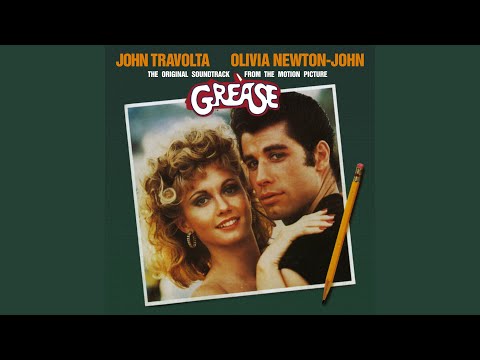


→ More from the 1970s File
View all 1970s hits →




Keep digging