The 1970s File Feature
Let Me Be There
"Let Me Be There" — Olivia Newton-John and the Country-Pop Crossover of 1973 A Young Australian Finds Her American Audience The autumn of 1973 was an interes…
01 The Story
"Let Me Be There" — Olivia Newton-John and the Country-Pop Crossover of 1973
A Young Australian Finds Her American Audience
The autumn of 1973 was an interesting moment to be releasing a country-flavored pop ballad on the American market. The country-pop crossover had been building as a commercial force for several years, with artists like Glen Campbell and John Denver demonstrating that country-inflected material could find enormous audiences beyond the traditional country radio market. Into this opening stepped a twenty-five-year-old Australian singer who had been working in British pop for several years and was making her first serious push for American success. Olivia Newton-John's "Let Me Be There" would not just find that audience; it would trigger a years-long debate about what country music actually was and who got to participate in it.
Olivia Newton-John had been known in Britain and Australia since the late 1960s, with a career that included a period as part of the UK group Tomorrow and a string of singles on the Pye label that demonstrated her vocal gifts without quite breaking through to major stardom. Her move toward the American market was a deliberate strategic choice, and the decision to work within a country-adjacent musical framework reflected both her vocal style and the commercial landscape she was entering.
The Song and Its Production
"Let Me Be There" was written by John Rostill, who had been the bassist with The Shadows, the British instrumental group that had been hugely successful in the UK throughout the 1960s. Rostill wrote the song and delivered it in a style that combined a country melody with the kind of clean pop production that could move between formats without friction. The recording was produced for MCA Records in the United States, where Newton-John was signed for her American market releases, with an arrangement that leaned into the warm, acoustic-leaning aesthetic that country-pop was developing at the time.
Her voice suited the material with unusual precision. Newton-John's vocal quality had a brightness and clarity that was neither the nasal twang of traditional country nor the full-throated projection of mainstream pop, but something in between that worked on both country radio and pop radio without alienating either. The song itself was a declaration of steadfast emotional support, the narrator offering an unwavering presence to someone she loves, which gave Newton-John material that played to the warmth in her vocal character rather than demanding something her voice was not built for.
A Chart Run That Refused to Hurry
"Let Me Be There" debuted on the Billboard Hot 100 on November 17, 1973, entering at position 87. From there it climbed with methodical patience through the final weeks of 1973 and into 1974, passing through 77, 60, 44, and 31 before continuing its ascent into the new year. The track peaked at number 6 on the chart dated February 9, 1974, and its total run on the Hot 100 was 19 weeks. The song also performed strongly on the country chart, where it reached number seven, a performance that demonstrated the crossover appeal that would define Newton-John's commercial approach throughout her peak years.
The country chart performance would prove enormously consequential. At the Grammy Awards in 1974, "Let Me Be There" won the Grammy for Best Female Country Vocal Performance, a recognition that was not universally celebrated within the country music establishment, where some felt that Newton-John's pop orientation disqualified her from the category. The controversy contributed to the formation of the Academy of Country Music's more restrictive approach to crossover artists.
The Launch of an American Career
The commercial success of "Let Me Be There" established Olivia Newton-John as a major force in the American market and set the template for the career that followed. She would go on to score additional hits in the country-pop vein before her image transformation in the late 1970s, culminating in the massive success of Grease in 1978 and the more pop-oriented material of the early 1980s.
What "Let Me Be There" demonstrated was that her voice had a quality of sincerity that translated across format boundaries, that listeners in country radio markets and pop radio markets were responding to the same thing: a vocal performance that sounded trustworthy and emotionally genuine. Those qualities would sustain a career far longer than most people who heard "Let Me Be There" for the first time in late 1973 could have predicted.
John Rostill's Lasting Legacy
John Rostill died in November 1973, just as the single he had written was beginning its American chart ascent, a tragic coincidence that gave the song an unintended biographical dimension. His songwriting would be further celebrated through Newton-John's subsequent recording of his composition "If You Love Me (Let Me Know)," which became another major hit. The relationship between songwriter and artist was brief but commercially and culturally significant, two careers intersecting at a moment that proved transformative for one of them.
Put on "Let Me Be There" and hear the moment when an Australian singer found the sound that would take her to the top of American radio.
"Let Me Be There" — Olivia Newton-John's singular moment on the 1970s charts.
02 Song Meaning
"Let Me Be There" — Devotion, Steadfastness, and the Value of Constancy
The Promise at the Core
"Let Me Be There" is organized around an offer rather than a request. The narrator is not asking for love or reassurance; she is declaring availability, promising presence, volunteering constancy as her primary gift. This is an emotionally generous posture, and it differs meaningfully from most romantic pop songs of the period, which were more likely to center the singer's own feelings or desires than to foreground what the singer is prepared to give.
The emotional appeal of this framing was considerable in 1973. Popular music had spent the preceding few years exploring increasingly fractured romantic situations, the complexities of modern relationships, the difficulties of communication, the loneliness beneath the surface of even close partnerships. A song that cut through that complexity with a simple, direct offer of presence and support provided something that audiences were genuinely hungry for: the uncomplicated comfort of someone saying, without reservation, that they will be there.
Country Music's Vocabulary of Commitment
The country-flavored musical setting was not incidental to the song's meaning. Country music, in its most traditional forms, has always had a particular investment in the values of loyalty, constancy, and unconditional emotional support. These are the values that underpin its most enduring narratives, from songs about standing by a partner through hard times to songs about love that survives loss or distance. "Let Me Be There" drew from that vocabulary while delivering it in a pop production context that made it accessible to listeners who might never tune to a country radio station.
The country-pop crossover format that Newton-John occupied at this stage of her career was a deliberate blending of these two vocabularies: country's commitment to emotional directness and relational values, combined with pop's melodic accessibility and production polish. The song demonstrated that those two sets of values were not in conflict and could be deployed together with considerable commercial effectiveness.
The Female Narrator and Emotional Labor
The song places a woman in the role of emotional provider, the person whose offer is one of constancy and support. In retrospect, this positioning can be read in light of the feminist critiques of traditional gender roles that were being developed in exactly the same cultural moment. The offer "let me be there" carries different weight depending on who is making it, and in the early 1970s context, a woman volunteering unconditional emotional availability was a posture that could be understood as either the highest form of love or as a capitulation to gendered expectations of female self-sacrifice.
The song itself does not engage with that analysis; it presents the emotional offer without irony or qualification. But the cultural conversation that surrounded it gave listeners with different perspectives the material they needed to engage with the song's implications in different ways, which is part of what made it resonate across such a broad audience.
Olivia Newton-John's Vocal and the Song's Reception
The way Olivia Newton-John sang this song was crucial to how its emotional offer landed. Her voice carried a quality of openness and sincerity that made the offer sound genuine rather than formulaic, personal rather than calculated. The brightness in her vocal tone worked against any reading of the song as resigned or self-abnegating; she sounded like someone who genuinely wanted to be there, who was offering something that came from abundance rather than depletion.
That quality of generous warmth was her great commercial asset in this period, and "Let Me Be There" used it perfectly. The result was a record that felt emotionally safe to listen to, that offered something reassuring rather than demanding, and that left listeners with a feeling of having been given something rather than having had something taken. In a period of considerable cultural anxiety, that feeling was valuable, and listeners responded accordingly.
The Enduring Appeal of Constancy
The Grammy recognition confirmed what chart performance had already demonstrated: that the emotional content of "Let Me Be There" resonated deeply with a large portion of the listening public. The promise of steady, reliable presence is one that never goes out of fashion, which is part of why the song has found listeners in every decade since its original release. It speaks to something permanent in human experience, the need to know that someone will stay.
→ More from Olivia Newton-John
View all Olivia Newton-John hits →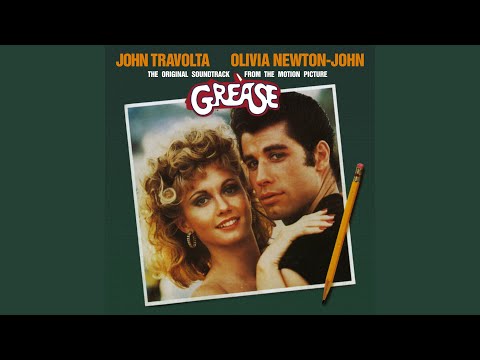

→ More from the 1970s File
View all 1970s hits →




Keep digging