The 1970s File Feature
Dancin' 'round And 'round
Olivia Newton-John and "Dancin' 'round And 'round": A Pop Footnote from the Totally Hot Era By the autumn of 1979, Olivia Newton-John had completed one of th…
01 The Story
Olivia Newton-John and "Dancin' 'round And 'round": A Pop Footnote from the Totally Hot Era
By the autumn of 1979, Olivia Newton-John had completed one of the most remarkable commercial ascents in contemporary pop music. The previous year had seen her transform from a dependable adult-contemporary star into a full-fledged cultural phenomenon, propelled by the blockbuster success of the Grease soundtrack and the accompanying film. The record-breaking reception of that project, combined with the deliberate image reinvention she undertook on the Totally Hot album, placed her at a crossroads that few artists navigate gracefully. "Dancin' 'round And 'round" arrived at precisely this transitional moment, entering the Billboard Hot 100 on September 22, 1979, at position 84 before climbing slightly to its peak of number 82 the following week.
The Totally Hot album, released in November 1978, was conceived as a conscious break from the wholesome, country-tinged pop that had defined Newton-John's early American career. Producers John Farrar and Bruce Welch, both longtime collaborators, helped engineer a sound that incorporated synthesizers, driving rhythms, and a harder sonic edge intended to signal a more mature, assertive persona. The album cover, on which Newton-John appeared in black leather and a more overtly glamorous presentation, became a talking point in the music press and underscored the deliberate nature of the shift. In commercial terms the gamble largely paid off: the album produced the number-one hit "A Little More Love" and reached the top five on the Billboard 200.
"Dancin' 'round And 'round" was among the later singles drawn from Totally Hot, and its chart performance reflected the natural diminishing returns of extended album campaigns. By mid-1979, radio programmers had moved through the album's strongest material, and newer releases were competing for attention in an increasingly crowded pop landscape. Disco was at its commercial peak even as backlash against the genre was beginning to mobilize, and the broader pop environment was fragmented across rock, soul, emerging new wave, and the ongoing soft-rock mainstream where Newton-John had traditionally found her audience.
John Farrar, the Australian musician and producer who had written and produced many of Newton-John's biggest successes, contributed to the track's construction in ways that were consistent with the album's overall sonic philosophy. The song carried the danceable energy implied by its title while remaining squarely within the polished, radio-friendly template that had always characterized Newton-John's releases. It was professional, melodically accessible, and technically accomplished, yet it lacked the distinctive hook or emotional urgency that separated her landmark singles from more routine album material.
The brief two-week chart run placed "Dancin' 'round And 'round" among the more modest entries in Newton-John's Hot 100 catalog. For context, she had scored a number-one position with "You're The One That I Want" (with John Travolta) and topped the chart again with "Physical" in 1981, a run that made the fleeting appearance of this particular single all the more notable in retrospect. The record industry of 1979 was still structured around the concept of album artists releasing multiple singles per project, and not every release was expected to be a blockbuster. "Dancin' 'round And 'round" served its function as a promotional vehicle while the album cycle wound toward its conclusion.
Newton-John's position in the pop mainstream at this juncture was simultaneously powerful and precarious. The Grease-era saturation had made her one of the most recognizable names in popular music worldwide, but it had also created audience expectations that were difficult to manage. Some critics who had previously championed her folk-country accessibility viewed the Totally Hot reinvention skeptically, while new wave and rock audiences were unlikely to embrace a figure so closely associated with mainstream pop product regardless of how the presentation was adjusted.
Radio promotion for the single was handled through MCA Records in the United States, the label that had distributed her output throughout the decade. The promotional apparatus was substantial, but the competitive environment of fall 1979 meant that dozens of equally well-resourced singles were competing for the same limited radio slots. Michael Jackson, the Doobie Brothers, and an array of disco acts were all active on the charts simultaneously, and securing sustained rotation required either an exceptional record or exceptional timing.
In the decades since its release, "Dancin' 'round And 'round" has occupied the particular space reserved for deep cuts from celebrated catalogs: acknowledged by devoted fans, occasionally surfacing in retrospective compilations of the Totally Hot era, but rarely cited as representative of Newton-John's creative or commercial peak. That distinction belongs to the handful of singles that bracketed it on either side. Nevertheless, the song represents a genuine artifact of late-1970s pop production, capturing the particular sound and sensibility of an era when synthesizers were being integrated into mainstream pop without yet displacing the organic arrangements that had preceded them.
Newton-John would go on to record "Physical" in 1981, a song that dominated the charts for ten consecutive weeks and reinvented her image a second time, demonstrating that brief chart disappointments were simply the natural rhythm of a long and resilient career. "Dancin' 'round And 'round" stands as evidence that even at the height of her commercial powers, not every release found its moment.
02 Song Meaning
The Meaning of "Dancin' 'round And 'round" by Olivia Newton-John
"Dancin' 'round And 'round" by Olivia Newton-John belongs to a recognizable tradition in late-1970s pop songwriting: the dance-floor invitation that functions simultaneously as romantic metaphor and straightforward celebration of physical movement. The title itself encodes the song's central conceit, suggesting both the literal act of dancing in circles and the more figurative notion of emotional orbiting, the way two people in an uncertain romantic situation can keep returning to the same point without making progress toward genuine connection or commitment.
At its most straightforward reading, the song invites its subject to join in the pleasure of dancing, presenting the dance floor as a space of liberation and shared joy. This was an extremely common theme in 1979, when disco culture had made dancing itself a subject of intense cultural focus and when pop songs about dancing carried meanings that extended beyond mere physical activity. To dance in the late 1970s was to participate in a communal hedonism that had political and social dimensions, particularly for communities that had found belonging in the dance-floor environments of the era.
Newton-John's vocal delivery adds warmth and accessibility to whatever subject matter the lyric addresses. Her voice at this period in her career carried a quality of genuine invitation rather than mere performance, and the production choices made by John Farrar emphasized this quality by keeping the arrangement supportive rather than overwhelming. The listener is drawn in rather than confronted, which was entirely consistent with Newton-John's broader artistic persona throughout the Totally Hot period.
The circular structure implied by the title also invites interpretation as a commentary on romantic indecision or habitual patterns in relationships. Dancing in circles is not necessarily going nowhere: it can represent a sustained pleasure in the present moment, a refusal to move toward conclusion because the current state of circling is itself desirable. This reading positions the song as emotionally more sophisticated than its danceable surface might initially suggest, though it would be an overreading to assign the track a weight of meaning it probably does not claim.
Within the context of the Totally Hot album, the song's meaning is also shaped by its surroundings. The album as a whole was concerned with projecting an image of a more confident, physically assertive woman than the one who had recorded Newton-John's earlier country-pop material. Songs about dancing, about bodily pleasure, and about confident romantic engagement were consonant with this project, and "Dancin' 'round And 'round" contributed to the album's overall argument about who Olivia Newton-John was in this new phase of her career.
The broader cultural context of 1979 pop music reinforced these meanings. Audiences were accustomed to hearing songs in which dancing served as a proxy for romantic and sexual possibility, and the conventions of the form were well established enough that listeners could decode the layers of meaning without conscious effort. A song about dancing was always partly about something else, and partly just about dancing, and the pleasure of such recordings lay in the comfortable navigation of both registers simultaneously.
Critical reception of the track, while limited given its modest chart performance, tended to treat it as competent album filler rather than a statement of artistic ambition. This assessment was probably fair in a narrow commercial sense while missing the degree to which even apparently lightweight pop material carries cultural meaning when it comes from an artist of Newton-John's visibility and symbolic significance at that particular moment in music history.
The song endures in the memory of devoted Newton-John fans as an honest document of its time and of an artist in transition, using the universal language of dancing to navigate the personal and professional changes that defined one of the most consequential periods of her remarkable career.
→ More from Olivia Newton-John
View all Olivia Newton-John hits →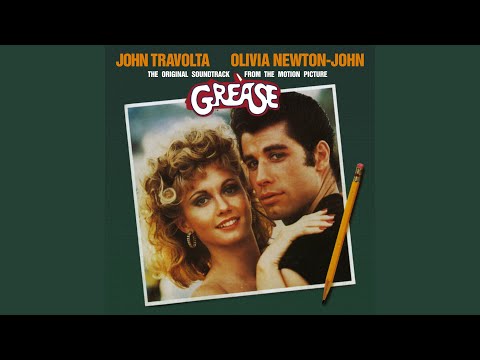


→ More from the 1970s File
View all 1970s hits →




Keep digging