The 1970s File Feature
Knock Knock Who's There
"Knock Knock Who's There" — Mary Hopkin From Pontardawe to the World Stage The story of Mary Hopkin is one of the most remarkable in British pop history, and…
01 The Story
"Knock Knock Who's There" — Mary Hopkin
From Pontardawe to the World Stage
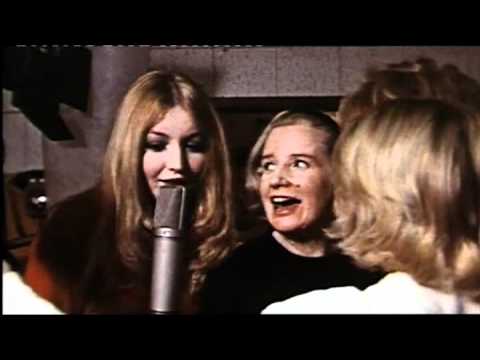
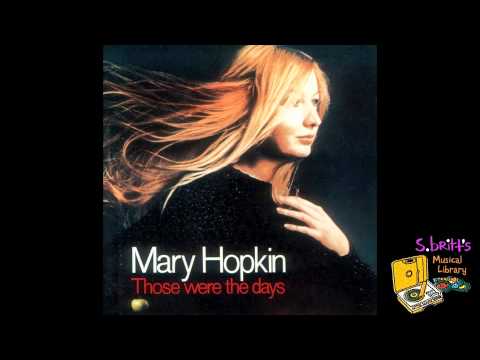
The story of Mary Hopkin is one of the most remarkable in British pop history, and it begins not in London or Liverpool but in a small town in Wales where a young woman with a pristine soprano voice was discovered on a British television talent show. Mary Hopkin caught the attention of Twiggy, the model and cultural icon of the late 1960s, who brought her to the notice of Paul McCartney. McCartney signed her to Apple Records in 1968, produced her debut single "Those Were the Days," and watched it become a transatlantic smash. In the years that followed, Hopkin navigated the complicated waters of being a young artist managed within the orbit of the most famous band in the world, maintaining her own artistic sensibility while working within the commercial requirements of the Apple Records system.
Eurovision and Its Aftermath
"Knock Knock Who's There" has a specific origin story that sets it apart from most pop singles of its era. The song was the United Kingdom's entry in the 1970 Eurovision Song Contest, held in Amsterdam. Hopkin finished second in the competition, a result that caused considerable disappointment at the time given how strong the performance was, but the song's melodic construction and Hopkin's delivery gave it enough independent life that it moved beyond Eurovision context and became a genuine pop release. Eurovision had a complicated relationship with British pop credibility in 1970, since the contest was seen by the rock-oriented taste-makers of the era as fundamentally lightweight, but Hopkin's voice was capable of elevating almost any material beyond its apparent genre limitations.
Reaching the American Market
The American chart story of "Knock Knock Who's There" is modest by the standards of Hopkin's earlier Apple Records success. The track debuted on the Billboard Hot 100 on December 9, 1972 at position 97, climbing slowly through the holiday season before reaching its peak of 92 on December 23, 1972, and spending 4 weeks on the chart total. The timing, arriving in December, placed it in competition with the seasonal avalanche of Christmas-themed material and the year-end chart activity that compressed competition for radio time. That context makes the chart placement more explicable; a lovely pop single from a British singer associated with an earlier moment in pop history was always going to face a steep climb in the Christmas marketplace.
Hopkin's Voice and the Apple Records Era
What makes Mary Hopkin's recordings from this period worth returning to is the quality of the voice itself. She possessed a clarity and naturalness of tone that was rare even in an era that produced many exceptional British female vocalists. Her soprano had warmth without vibrato excess, a quality that made her recordings sound both technically accomplished and emotionally transparent. The Apple Records releases, produced variously by McCartney, Mickie Most, and others, showcase different facets of her talent, but they share a common quality: her voice is always the clearest thing in the room, and it commands attention without effort. "Knock Knock Who's There" is a demonstration of that quality applied to a piece of Eurovision pop craftsmanship.
A Legacy Larger Than the Charts
Mary Hopkin is not primarily remembered for her chart statistics, and "Knock Knock Who's There" is not the track that defines her career. That distinction belongs to "Those Were the Days," her debut, which is one of the best-remembered records of 1968. But this later single illustrates something important about her trajectory: she continued making records of genuine quality through the early 1970s even as the commercial context shifted around her. The Apple Records period produced a body of work that rewards careful listening, and Hopkin's contributions to it stand up remarkably well. Press play on this track and hear what careful craftsmanship and a world-class voice sound like in combination on a piece of early-1970s European pop.
"Knock Knock Who's There" — Mary Hopkin's singular moment on the 1970s charts.
02 Song Meaning
"Knock Knock Who's There" — Themes and Legacy
The Invitation and What Lies Behind the Door
The title carries a structural playfulness that is characteristic of early-1970s British pop at its most charming. A knock at the door is one of the oldest theatrical devices in drama, carrying with it the promise of revelation, the question of who or what is waiting on the other side. In the context of a love song, the metaphor extends naturally: the song's narrator is issuing an invitation, asking the romantic object to announce themselves, to cross the threshold and enter the emotional space being offered. That gesture of openness and vulnerability is at the heart of the song's appeal, and Mary Hopkin's vocal delivery communicates it with complete sincerity rather than coyness. The invitation feels genuine.
Eurovision Craft and Its Dismissal
The Eurovision Song Contest has long occupied an ambiguous position in the broader landscape of popular music criticism. In 1970, when "Knock Knock Who's There" represented the United Kingdom in Amsterdam, the contest was already seen by rock critics and the taste-making press as a bastion of lightweight pop commerce, the antithesis of the serious album-oriented music that was commanding critical attention at the time. This reputation has always been somewhat unfair, since the contest has consistently produced well-crafted melodic pop that serves its audience with efficiency and sometimes genuine artistry. The song demonstrates that Eurovision craft at its most appealing: a clear melodic line, an accessible emotional premise, and a production that lets the vocalist carry the weight without unnecessary ornamentation.
The Voice as Emotional Truth-Teller
One of the consistent critical observations about Mary Hopkin's Apple Records recordings is that her voice functions as a kind of emotional transparency device. Whatever the material throws at her, her soprano communicates the emotional content directly to the listener without the mediation of studied technique or performed affect. This quality makes songs that might otherwise seem slight feel emotionally substantial, because the instrument delivering them is incapable of dishonesty. For listeners in 1972 who encountered this track on the radio or via the British pop import market, the experience would have been of a voice that seemed to be speaking directly to them rather than performing at them. That intimacy is rare and valuable in pop music.
Pop Music's Relationship With Simplicity
The early 1970s was a period of significant formal experimentation in popular music, with progressive rock expanding compositional ambitions and singer-songwriters deepening lyrical complexity. In that context, a song as formally simple as "Knock Knock Who's There" could easily be dismissed as naive or commercially cynical. The more honest assessment is that formal simplicity in the hands of a great vocalist is not a limitation but a choice, and the choice here was well-made. The directness of the song's emotional appeal is precisely what distinguishes it from the more labored emotional performances of the era. Complexity for its own sake was abundant in 1970 and 1972; emotional simplicity, communicated with this level of vocal grace, was considerably rarer.
Hopkin's Place in the Pop Canon
Mary Hopkin's career was relatively brief in commercial terms, concentrated in a few years at the turn of the decade. But her recordings have maintained a steady presence in the consciousness of serious pop listeners who value vocal quality above other considerations. Her Apple Records catalog, which includes this single alongside "Those Were the Days," "Goodbye," and the Earth Song/Ocean Song album, represents a coherent artistic statement made under extraordinary circumstances, surrounded by the most famous band in the world during their most turbulent final period. That she maintained her own voice, literally and figuratively, throughout that experience says something significant about her character as an artist.
→ More from Mary Hopkin
View all Mary Hopkin hits →
→ More from the 1970s File
View all 1970s hits →




Keep digging