The 1960s File Feature
Those Were The Days
Those Were the Days: Mary Hopkin, Paul McCartney, and the Song That Launched Apple Records "Those Were the Days" was not merely a hit single in 1968. It was …
01 The Story
Those Were the Days: Mary Hopkin, Paul McCartney, and the Song That Launched Apple Records
"Those Were the Days" was not merely a hit single in 1968. It was the commercial foundation on which Apple Records attempted to build a new kind of music industry, and its extraordinary success across international markets demonstrated that the Beatles' collective commercial instincts extended to their business ventures as well as their own recordings. The song's story involves a Welsh folk singer discovered on a television talent program, a melody with roots in pre-Revolutionary Russia, a production overseen by one of the most famous musicians in the world, and a chart performance that rivaled the Beatles themselves at their commercial peak.
The melody of "Those Were the Days" is adapted from a Russian folk song, "Dorogoi Dlinnoyu," which has been dated to the late nineteenth century. The song was brought to the English-speaking world by Gene Raskin, an American folk singer and playwright, who wrote English lyrics and performed it in folk clubs in London during the early 1960s. It was in these settings that the melody became known to a generation of British folk musicians, including those who would eventually bring it to the attention of Paul McCartney.
Mary Hopkin had come to McCartney's attention through a recommendation from the model Twiggy, who had seen Hopkin perform on the British talent program Opportunity Knocks. McCartney produced the recording personally, making specific decisions about arrangement and vocal treatment that shaped the final sound considerably. He surrounded Hopkin's remarkably pure and unaffected voice with a folk-tinged production that included acoustic guitars, mandolin, and other traditional instruments, creating a sound that felt simultaneously contemporary and timeless. The single was released on Apple Records in August 1968, making it one of the first major releases on the Beatles' newly founded label.
The commercial response was immediate and overwhelming. In the United Kingdom, "Those Were the Days" reached number one and held the position for six weeks, an exceptional chart run for a debut single by a new artist. The song displaced the Beatles' own "Hey Jude" from the top of the charts in some markets, a remarkable demonstration of Apple Records' capacity to compete with itself. In the United States, the single climbed to number two on the Billboard Hot 100, held from the top position but spending weeks in the upper reaches of the chart and achieving sales that made it one of the biggest international hits of the autumn of 1968.
The song's appeal transcended the usual pop demographic in ways that complicated any simple account of its success. It was not primarily a youth record, though young people certainly bought and enjoyed it. Its nostalgic subject matter, the remembering of a carefree youth and the acknowledgment that those days have passed, gave it an emotional resonance for older listeners who might not typically be purchasing pop singles. Radio programmers found that it worked across the easy listening and pop formats simultaneously, and it received airplay in markets that did not typically share much programming overlap.
Hopkin's vocal performance was the key to the record's effectiveness. She sang with a clarity and emotional directness that was striking in the context of 1968 pop, when many female vocalists were adopting more elaborate and production-heavy approaches. McCartney's production decision to let her voice stand relatively unadorned, supported but not overwhelmed by the arrangement, proved correct: the simplicity of the vocal against the carefully constructed backing created a counterpoint that was more moving than either element would have been alone. Hopkin was nineteen years old when the recording was made, and her youth gave the nostalgic lyric an additional layer of poignancy, suggesting that even the very young could feel the pull of a past that had already slipped away.
Apple Records used the success of "Those Were the Days" as evidence that the label could function as a genuine major commercial force and not merely a vanity project for the Beatles. The label's early roster included James Taylor, Jackie Lomax, and the Modern Jazz Quartet, alongside Hopkin, and the success of her debut single helped fund and sustain these more artistically ambitious signings. The label sold millions of copies of the single in markets across Europe, North America, Australia, and Asia, confirming that its distribution infrastructure was capable of competing with the established majors.
The cultural footprint of "Those Were the Days" proved durable. The song was released in multiple language versions across different markets, with Hopkin recording in French, German, Italian, Spanish, and Hebrew, among others. These international recordings extended the song's reach into markets where the English version might not have been commercially viable and demonstrated Hopkin's versatility as a performer. The song became one of the best-selling singles of 1968 across multiple countries and remained a fixture of easy listening radio for years after its initial release. It is now regarded as one of the defining recordings of Apple Records' early period and one of the most successful productions of McCartney's career outside of his work with the Beatles.
02 Song Meaning
The Grammar of Nostalgia: What "Those Were the Days" Means
"Those Were the Days" is organized around the experience of retrospection, the act of looking back at a period of life that felt abundant and free, from a vantage point that is by implication more constrained and complicated. The narrator and the friend she addresses shared a time when the future seemed unlimited, when nights lasted until dawn, when dreams were treated as facts about what was coming rather than fantasies about what would never arrive. The song maps the geography of that lost time with precision and tenderness.
What distinguishes the lyric from simple sentimentality is its clarity about the nature of what has been lost. The song does not pretend that those days were objectively better in material terms, nor does it argue that the present is worse than the past. It makes a more precise claim: that a particular quality of openness and possibility, native to youth and inexperience, cannot be recovered once it is gone. This is not a political or historical argument but a psychological one, about the relationship between consciousness and time. The days were those days because the people living them believed in a particular way about the future, and that belief cannot be recovered once experience has complicated it.
Mary Hopkin's vocal delivery gave the nostalgia an unusual emotional texture. She was a teenager singing about looking back on a past she had not yet fully lived, which created a curious doubling: the nostalgia was both genuine and anticipated, felt in the present as a premonition of future loss as much as a memory of actual experience. This quality made the record accessible to listeners of all ages, because each could find in it a reflection of their own relationship to a time that had passed or was passing.
The song's melodic origins in Russian folk music gave it a modal quality that sets it apart from contemporary Western pop, a slightly antique tonal flavor that reinforces the lyric's backward-looking perspective. The music sounds like it comes from a different time as well as a different place, which is precisely appropriate for a song about the irreversibility of the past. McCartney's production decision to foreground these folk elements rather than modernize them reflected a sophisticated understanding of how arrangement can serve lyrical meaning.
The fact that the song became an international hit simultaneously in its English version and in numerous other language editions suggests that its subject matter was genuinely universal rather than culturally specific. Nostalgia for a time of youthful freedom is an experience that translates across languages and cultures because it describes something fundamental about human development: the movement from the open possibility of youth into the more defined and limited space of adult life. The transition is universal even as the specific content of what is lost varies from person to person and culture to culture.
For Hopkin's brief but significant recording career, the song established a template that would be difficult to follow. The combination of vocal purity, emotional directness, and production restraint that McCartney had found for her on "Those Were the Days" was a delicate formula, and subsequent recordings found it difficult to replicate the same quality of feeling. The song stands as her defining artistic achievement, a record that captured something real about a particular emotional experience and communicated it with unusual grace and economy. Its staying power in the cultural imagination is a testament to the quality of both the original melody and the 1968 production that gave it new life.
→ More from Mary Hopkin
View all Mary Hopkin hits →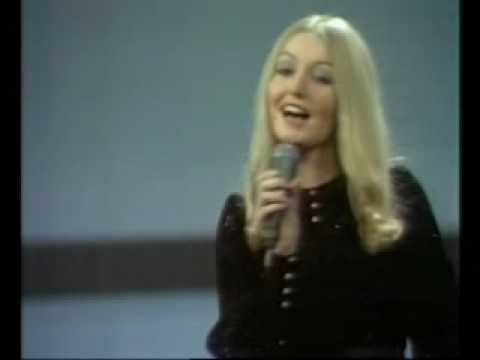
→ More from the 1960s File
View all 1960s hits →




Keep digging