The 1970s File Feature
What's Your Name
"What's Your Name" — Lynyrd Skynyrd on the Road and on the Charts Southern Rock's Swaggering Dispatch from the Tour Bus There is a particular kind of rock so…
01 The Story
"What's Your Name" — Lynyrd Skynyrd on the Road and on the Charts
Southern Rock's Swaggering Dispatch from the Tour Bus
There is a particular kind of rock song that doubles as autobiography, and "What's Your Name" by Lynyrd Skynyrd is one of the most entertainingly honest examples the genre ever produced. Picture late 1977: the band from Jacksonville, Florida is navigating the complicated aftermath of real tragedy, pushing through a period of enormous grief while still fulfilling their obligations as one of the biggest live draws in American rock. The song appeared on Street Survivors, the album that would become forever haunted by its release date, just three days before the October 1977 plane crash that killed vocalist Ronnie Van Zant and two other band members. The chart run of "What's Your Name" thus took place in the shadow of catastrophe, but the record itself is pure, swaggering Southern rock vitality.
The Album That Changed Everything Before Anything Could
Street Survivors was already completed and in stores when the Convair CV-240 aircraft carrying the band went down in Mississippi. The album's original cover artwork, which showed the band members surrounded by flames, was quickly pulled from shelves and replaced with a more straightforward band photograph. None of this could change what was actually in the grooves: a record that showed Lynyrd Skynyrd in full creative command, incorporating elements of blues, country, and hard rock into a signature sound that was entirely their own. "What's Your Name" was among the album's highlights, a cheeky, confident rocker built around the band's fundamental strengths.
The track's subject matter is blunt and unashamed: the road, the women, the hotel rooms, and the casual encounters that form the texture of a touring band's existence. Van Zant delivers the lyric with total conviction, the kind of natural storytelling ease that made him one of rock's most compelling vocalists. The twin-guitar interplay that had always defined the band's live and studio sound is in full evidence, with the wall of guitars providing a context in which the story being told feels entirely plausible and three-dimensional.
Climbing the Charts Through Tragedy
The song debuted on the Billboard Hot 100 on December 3, 1977, entering at number 83. The climb over the following weeks was steady despite the overwhelming sadness that surrounded the band's situation: number 73, then 62, then 52, with the record ultimately reaching its peak position of number 13 on March 11, 1978, after eighteen weeks on the chart. That extended run was a testament to the song's genuine appeal, but also to the way the public responds to art made by musicians who are no longer with us. The record became a kind of tribute even as it demonstrated exactly the exuberant aliveness that the crash had extinguished.
Van Zant's Legacy in Every Groove
Ronnie Van Zant was 29 years old when he died. His death cut off one of rock's most original voices at a moment when that voice was clearly still developing, still finding new registers and new stories to tell. "What's Your Name" stands as evidence of where he was at that point: relaxed, confident, funny, and fully in control of his considerable gifts. The song's light touch is itself an artistic choice; Van Zant knew how to play a song for laughs without letting it become trivial, how to be charming without being shallow. That balance is harder to achieve than it sounds, and hearing it in the context of his premature death gives the track an additional emotional dimension that nothing in the lyric itself actually intends.
Skynyrd Enduring Beyond the Crash
Lynyrd Skynyrd eventually reformed with Ronnie's brother Johnny Van Zant on vocals, and subsequent generations have discovered the catalog through classic rock radio, films, and one of the most instantly recognizable song catalogs in American music. "What's Your Name" remains a fan favorite because it captures the road-dog energy that was always central to the band's appeal: the sense that these were musicians who lived their music rather than simply performing it, who drew their material from direct experience rather than abstract imagination. Eighteen weeks on the Hot 100 and a peak of number 13 mark it as a genuine commercial success. But the track's deeper value is what it preserves: Ronnie Van Zant, fully alive, telling a story on his own terms.
Put it on and let the twin guitars take you somewhere dusty and alive. This is Southern rock at its most irresistible.
"What's Your Name" — Lynyrd Skynyrd's singular moment on the 1970s charts.
02 Song Meaning
Life on the Road, Told Straight — The Meaning of "What's Your Name" by Lynyrd Skynyrd
Honesty as Rock's Highest Virtue
Rock and roll has always trafficked in mythology, but the best Southern rock was built on something more grounded: the insistence on telling the truth about how life actually felt from inside it. "What's Your Name" belongs firmly to that tradition. The lyric makes no attempt to elevate or glamorize its subject matter; it simply documents, with cheerful candor, the experience of being a touring musician in an era when such a life meant months away from home and the kind of transient human connections that the road makes inevitable. There is no shame in the song's worldview and no sentimentality either. It reports rather than judges, and that documentary quality is precisely what makes it feel authentic.
The Tour Bus as Cultural Territory
Southern rock's geography was always significant. These were bands that came from specific places, the American South with its own musical traditions, social textures, and cultural attitudes, and they wrote about the experience of moving through the broader country from that rooted perspective. When Lynyrd Skynyrd puts a character in a hotel room in some unnamed American city, the specificity of the situation grounds what could otherwise be generic. The song's world is recognizable not because every listener has lived it, but because the music and the vocal delivery make it vividly present. You feel the fluorescent hotel corridor, the unfamiliar city sounds outside the window.
Gender, Power, and the Road Narrative
Songs about touring musicians and the women they meet are as old as rock itself, and they carry baggage that honest cultural analysis cannot ignore. "What's Your Name" participates in a tradition that reflects the gender dynamics of its era with some fidelity, presenting the touring musician's perspective without complication or critique. The song's cultural power comes precisely from its unreflective candor: it is not interested in examining its own assumptions but in presenting a slice of experience as directly as possible. Listeners in 1977 and 1978 received it as what it was: a story from the road, told by someone who had clearly lived it, with enough musical wit and energy to make the telling irresistible.
Ronnie Van Zant's Storytelling Gift
What separates "What's Your Name" from a hundred similar rock road songs is the personality of its narrator, which is to say the personality of Ronnie Van Zant. Van Zant had an extraordinary ability to invest casual, conversational language with emotional weight, to make you feel that the person telling the story was speaking directly to you rather than performing for a crowd. This quality, so difficult to manufacture and so impossible to fake, runs through all of his best work. In this track it produces something close to comic charm: the story is funny, the narrator is self-aware enough to be in on the joke, and the music swings with the confidence of a band that knows exactly how good they are.
What Endures
The track's continued appeal rests on its fundamental human honesty. Life on the road is a specific experience, but loneliness, desire, the search for connection in unfamiliar places, and the particular freedom of existing temporarily outside your ordinary life are not specific at all. They are as universal as any human experience gets. Lynyrd Skynyrd in 1977 found those universal notes inside a very particular story and played them loud enough that nearly five decades later the record still rings true. That is the definition of a song that has earned its place in history.
→ More from Lynyrd Skynyrd
View all Lynyrd Skynyrd hits →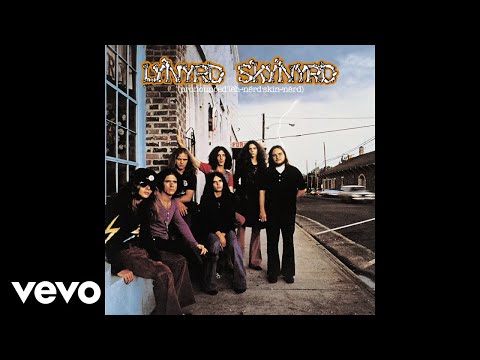




→ More from the 1970s File
View all 1970s hits →




Keep digging