The 1970s File Feature
Double Trouble
Double Trouble — Lynyrd Skynyrd (1976) By February 1976, Lynyrd Skynyrd had already established themselves as the standard-bearers of Southern rock, a genre …
01 The Story
Double Trouble — Lynyrd Skynyrd (1976)
By February 1976, Lynyrd Skynyrd had already established themselves as the standard-bearers of Southern rock, a genre they had helped define with muscular guitar interplay, hard-living imagery, and a swagger rooted in the American South's musical traditions. Their fourth studio album, "Gimme Back My Bullets," arrived in that context carrying a deliberate message: the band had no intention of softening their approach or chasing commercial trends. "Double Trouble" was one of the tracks that made that declaration most forcefully.
The album was recorded at Studio One in Doraville, Georgia, the same facility associated with Atlanta Rhythm Section recordings, giving the sessions a Southern studio pedigree consistent with the band's identity. Production duties were handled by Tom Dowd, the legendary engineer and producer whose credits stretched back to early Atlantic Records sessions and forward through Allman Brothers and Eric Clapton records. Dowd's ability to capture a live band's energy without sanitizing it was exactly what Lynyrd Skynyrd needed, and his work on "Gimme Back My Bullets" gave the album a tighter, more direct sound than some of the band's more sprawling earlier work.
Lynyrd Skynyrd in 1976 featured the core lineup of Ronnie Van Zant on lead vocals, Gary Rossington and Allen Collins on guitars, Leon Wilkeson on bass, Billy Powell on keyboards, and Artimus Pyle on drums. The band had recently undergone lineup changes, and Van Zant was navigating the challenge of maintaining the group's momentum while also dealing with internal pressures. "Gimme Back My Bullets" was partly a response to critics who felt the band's previous double album, "One More from the Road," had diluted their edge. The title track was a defiant declaration of intent, and "Double Trouble" carried the same combative energy.
The song itself addressed the experience of facing compounded adversity, the kind of situation where problems arrive not individually but in clusters. It fit naturally into Lynyrd Skynyrd's thematic vocabulary, which frequently explored resilience, hardship, and the refusal to be broken by circumstance. Van Zant's vocal delivery on the track was characteristically unflinching, projecting a toughness that felt earned rather than performed.
MCA Records released "Gimme Back My Bullets" in February 1976, and the album performed respectably on the charts, though it did not match the commercial peak of "Second Helping" from two years earlier. "Double Trouble" was not released as a standalone single in the traditional sense, functioning instead as an album cut that demonstrated the band's consistency and range as writers and performers. The album reached the upper half of the Billboard 200, and its reception confirmed that Lynyrd Skynyrd retained a substantial and loyal audience even without a blockbuster single driving sales.
The band's touring operation was central to their commercial viability during this period. Lynyrd Skynyrd was one of the most active live acts in rock music, and their road presence converted album listeners into devoted fans who would follow the band through multiple release cycles. "Double Trouble" and the broader "Gimme Back My Bullets" album benefited from that ecosystem, getting exposure on album-oriented rock radio and performing well in markets where the band had strong touring relationships.
The tragic plane crash of October 1977, which killed Ronnie Van Zant, guitarist Steve Gaines, and backing vocalist Cassie Gaines, cast a retrospective shadow over everything the band recorded during the preceding years. "Double Trouble" and the "Gimme Back My Bullets" album came to be heard differently after that disaster, as documents of a band operating with full creative force in the years immediately before it was ended by catastrophe. The song's themes of resilience and facing down trouble took on additional resonance in that context.
Southern rock as a genre was at something of a crossroads in 1976. The Allman Brothers Band had gone through their own turbulences, and the genre was facing increasing competition from arena rock and the early stirrings of punk and new wave. Lynyrd Skynyrd's decision to double down on their established approach with "Gimme Back My Bullets" rather than experiment or modernize was, in retrospect, both commercially sensible and artistically honest. "Double Trouble" embodied that choice, delivering exactly what the band's audience expected at a level of quality that justified the consistency.
In the decades since its release, "Double Trouble" has remained a valued track in the Lynyrd Skynyrd catalog, particularly among fans who appreciate the band's album-oriented work rather than only their best-known radio hits. It appears on retrospective compilations and has been part of the setlists that the reconstituted version of the band has performed in subsequent decades. Its place in the broader "Gimme Back My Bullets" context makes it an essential piece of the Lynyrd Skynyrd story at one of the most charged moments in Southern rock history.
02 Song Meaning
Resilience and Defiance in Lynyrd Skynyrd's "Double Trouble"
"Double Trouble" operates within the emotional and thematic territory that Lynyrd Skynyrd made distinctly their own during the 1970s: the experience of being battered by circumstances and choosing to stand firm rather than yield. The song's central subject is compounded adversity, the condition of facing not one challenge but two or more simultaneously, a situation that tests character in ways that single problems do not. Ronnie Van Zant approached this subject with the blunt directness that characterized his best writing, refusing sentimentality in favor of a hard-eyed acknowledgment of how difficult life could actually be.
The song fits naturally within a broader pattern in Southern rock of portraying working-class or hard-living experience without romanticizing or softening the rough edges. Where some rock music of the era dealt in escapism or fantasy, Lynyrd Skynyrd songs like "Double Trouble" tended to look directly at hardship and ask what a person was made of when things fell apart. The answer the song implies is persistence, not because persistence is glamorous but because it is the only viable response when trouble compounds.
Within the context of the "Gimme Back My Bullets" album, "Double Trouble" reinforced the record's overall combative posture. The album title itself was a metaphor for reclaiming commercial and critical momentum, and the songs on it were written and recorded with a sharpness that responded to perceptions that the band had grown complacent. "Double Trouble" embodied that sharpness, arriving with a sense of urgency that felt rooted in real frustration rather than manufactured attitude.
The song also reflects the particular social geography that Lynyrd Skynyrd inhabited and described throughout their catalog. The American South of the early and mid-1970s was a region with its own economic pressures, cultural tensions, and social dynamics, and the band's music consistently drew on that environment for both its sonic palette and its lyrical concerns. The troubles described in the song are not abstract; they have the texture of lived experience, which gave the track a credibility that resonated with the band's core audience.
Van Zant's persona as a vocalist was inseparable from the song's impact. His delivery carried an authority that came from sounding like someone who had actually encountered the situations he was singing about, a quality that distinguished him from more theatrical or performative rock vocalists of the period. When he addressed adversity in "Double Trouble," the listener's instinct was to believe him, which intensified the emotional stakes of the song considerably.
In retrospect, knowing what happened to the band in October 1977, the themes of trouble and resilience in "Double Trouble" take on a quietly painful resonance. The song becomes part of a body of work that documented a band living and creating at full intensity during a period that turned out to be tragically finite. That retrospective context does not change what the song meant in 1976, but it adds a layer of meaning that listeners cannot fully separate from the music when they return to it today. The defiance in the track becomes, with historical distance, something closer to elegy.
The guitar interplay between Gary Rossington and Allen Collins that characterized Lynyrd Skynyrd's sound gave "Double Trouble" its musical backbone, and that sound was itself a statement of values: raw, technically accomplished, and rooted in blues traditions that the band wore openly as an influence. The music reinforced what the lyrics declared, producing a coherence between form and content that was one of the band's most reliable strengths.
→ More from Lynyrd Skynyrd
View all Lynyrd Skynyrd hits →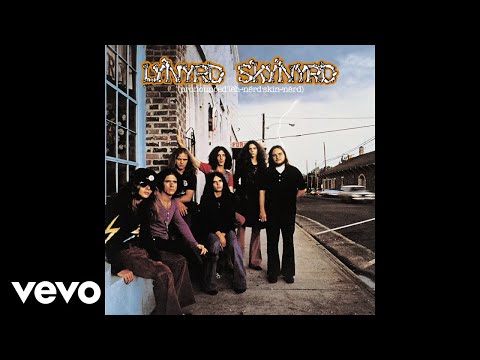



→ More from the 1970s File
View all 1970s hits →




Keep digging