The 1970s File Feature
It Sure Took A Long, Long Time
It Sure Took A Long, Long Time — Lobo's Patient Climb Up the 1970s Charts There was something almost counterintuitive about the success of soft rock in the e…
01 The Story
"It Sure Took A Long, Long Time" — Lobo's Patient Climb Up the 1970s Charts
There was something almost counterintuitive about the success of soft rock in the early 1970s. The era had opened with the raw emotional energy of Woodstock still reverberating through the culture, and yet by 1972 and 1973 the radio was filling steadily with something quieter, more personal, more acoustic. Listeners who had spent the late 1960s inside the communal intensity of rock were turning, in significant numbers, toward music that addressed them individually rather than collectively, songs that felt like they were being sung directly into your ear rather than broadcast to a crowd. Lobo was one of the artists who understood this shift intuitively, and "It Sure Took A Long, Long Time" arrived at the precise moment when that understanding translated most naturally into chart success.
The Artist Behind the Name
Lobo was the recording name of Roland Kent Lavoie, a Florida-born singer-songwriter who had spent years working in the music industry before his solo career took hold. His earliest hits, "Me and You and a Dog Named Boo" in 1971 and "I'd Love You to Want Me" in 1972, had established a clear identity: gentle, melodic, lyrically direct songs about love and everyday emotional life, performed with an acoustic guitar sensibility even when the production added orchestral elements. His peak commercial moment came with "I'd Love You to Want Me," which reached number 2 on the Hot 100 and confirmed him as a significant presence in the soft rock format. "It Sure Took A Long, Long Time" followed that success with the momentum of an established hit-maker behind it.
The Sound of 1973 Soft Rock
The production on the track sits comfortably in the early-seventies soft rock aesthetic: an acoustic core with sympathetic orchestration, Lavoie's voice occupying a warm, unhurried register that suits the lyrical patience the title announces. There is nothing urgent in the instrumental arrangement, and that unhurriedness is a deliberate choice, matching the song's emotional content with an appropriately relaxed sonic frame. This was a sound that AM radio in 1973 had developed an almost reflexive appetite for, and Lobo fed that appetite with considerable consistency.
Eleven Weeks and a Peak at Number 27
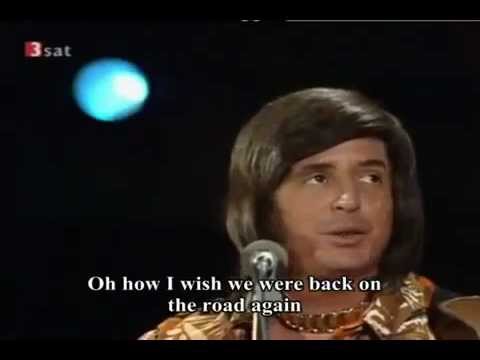
"It Sure Took A Long, Long Time" debuted on the Billboard Hot 100 on April 7, 1973, entering at number 85 and beginning a steady, methodical climb upward. Week by week it moved: 85, 64, 53, 45, 36, working its way through the chart with the same patient momentum its title describes. The single reached its peak position of number 27 on May 26, 1973, a respectable top-30 showing that kept Lobo's commercial presence intact following his previous successes. The record spent eleven weeks on the chart in total, a solid run that demonstrated real staying power with radio audiences.
Competition in the Spring of 1973
The Hot 100 in the spring of 1973 was a genuinely eclectic document of American popular taste. Stevie Wonder was ascending toward his classic period, Paul McCartney was charting with Wings, and the early stirrings of Philadelphia soul were beginning to show up alongside the soft rock that dominated many daypart formats. A top-30 finish in that company was a meaningful result, particularly for an artist whose commercial brand was defined more by warmth and consistency than by novelty or spectacle.
Where Lobo Stands in the Decade's Story
Looking at Lobo's career from the vantage point of the full 1970s, "It Sure Took A Long, Long Time" occupies a place in the middle of his most productive commercial period, which ran roughly from 1971 to 1975. He never quite replicated the success of "I'd Love You to Want Me," but he maintained chart presence with a consistency that speaks to a loyal audience rather than a flash of luck. His records were among the defining sounds of the early-seventies soft rock format, and this one is a good example of the craft he brought to that format at its most effective. The 179,000 YouTube views are a testament to listeners who remember the era fondly.
If the gentle FM radio of the early seventies is your preferred emotional territory, this one is a quiet pleasure. Put it on.
"It Sure Took A Long, Long Time" — Lobo's singular moment on the 1970s charts.
02 Song Meaning
The Meaning Behind "It Sure Took A Long, Long Time" by Lobo
Songs about waiting have an inherent dramatic structure built in: there is a before, a period of absence or longing, and a now, the arrival of whatever was awaited. The emotional payoff depends entirely on the listener believing in the weight of the waiting period, and in the significance of what finally arrived to make it worthwhile. Lobo's "It Sure Took A Long, Long Time" earns its title by spending its emotional content on exactly that accounting: the patience required to endure without guarantee, and the specific quality of relief when patience is finally rewarded.
The Lyrical Architecture of Patience
The title's repetition of "long" is itself a rhetorical gesture: you are being made, even in the phrase that names the song, to feel the duration it describes. This kind of lyrical patience was central to Lobo's songwriting approach, the willingness to let a song develop its emotional argument slowly rather than rushing to its resolution. In 1973, when radio was accommodating softer, more contemplative sounds, that patience was a commercial as well as artistic virtue. Listeners who had grown up with three-minute rock-and-roll singles were developing a taste for songs that took their time.
The Romantic Reward Narrative
At its core, the song belongs to a narrative type common in popular music: the story of love that required endurance to find or keep. The emotional arc moves from duration through difficulty toward arrival, and the satisfaction of that arrival is validated by the effort that preceded it. This is an emotionally optimistic framework, one that affirms the value of persistence in romantic pursuit even when the path has been longer and harder than expected. For listeners in the early 1970s, navigating relationships in a culture that was simultaneously loosening its old certainties about love and partnership while also longing for new ones, that optimism was something to hold onto.
Authenticity in the Soft Rock Mode
Lobo's ability to make lyrics like these land without tipping into saccharine territory was one of the defining qualities of his best work. The soft rock format had a real risk of emotional overreach, of sentiment becoming sentimentality through excess. What kept his best songs on the right side of that line was a plainness of expression that read as genuine rather than performed. The language was everyday, the emotional claim modest enough to feel earned, and the delivery unhurried enough that the feeling had room to accumulate.
The Early Seventies Context of Connection
By 1973, a significant portion of the American listening audience was navigating a complex emotional landscape. The social upheavals of the late 1960s had disrupted many of the old frameworks for understanding relationships, community, and commitment, and the music that was finding the largest audiences was often music that offered something quiet and reliable in that uncertain environment. Songs about love that finally arrives, after long waiting, offered a form of emotional reassurance that was genuinely useful in that context, the reminder that patience and commitment had not been rendered obsolete by the preceding decade's turbulence.
Why It Still Resonates
"It Sure Took A Long, Long Time" holds up because the emotional experience it describes is permanent, not specific to any decade or cultural moment. The waiting, the uncertainty, the relief of arrival: these are things that people continue to live through in their own relationships, regardless of what year the calendar shows. Lobo put words to them with the directness and lack of pretense that his best work always brought, and the result is a song that delivers exactly what it promises in its title, and does so without wasting a moment of your time.
→ More from Lobo
View all Lobo hits →
→ More from the 1970s File
View all 1970s hits →




Keep digging