The 1970s File Feature
Don't Expect Me To Be Your Friend
Don't Expect Me To Be Your Friend — Lobo: Soft Rock and the Politics of Emotional Boundaries Lobo was the recording name of Roland Kent LaVoie, a Florida-bor…
01 The Story
Don't Expect Me To Be Your Friend — Lobo: Soft Rock and the Politics of Emotional Boundaries
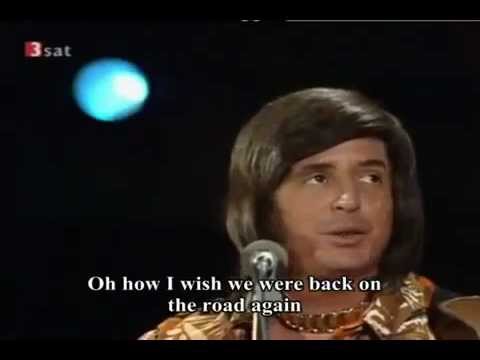
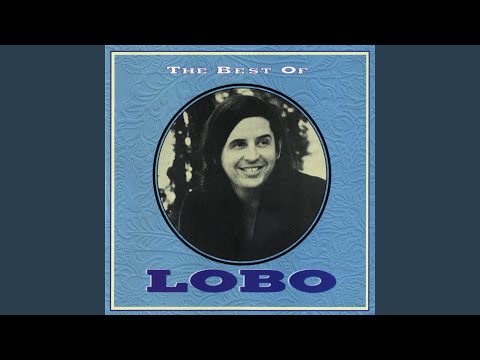
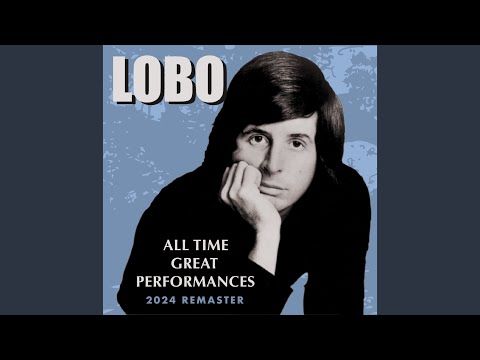
Lobo was the recording name of Roland Kent LaVoie, a Florida-born singer-songwriter who developed one of the more distinctive voices in the early 1970s soft rock movement. He had broken through in 1971 with "Me and You and a Dog Named Boo," a charming piece of pastoral escapism that reached the top five of the Billboard Hot 100 and established his commercial credibility with an audience that was moving away from the harder rock sounds of the late 1960s toward something more melodically approachable and lyrically personal. "Don't Expect Me To Be Your Friend" followed in 1972 and confirmed that the first success was not an anomaly.
The recording was released on Big Tree Records, a label that had been instrumental in establishing Lobo's recording career and that continued to be his commercial home through his most successful period. Big Tree was well suited to the soft rock market; it had the connections to radio programmers and the promotional infrastructure to get a record like "Don't Expect Me To Be Your Friend" in front of the audiences most likely to respond to it. The label's investment in Lobo had paid off with "Me and You and a Dog Named Boo," and this follow-up single benefited from the commercial credibility that the first hit had established.
LaVoie wrote and produced his own material, which gave him an unusual degree of creative control for a commercial pop artist of the period. The production aesthetic he developed was deliberately intimate, favoring acoustic guitar and understated arrangements over the more elaborate productions that dominated some segments of the early 1970s pop market. This intimacy was not merely a stylistic preference but a strategic choice that aligned the sonic presentation with the lyrical content; Lobo's songs were personal and confessional in a way that demanded a production frame of corresponding directness.
"Don't Expect Me To Be Your Friend" entered the Billboard Hot 100 and climbed to number eight on the chart, making it one of the highest-charting singles of LaVoie's recording career and confirming his position as a consistent presence in the upper reaches of the pop chart. The record spent several weeks in the top ten, receiving heavy rotation on the pop radio formats that were the primary delivery system for soft rock material in the period. Adult listeners in particular responded to the record's emotional frankness and melodic accessibility.
The subject matter of the song, the experience of a relationship ending and the emotional complications that follow, was entirely consistent with the thematic preoccupations of early 1970s singer-songwriter culture. The confessional tradition that James Taylor, Carole King, Carly Simon, and others had established and popularized created an audience expectation that commercial pop could and should engage with personal emotional territory of this kind. Lobo fit comfortably within this tradition while maintaining a somewhat more radio-friendly production approach than some of its more critically acclaimed practitioners.
The record's chart performance placed Lobo in the company of the most successful commercial artists of the soft rock moment, a genre that was generating some of the era's largest-selling singles and albums. The early 1970s represented a period in which the fragmentation of the rock audience that had begun in the late 1960s was producing multiple commercially viable sub-genres, and soft rock was among the most commercially robust of these. Radio programmers found that softer, more melodically accessible material performed very well in terms of listener retention and format identity, and artists like Lobo were primary beneficiaries of this programming preference.
LaVoie continued to have chart success through the mid-1970s, including with "I'd Love You to Want Me" in 1972, one of his biggest commercial achievements. His career traced a pattern common among artists of his generation: significant success during the period when his particular style was in maximum commercial favor, followed by diminishing chart returns as the musical landscape shifted toward disco, punk, and new wave in the second half of the decade. But his recordings from the peak period, including "Don't Expect Me To Be Your Friend," maintained their audiences through the mediation of oldies radio and compilation releases.
The production on the single demonstrates the craft that defined successful soft rock of the period. The arrangement is light but not thin; there is enough musical support to give the vocal performance proper framing without the busyness that would distract from the emotional content of the material. The guitar work is tasteful and the rhythm section unobtrusive, creating a sonic environment in which the lyrical content and the vocal performance can be received with full attention. This is precisely the balance that effective soft rock production required, and LaVoie achieved it here with the assurance of an artist who understood his material and his audience.
02 Song Meaning
Don't Expect Me To Be Your Friend — Emotional Honesty and the Aftermath of Love
"Don't Expect Me To Be Your Friend" addresses a specific and often overlooked emotional situation: the period immediately after a romantic relationship has ended, when both parties must negotiate a new mode of relating to each other that neither fully chose and neither finds entirely comfortable. The song's protagonist is refusing a particular kind of consolation prize, the offer of ongoing friendship from a former romantic partner, on the grounds that such an arrangement is emotionally untenable for someone who has invested more deeply in the relationship. This is a recognizable situation, and the song articulates it with a directness that was characteristic of Lobo's songwriting approach.
The refusal at the heart of the song is not presented as anger or bitterness but as emotional honesty. The protagonist is not claiming that the former partner is a bad person or that the relationship was meaningless; he is simply acknowledging a truth about his own emotional capacity: the transition from romantic partner to friend is not one he can make, and pretending otherwise would be a disservice to both parties. This quality of honest self-knowledge is what distinguishes the song from the more dramatic heartbreak narratives that populated pop music of the period. There is no accusation, no sense of grievance; there is only clarity about what is and is not possible.
The early 1970s singer-songwriter tradition to which "Don't Expect Me To Be Your Friend" belongs was defined largely by this kind of emotional honesty. Artists like James Taylor and Carole King had established an audience expectation that pop music could deal with personal emotional situations in a direct and unromanticized way, and Lobo's work participated in this expectation. His commercial success suggested that the audience found this approach not merely tolerable but actively appealing, which reflects something important about the cultural moment in which the record was made.
The song's perspective is explicitly that of the person who has been hurt more, or who has invested more fully in the relationship, and for whom the offer of friendship is therefore not a neutral gesture but an additional form of pain. This asymmetry of emotional investment in romantic relationships was not often addressed so directly in pop music, which more commonly portrayed both parties as equally bereft or equally at fault. By occupying the position of the person for whom friendship is impossible rather than the person who can graciously offer it, the song takes a more complicated and more honest position.
For Lobo as an artist, the song contributed to a catalog that was unified by thematic consistency and a particular quality of emotional precision. His recordings were not melodically or harmonically adventurous; their distinction lay in the specificity with which they identified and articulated common emotional situations. "Don't Expect Me To Be Your Friend" did this with particular effectiveness, finding a scenario that many listeners recognized but that had not been given such direct treatment in commercial pop before.
The lasting appeal of the recording, which has ensured its continued presence on soft rock compilations and oldies radio for more than five decades, reflects the enduring relevance of the emotional situation it describes. Romantic relationships end, and the question of what replaces them is one that very few people navigate without difficulty. A song that names the difficulty honestly and refuses the easy consolation of friendship-as-substitute has something to say to anyone who has been in the situation it describes, which is to say, most adults. That universality, achieved through specific emotional detail rather than vague generality, is the mark of an effective piece of popular songwriting.
→ More from Lobo
View all Lobo hits →
→ More from the 1970s File
View all 1970s hits →




Keep digging