The 1970s File Feature
I'd Love You To Want Me
I'd Love You to Want Me: Lobo and the Soft-Rock Ballad That Almost Reached Number One "I'd Love You to Want Me" is one of the most commercially successful re…
01 The Story
I'd Love You to Want Me: Lobo and the Soft-Rock Ballad That Almost Reached Number One
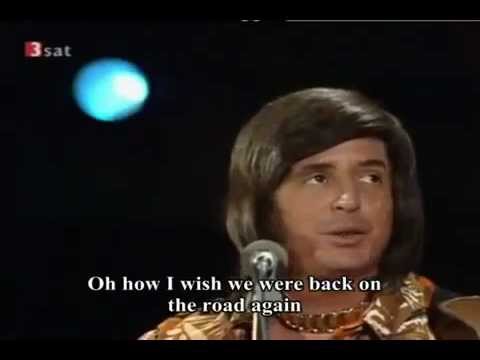
"I'd Love You to Want Me" is one of the most commercially successful recordings of the early 1970s soft-rock era, a song that combined melodic directness, lyrical vulnerability, and production restraint in ways that proved irresistible to radio programmers and listeners across the country. Released in 1972 on Big Tree Records, the song reached number 2 on the Billboard Hot 100, one of the highest chart positions achieved by any song released on an independent label in that year. The record spent multiple weeks near the top of the chart and accumulated considerable airplay that kept it in the cultural conversation long after its initial chart run concluded.
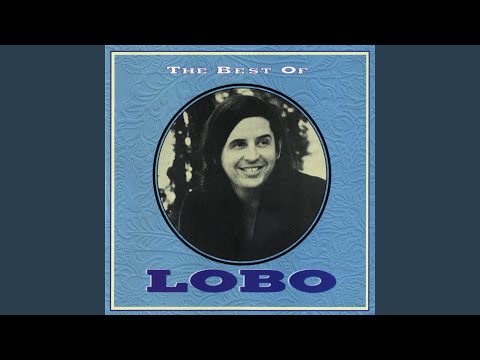
The artist known as Lobo was Roland Kent LaVoie, a Florida-born singer-songwriter who had been working in the music industry for several years before achieving commercial breakthrough. LaVoie wrote "I'd Love You to Want Me" himself, and its success reflected his genuine songwriting gifts rather than reliance on material from professional songwriters. The song demonstrated an understanding of what made a pop melody stick, the careful construction of a hook that was simultaneously memorable and emotionally resonant, easy to sing along with but carrying enough feeling to reward repeated listening.
Big Tree Records was a relatively small independent label, and the success of "I'd Love You to Want Me" represented a significant achievement for an operation without the promotional infrastructure of the major labels. The song's chart performance demonstrated that compelling material could still break through on the strength of radio response even without the full weight of a major label promotional campaign behind it. This was an increasingly important demonstration as the music industry of the early 1970s was becoming more consolidated around major labels while still leaving space for independent success stories.
The production of "I'd Love You to Want Me" was clean and uncluttered, placing the voice and the guitar-centered arrangement at the center of attention without excessive orchestration or studio embellishment. This approach was consistent with the broader aesthetics of soft rock, a genre that had emerged in the late 1960s as a counterweight to heavier rock styles and that prioritized melody, vocal performance, and emotional accessibility over sonic power or experimental production. James Taylor, Carole King, and Carly Simon were among the artists who had defined the territory that Lobo's work occupied, and "I'd Love You to Want Me" fit comfortably within this musical context while also being distinctive enough to stand out from the crowded field.
Lobo had scored a previous hit with "Me and You and a Dog Named Boo" in 1971, which had also charted well on the Hot 100, establishing him as a viable commercial presence. But "I'd Love You to Want Me" surpassed that earlier success considerably, both in terms of chart position and in the depth of its connection with listeners. The song received substantial commercial radio airplay during its chart run and found a particular resonance with the adult contemporary audience that was increasingly important to record labels as a reliable and sizeable demographic.
"I'd Love You to Want Me" also performed strongly on the Adult Contemporary chart, where it reached the top position, confirming the song's particular appeal to the mainstream pop audience rather than the more youth-oriented rock market. This dual chart success on the Hot 100 and the Adult Contemporary chart reflected the song's capacity to bridge demographic categories, reaching both younger general pop listeners and the more adult audience that consumed its radio equivalent.
Internationally, the song found substantial audiences in Europe and other markets where soft rock had developed significant commercial traction, confirming that the emotional directness and melodic clarity that made the song work on American radio translated effectively across cultural contexts. Lobo achieved significant international recognition on the strength of this single, placing it among the more globally successful American soft-rock recordings of the early 1970s.
In retrospect, "I'd Love You to Want Me" represents a high point in the brief but commercially significant career of Lobo, and more broadly a defining example of what early-1970s soft rock could achieve at its most melodically focused and emotionally committed. The song's near-miss at the top of the Hot 100 remains one of those chart footnotes that understates its actual cultural impact, which was substantially larger than the number 2 position might suggest.
02 Song Meaning
The Ache of Unrequited Wanting: Emotional Logic in "I'd Love You to Want Me"
"I'd Love You to Want Me" belongs to the tradition of songs that express longing for reciprocity rather than the presence of the beloved. The narrator is not separated from someone he loves by distance or circumstance; rather, he exists in close proximity to a person whose feelings do not match his own. The particular pain the song explores is not absence but asymmetry, the condition of wanting someone who does not want you back, of being physically present in a relationship that is emotionally unequal.
This is among the more psychologically precise emotional situations that popular song explores, requiring delicacy to avoid either self-pity or aggression. Lobo navigates this territory with considerable skill, maintaining the narrator's dignity while making his vulnerability completely legible. The title itself performs this balance, expressing the wish for reciprocated desire in conditional terms that acknowledge rather than demand. The phrase "I'd love you to want me" is grammatically a conditional, a would rather than an imperative, which conveys both the depth of the feeling and the narrator's awareness that desire cannot be compelled.
The song also explores the way that the hoped-for outcome is projected onto incomplete evidence, the narrator interpreting gestures, expressions, and moments as possible signs of the reciprocal feeling he longs for, only to have the interpretation remain uncertain. This experience of reading significance into ambiguous signals is one of the most universally recognizable aspects of unrequited or unconfirmed longing, and the song handles it with the kind of understated precision that makes listeners recognize their own experience in someone else's art.
The soft-rock production style is ideally suited to this emotional content. The restraint of the arrangement mirrors the narrator's position, someone who holds himself in check rather than overwhelming the object of his attention, who expresses his feeling in the controlled register of song rather than the potentially off-putting register of direct declaration. The music's quietness is the quietness of someone who knows that the wrong move will close off the possibility he is hoping for.
Within the context of early-1970s singer-songwriter soft rock, "I'd Love You to Want Me" participates in a broader project of bringing male emotional vulnerability into mainstream pop expression. The genre as a whole was engaged in expanding what men were permitted to express in popular music, moving away from the emotional coolness or aggressive posturing that had dominated much of rock and pop and toward a more confessional, emotionally candid mode. Lobo's song is one of the more commercially successful examples of this development, suggesting that the audience was genuinely hungry for this kind of emotional honesty from male pop artists.
The song's near-universal appeal across demographic lines, reflected in its success on both the Hot 100 and the Adult Contemporary chart, suggests that the emotional experience it describes transcends age and generation. The condition of unrequited or uncertain longing is not specific to youth, and a song that treats it with adult seriousness while remaining melodically accessible found listeners wherever people had loved without certainty of being loved back. That is a considerable portion of the human population at any given moment, which goes some way toward explaining why "I'd Love You to Want Me" reached so many people so effectively.
→ More from Lobo
View all Lobo hits →
→ More from the 1970s File
View all 1970s hits →




Keep digging