The 1970s File Feature
When Will I Be Loved
"When Will I Be Loved" — Linda Ronstadt Country Rock's Most Magnetic Voice Finds Her Moment The spring and early summer of 1975 belonged to Linda Ronstadt in…
01 The Story
"When Will I Be Loved" — Linda Ronstadt
Country Rock's Most Magnetic Voice Finds Her Moment
The spring and early summer of 1975 belonged to Linda Ronstadt in a way that felt simultaneously earned and overdue. She had been working the Los Angeles country rock scene since the late 1960s, first with the Stone Poneys and then as a solo act on Capitol Records, releasing a series of albums that showcased an extraordinary vocal instrument without quite breaking through to pop stardom on the scale her talent warranted. By 1975, after years of critical appreciation and industry respect that had not fully translated to commercial success, the combination of the right song, the right production, and a moment of genuine cultural readiness finally clicked.
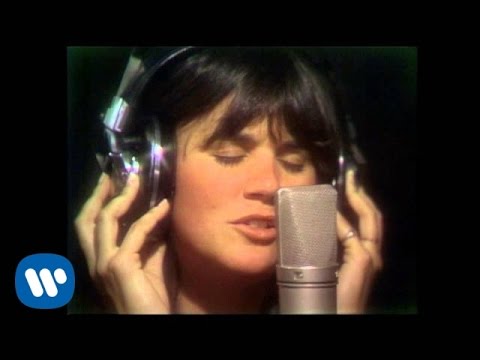
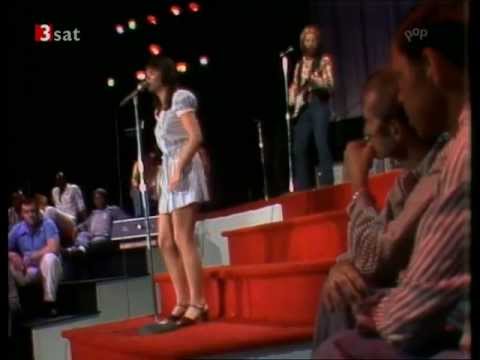
"When Will I Be Loved" was originally recorded by the Everly Brothers in 1960, a tight, propulsive country-flavored rock and roll track with a memorable chorus and the kind of direct emotional simplicity that makes the best songs of that era feel timeless. Ronstadt's version transformed the material almost entirely, bringing a new urgency and a rawer vocal approach that turned the question at the song's center into something more plaintive and more powerful than the original had suggested. The production, delivered in the style of the West Coast rock that was reshaping country influences in the mid-1970s, gave the track an immediacy that felt very much of its moment while honoring the song's roots.
The Album and Its Production
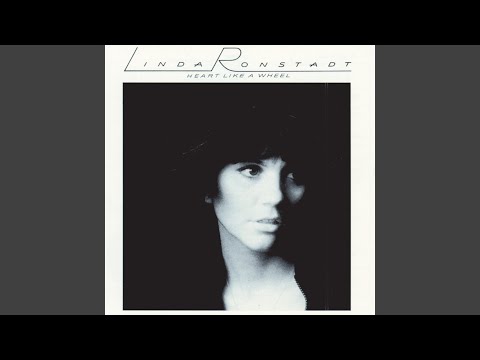
Prisoner in Disguise, the Ronstadt album that would contain "When Will I Be Loved" in its singles campaign, arrived in September 1975, but the single itself preceded the album, entering the Billboard Hot 100 in April of that year. The production team around Ronstadt at this period included Peter Asher, the British-born producer who had become her primary collaborator and who was instrumental in shaping the accessible, rock-inflected sound that would define her commercial peak. Asher's touch gave Ronstadt's recordings a clarity and directness that suited her voice perfectly, letting the instrument breathe without burying it under production excess.
The band assembled around Ronstadt during this period included musicians drawn from the interconnected world of Los Angeles rock and country rock, a community that also produced the Eagles and a host of other acts that would define the sound of 1970s California rock. The resulting recordings had a lived-in quality, a sense of musicians who knew each other's instincts and could communicate through the music without effort.
A Fifteen-Week Journey to Number Two
"When Will I Be Loved" entered the Billboard Hot 100 at number 81 in the chart dated April 12, 1975. What followed was one of the more sustained ascents of that year: over fifteen weeks, the single climbed steadily through the chart, reaching its peak position of number 2 in the chart dated June 21, 1975. The trajectory reflected genuine radio momentum, the kind that builds as stations in smaller markets follow the lead of larger ones and as listener familiarity grows into genuine affection.
Number two was a significant achievement and also a slightly frustrating one. The position that denied Ronstadt the top spot reflected the fierce competition at the summit of the Hot 100 that summer, but it placed her squarely among the year's major commercial performers. The fifteen-week chart run was itself a mark of quality; singles that simply spike and drop rarely sustain that kind of presence.
The Ronstadt Legacy
"When Will I Be Loved" opened a period of sustained commercial and artistic achievement for Ronstadt that would continue through the late 1970s. The combination of impeccable song selection, Peter Asher's production, and the sheer communicative power of her voice made her one of the dominant figures of the era, an artist who could move between country, rock, pop, and standards with fluency that few of her contemporaries could match. The 1975 chart performance of "When Will I Be Loved" was the commercial breakthrough that the preceding years of work had been pointing toward, the moment when a large mainstream audience finally caught up with what her devoted following already knew. Put it on loud and you will hear exactly why she arrived.
"When Will I Be Loved" — Linda Ronstadt's singular moment on the 1970s charts.
02 Song Meaning
"When Will I Be Loved" — Meaning, Themes, and Cultural Resonance
The Oldest Question in the Repertoire
The emotional territory of "When Will I Be Loved" is as old as popular song itself: the desire to be loved, genuinely and sustainably, by another person. What distinguishes the song from thousands of others working the same territory is its directness and its willingness to name the specific disappointments that make the central question feel earned rather than abstract. The speaker has been pushed around, cheated, and deceived; the desire for love emerges not from innocence but from experience, which gives the question its particular ache.
Linda Ronstadt's vocal performance on the 1975 recording intensifies this quality. Her voice carries a warmth that resists self-pity even as it acknowledges real hurt, projecting someone who has been wounded but has not lost the capacity for desire. That combination of vulnerability and resilience is what made the track resonant beyond its pop-song surface, communicating something about the emotional experience of romantic life that listeners recognized as true.
Covering as Creative Act
Ronstadt's career was built substantially on her ability to identify songs by other writers that suited her voice and sensibility, then reimagine them in ways that revealed something new. "When Will I Be Loved," originally by the Everly Brothers, underwent a significant transformation in her hands. The original read as a more straightforward early rock and roll complaint; Ronstadt's version located a deeper emotional register, turning the same lyric into something more searching and more vulnerable without changing a word.
This capacity for transformation through interpretation is one of the most underrated skills in popular music. The arranger, the band, the producer, and above all the singer all contribute to making a song mean something different from how it meant before, and Ronstadt's collaborations with Peter Asher were consistently productive in exactly this way.
The Mid-1970s California Sound
The cultural context of the track matters for understanding why it connected so broadly in 1975. The Los Angeles country rock scene had spent the early 1970s developing a hybrid sound that blended the emotional directness of country with the production sophistication of rock, creating something that felt both rootsy and modern. Ronstadt was one of the central figures of this movement, and "When Will I Be Loved" sits at the intersection of those influences, its country phrasing delivered through rock production sensibility.
The mid-1970s were also a period when the singer-songwriter tradition was at its commercial peak, with audiences showing considerable appetite for emotionally direct, personally felt material. Ronstadt's interpretive approach fit perfectly into that landscape, even though she was a performer rather than a songwriter: her ability to communicate genuine feeling through others' material made the distinction irrelevant for most listeners.
Longing as a Universal Register
The enduring appeal of "When Will I Be Loved" lies in its universal applicability. The specific details of the lyric, the infidelities, the casual treatment, the succession of disappointments, are particular enough to feel real but general enough to accommodate many different listeners' experiences. The question at the song's center belongs to anyone who has wanted genuine connection and found it elusive, which is to say virtually everyone who has ever listened to popular music.
Ronstadt's version planted a stake at the intersection of country tradition and 1970s pop sensibility, and the fifteen weeks it spent climbing the Hot 100 reflected the breadth of the audience that recognized something of their own experience in it. Decades later, the track still works because the feeling it describes has not aged. Some questions remain permanently current.
→ More from Linda Ronstadt
View all Linda Ronstadt hits →

→ More from the 1970s File
View all 1970s hits →




Keep digging