The 1970s File Feature
Tracks Of My Tears
Tracks of My Tears: Linda Ronstadt's Immaculate 1975 Revival of a Motown Classic When Linda Ronstadt recorded "Tracks of My Tears" for her 1975 album Prisone…
01 The Story
Tracks of My Tears: Linda Ronstadt's Immaculate 1975 Revival of a Motown Classic
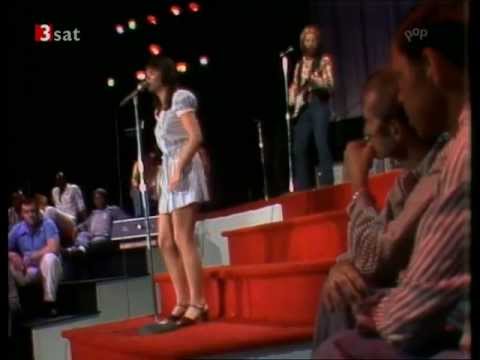
When Linda Ronstadt recorded "Tracks of My Tears" for her 1975 album Prisoner in Disguise, she was participating in a rich tradition of country and rock artists finding new life in the Motown catalog, but she was doing so with a combination of vocal authority and production intelligence that elevated her version beyond the category of mere tribute. The original recording, released in 1965 by Smokey Robinson and the Miracles on Tamla Records, a Motown subsidiary, had been one of the defining singles of its era, widely regarded as one of the greatest songs ever written and produced. Robinson himself has listed it among his personal favorites of his own compositions.
The original "Tracks of My Tears" was written by William "Smokey" Robinson, Warren "Pete" Moore, and Marvin Tarplin, with Tarplin's guitar figure forming the song's melodic foundation. The original single peaked at number sixteen on the Billboard Hot 100 in 1965 and reached number two on the R&B Singles chart, performing solidly but perhaps not reflecting the song's subsequent critical elevation to the upper ranks of popular music composition. Over the following decade, the song's reputation had grown considerably, and by the mid-1970s it was widely understood to be a masterwork of the songwriting craft.
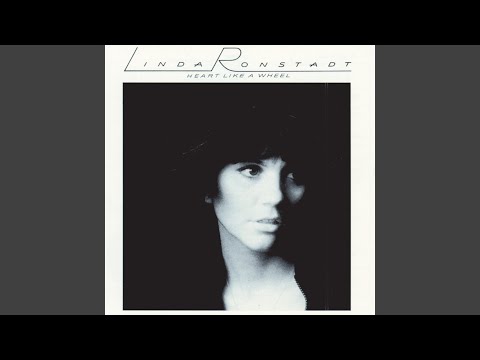
Linda Ronstadt, by 1975, was one of the most commercially successful solo artists in America, having achieved breakthrough status with her 1974 album Heart Like a Wheel. That album, produced by Peter Asher, had generated the number-one hit "You're No Good" and "When Will I Be Loved" and established Ronstadt as a singer whose particular gift lay in finding and interpreting material from across the spectrum of American popular music. Her instincts for song selection were consistently praised as among the finest in the industry, and "Tracks of My Tears" was perhaps the most ambitiously chosen piece in her covers catalog up to that point.
Peter Asher produced "Tracks of My Tears" for the Prisoner in Disguise album, maintaining the creative partnership that had defined Ronstadt's commercial breakthrough. Asher's production approach tended toward clarity and restraint, allowing Ronstadt's voice to occupy the center of the arrangement without the kind of overproduction that would have worked against the song's emotional directness. The backing musicians included many of the same session players who had contributed to her previous albums, creating a consistency of sound that suited the material.
Ronstadt's vocal performance on the track is widely considered one of the finest of her career. Her voice in the mid-1970s combined technical control with emotional expressiveness in a balance that few contemporaries achieved, and the specific demands of Robinson's melody, its expressive range, its moments of vulnerability and release, suited her instrument particularly well. The performance demonstrates what Ronstadt did best: not imitation of the original but absorption and reinterpretation, making the song her own while honoring the qualities that made it worth covering.
"Tracks of My Tears" was released as a single from Prisoner in Disguise and charted on the Billboard Hot 100, reaching a position that reflected genuine radio and public enthusiasm for Ronstadt's version. The song performed on both pop and country radio formats, reflecting the cross-format appeal that had become one of the defining characteristics of Ronstadt's commercial identity. The Prisoner in Disguise album was certified platinum, confirming that her commercial momentum from Heart Like a Wheel had been sustained and extended.
The critical reception of Ronstadt's "Tracks of My Tears" established it as one of the benchmark cover versions of the 1970s, a decade extraordinarily rich in reinterpretation of classic material by rock and country-rock artists. Her version is regularly cited alongside her covers of "Heat Wave" and "When Will I Be Loved" as evidence of an interpretive intelligence that has few peers in the history of American popular music. The song's combination of sophisticated harmonic content and emotionally direct lyrical content gave Ronstadt the opportunity to demonstrate both the technical capabilities and the emotional depth of her voice.
02 Song Meaning
The Meaning of "Tracks of My Tears": Performance, Concealment, and the Smile That Hides Sorrow
"Tracks of My Tears" is organized around one of the most psychologically precise conceits in the Smokey Robinson songwriting catalog: the performance of happiness as a strategy for concealing grief. The narrator presents a public face to the world, and specifically to former lovers and social acquaintances, that does not correspond to his actual emotional state. He smiles, he participates in the social rituals of attraction and interaction, but underneath this performed happiness runs the continuous evidence of tears, the tracks that the song's title names as its central image.
This gap between performed identity and authentic feeling is one of the most enduring themes in American popular music, rooted in the blues tradition's exploration of sorrow concealed behind social presentation and extended through R&B and soul into the complex emotional terrain that Motown's best songs navigated. Robinson's particular contribution was to make this theme work within the formal constraints of the pop single, compressing it into a structure of memorable melody and accessible lyrical statement without sacrificing the emotional complexity that gives the theme its power.
Linda Ronstadt's interpretation amplifies the song's emotional content through the specific qualities of her voice. Her vocal timbre carries a quality of genuine feeling that makes the gap between the narrator's performance and his actual emotional state palpable rather than merely stated. When she sings the lines that describe the public smile and the hidden sorrow, the texture of the voice itself seems to carry both dimensions simultaneously, performing the song's argument about performance in the act of singing it.
The song also engages with the theme of replacement and comparison, the experience of seeing a former partner with someone new and navigating the specific pain of that encounter while maintaining the social composure that the situation demands. This triangular emotional dynamic, the narrator, the former partner, and the new companion, gives the song a narrative specificity that grounds its more abstract psychological content in a recognizable human situation. The listener does not merely understand the narrator's pain in the abstract but can place it within a specific relational context.
For Ronstadt, whose catalog of the mid-1970s was heavily focused on romantic subjects and the emotional complexities of contemporary relationships, "Tracks of My Tears" represented an opportunity to engage with the Motown tradition's particular approach to emotional complexity. The soul tradition from which the song emerged treated romantic suffering with a combination of directness and formal elegance that resonated with Ronstadt's own artistic values, making the song not merely a stylistically adventurous choice but a thematically coherent one within her overall artistic identity.
The enduring quality of both the original and Ronstadt's cover rests on the song's psychological accuracy. The experience of maintaining composure in public while suffering privately is sufficiently universal that the song connects across very different cultural and biographical contexts. Robinson wrote it from within the specific world of a young Black artist navigating romance in the mid-1960s; Ronstadt sang it as a young white woman navigating a very different set of circumstances in the mid-1970s; listeners across many decades have found in it an accurate description of their own experience of romantic grief and social performance.
This universality is what distinguishes "Tracks of My Tears" from merely competent songwriting. The song does not describe a specific situation so much as it identifies a specific psychological mechanism, one so common to human experience that virtually any listener can locate themselves within it. Ronstadt's immaculate performance of this material gave the song new life and new audiences, demonstrating that the greatest songs can bear almost unlimited reinterpretation without losing their essential truth. Her version stands as one of the finest testaments to the original composition's inexhaustible quality.
→ More from Linda Ronstadt
View all Linda Ronstadt hits →

→ More from the 1970s File
View all 1970s hits →




Keep digging