The 1970s File Feature
Lose Again
Lose Again — Linda Ronstadt's 1977 Country-Rock Heartbreak The Queen of the Canyon in Her Reign The period from 1974 to 1978 represents the commercial and ar…
01 The Story
Lose Again — Linda Ronstadt's 1977 Country-Rock Heartbreak
The Queen of the Canyon in Her Reign
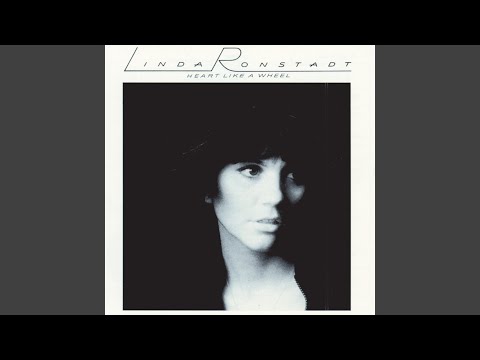
The period from 1974 to 1978 represents the commercial and artistic apex of Linda Ronstadt's career. The Arizona-born singer had spent the late 1960s and early 1970s building her reputation through a series of albums that established her as one of the finest interpreters of country-rock material in California's thriving scene. When Heart Like a Wheel arrived in 1974 and generated back-to-back chart-topping singles, it confirmed what her fellow musicians had long known: that Ronstadt's voice was a transformative instrument capable of elevating any material it touched.
By 1977, she was the best-selling female recording artist in America. Simple Dreams, the album that would contain "Lose Again," was released in August of that year, and it performed spectacularly, reaching number one on the album chart and eventually being certified as one of the year's best-selling records. The album was produced by Peter Asher, who had been the consistent architectural force behind Ronstadt's commercial run throughout the 1970s. Peter Asher's production approach was central to the sound of these albums: clean, precise, built around Ronstadt's voice as the unapologetic centerpiece, with arrangements that served the song rather than overwhelming it.
Karla Bonoff and the Material
"Lose Again" was written by Karla Bonoff, who had three songs on Simple Dreams and whose work became indelibly associated with Ronstadt during this period. Bonoff was one of the more quietly influential singer-songwriters of the California folk-rock community, a writer of precise emotional intelligence whose songs about romantic disappointment and resilience found their fullest realization when Ronstadt sang them. "Lose Again" examines the experience of returning to a relationship that has already failed, of finding oneself back in a familiar pattern of hope and disappointment despite the evidence of history. Bonoff's lyric does not moralize about this; it simply observes it with the compassion of someone who understands that people do not always behave according to their own best interests in matters of the heart.
Ronstadt's recording adds emotional dimensions to the material that were always there in the writing but needed her specific vocal intelligence to fully surface. Her ability to convey both vulnerability and resilience simultaneously, to sound simultaneously hurt and undefeated, gave Bonoff's lyrics exactly the interpretation they required.
Chart Performance in the Summer of 1977
The single entered the Billboard Hot 100 on June 4, 1977, at number 90. It climbed over the following weeks through 79, then hovered briefly before reaching its peak. The song peaked at number 76 on June 25, 1977, spending 5 weeks on the chart. By the specific standards of Ronstadt's commercial run during this period, a peak of 76 was modest; her bigger singles from Heart Like a Wheel and Prisoner in Disguise had been top-five and top-ten performers. But in the context of an album as successful as Simple Dreams, a chart single at any position served primarily to draw attention to the larger body of work.
The summer of 1977 was a crowded one for pop radio, with Fleetwood Mac's Rumours era in full force and a wide variety of artists competing for space. Ronstadt's presence on the chart during this period was a consistent given rather than a surprise, and "Lose Again" participated in that consistency without commanding its own sustained commercial run.
The Ronstadt-Bonoff Partnership
The relationship between Linda Ronstadt and Karla Bonoff represents one of the more significant interpreter-songwriter partnerships in 1970s California rock. Bonoff wrote with a specific emotional register, introspective and unsparing, that Ronstadt's voice was uniquely equipped to realize. The partnership produced some of the most emotionally honest records in the soft-rock canon, songs that refused the easy consolation of a chorus that promised everything would be fine, instead sitting with the difficulty of actually being human in the context of love.
"Lose Again" is characteristic of this collaboration: it does not resolve its central tension, does not tell the narrator to walk away or to try harder or to believe in herself. It simply renders the experience of recognizing a pattern in oneself and being unable or unwilling to break it, which is the kind of truth that takes real craft to express without making the listener feel lectured or condescended to.
A Voice That Defined Its Decade
Linda Ronstadt's catalog from the mid-1970s has aged well, and "Lose Again" is one of the quieter jewels in that catalog. The track represents her at her most unguarded, singing Bonoff's precisely observed lyric with the emotional intelligence that made her one of the era's most compelling voices. The production has the warm, unhurried quality that Asher brought consistently to her work during these years, giving the song space to breathe and the listener space to feel what it is saying. Find yourself a quiet moment and let it wash over you.
"Lose Again" — Linda Ronstadt's singular moment on the 1970s charts.
02 Song Meaning
Lose Again — Patterns, Repetition, and the Honest Geography of the Heart
The Cycle We Recognize
There is a particular kind of pain that comes not from a single wound but from the recognition of a pattern. "Lose Again" concerns itself with exactly this experience: the narrator seeing, with painful clarity, that she is about to repeat a sequence of events that has already hurt her before. The song does not blame an external force for this situation; it locates the pattern in the self, in a set of responses and choices that keep producing the same outcome. Karla Bonoff's writing identifies this dynamic with the precision of someone who has thought carefully about it, and the result is a lyric that feels simultaneously confessional and universal.
Most people who have been in a relationship, or navigated the aftermath of one, will recognize what the song is describing. The pull back toward something that has already proven painful is one of the more mysterious and consistent features of human romantic experience. Songs that engage with this dynamic honestly, without trivializing it or explaining it away, tend to earn a particular kind of listener loyalty.
Self-Knowledge Without Self-Rescue
What makes the song's emotional content so precise is the distinction it draws between self-knowledge and self-rescue. The narrator knows what is happening to her; she sees the pattern clearly. That knowledge does not save her from the pattern. The gap between understanding something intellectually and being able to act on that understanding emotionally is one of the more accurate things any song has captured about human psychology, and Bonoff found a way to render that gap in a form that fits on a radio single.
This quality distinguishes the song from the more triumphalist strand of women's popular music in the 1970s, which often featured narrators who, by the song's end, had found their strength and walked away from whatever was hurting them. "Lose Again" does not promise that resolution. It sits with the difficulty instead, which is more honest and, for many listeners, more recognizable.
Ronstadt's Interpretive Voice
Understanding what "Lose Again" means also requires understanding how Linda Ronstadt sang it. Her interpretive choices as a vocalist consistently emphasized emotional authenticity over polish, which was somewhat paradoxical given how polished her recordings were. She brought a kind of directness to even the most arranged and produced tracks, an insistence on making contact with the listener through the lyric rather than allowing the production to insulate the performance from its emotional content. Her reading of Bonoff's lyric makes the song's pain feel current rather than safely past, as though the narrator is living through the experience in real time rather than reporting on it from a safe distance.
That quality of immediacy is partly what made Ronstadt's recordings from this period so commercially successful. Listeners found in her voice something that felt personally addressed, as though she were singing specifically about their experience. The scale of her audience during these years suggests that a great many people found their own relationship patterns reflected in her recordings of Bonoff's material.
The California Sound and Emotional Honesty
The 1970s California soft-rock and country-rock tradition within which "Lose Again" sits had a particular relationship with emotional honesty. Artists including Jackson Browne, Joni Mitchell, James Taylor, and Carole King had established a critical and commercial consensus that personal, emotionally direct songwriting was not merely acceptable but was the highest form of popular music. Ronstadt's interpretations of Bonoff's songs participated in that consensus while adding a dimension that pure singer-songwriters sometimes lacked: the interpretive depth that comes from inhabiting someone else's material completely.
The result, in "Lose Again" as in the other Bonoff songs Ronstadt recorded during this period, is music that feels both crafted and genuine, specific and universal. The pattern the song describes is as recognizable now as it was in 1977, which is the surest measure of honest writing: that it identifies something true enough about human experience to remain relevant long after the specific cultural context that produced it has changed.
→ More from Linda Ronstadt
View all Linda Ronstadt hits →



→ More from the 1970s File
View all 1970s hits →




Keep digging