The 1970s File Feature
Heat Wave/love Is A Rose
Linda Ronstadt Owns Two Covers at Once on Heat Wave/Love Is A Rose Imagine a radio dial in the autumn of 1975 and one voice keeps cutting through the noise, …
01 The Story
Linda Ronstadt Owns Two Covers at Once on "Heat Wave/Love Is A Rose"
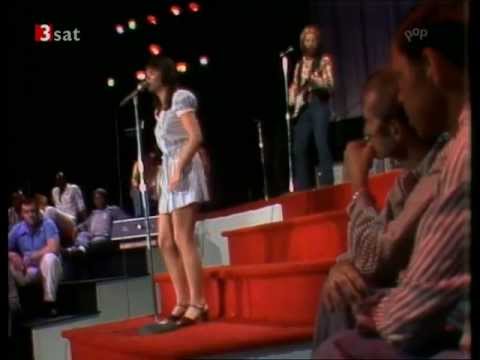
Imagine a radio dial in the autumn of 1975 and one voice keeps cutting through the noise, clear and full-throated and absolutely in command. Linda Ronstadt was in the middle of the most dominant stretch of her career, a singer who could take a song written by someone else and make it sound like it had been waiting for her all along. This double-sided single is a perfect snapshot of that gift, two very different covers delivered with the same effortless authority.
A Queen of the Mid-1970s
By 1975 Ronstadt had become one of the defining voices of American pop and rock. Her breakthrough album Heart Like a Wheel had announced her as a major star, and she followed it with a run of records that placed her at the center of the California sound. By the mid-1970s Ronstadt was among the most successful artists in America, an interpreter with impeccable taste who drew from country, rock, and classic pop. She had a knack for reaching into the catalog of past hits and pulling out songs that suited her powerhouse voice.
Two Songs, Two Moods
The single paired her version of the Motown classic "Heat Wave" with the gentler "Love Is A Rose." The first is pure energy, a rock-charged reading of a song first made famous by Martha and the Vandellas, driven hard and sung with joyful force. Ronstadt turned "Heat Wave" into a galloping rock workout, trading Motown polish for muscle. The flip side, "Love Is A Rose," came from the pen of Neil Young, and Ronstadt gave it a warm country-rock lilt. Two writers, two worlds, one unmistakable singer holding it all together.
A Confident Chart Climb
The American chart run reflected her commercial heat. The single entered the Billboard Hot 100 at number 53 on September 20, 1975 and moved up with purpose: to 44, then 31, then 18, then 14 in a steady, confident ascent. It kept climbing toward the top of the chart and reached its peak of number 5 on November 15, 1975, a genuine smash. All told it spent thirteen weeks on the Billboard Hot 100, a long, profitable stay that confirmed her status as one of the era's most bankable hitmakers.
The Art of the Cover
What sets Ronstadt apart in this era is how seriously she took the craft of interpretation. She was not a prolific songwriter, and she never pretended to be; instead she built her reputation on choosing other people's songs with impeccable taste and then making them unmistakably hers. Her gift was finding the emotional center of a song and amplifying it, whether the source was Motown, folk-rock, or vintage country. That approach put her in conversation with the great pop vocalists of earlier generations, singers judged by what they could do with a song rather than whether they wrote it. In a decade increasingly obsessed with the singer-songwriter, she made a powerful case that interpretation was its own form of authorship, and this double single is a compact demonstration of that argument.
Part of a Golden Run
This single belongs to a remarkable streak. Ronstadt would keep landing hits throughout the decade, building a catalog of interpretations that defined how a great singer could honor a song while completely remaking it. Her version of "Heat Wave" remains a staple of her live and recorded legacy, a reminder that she could rock as hard as she could ache. Together these two sides show the full range of an artist at the absolute top of her game, equally convincing at full throttle and in a quieter, more reflective register.
Press play and let that voice do its work. Few singers have ever made borrowing sound so much like ownership.
"Heat Wave/Love Is A Rose" — Linda Ronstadt's singular moment on the 1970s charts.
02 Song Meaning
What "Heat Wave/Love Is A Rose" Is Really About
This single offers two takes on love rather than one, and that contrast is its real subject. On one side, desire burns like summer weather; on the other, love is something delicate and thorned. Heard together, the two songs sketch a full emotional spectrum, from overwhelming passion to careful, clear-eyed affection. Ronstadt's interpretive instinct ties them into a single statement about how love feels at its hottest and its most considered, and that range is exactly why the pairing works.
Love as a Fever
"Heat Wave" treats romantic feeling as a physical condition, a rising temperature the singer cannot control. The lyric likens falling in love to being overtaken by heat, an irresistible force that leaves the narrator dizzy and exhilarated. Ronstadt sings it with abandon, leaning into the sense that passion is something that happens to you rather than something you choose. It is love as weather, sudden and total, and she makes that helplessness sound thrilling rather than frightening.
Love as a Rose
The other side cools the temperature considerably. "Love Is A Rose" uses the flower as an image of beauty that must be handled gently, warning that grasping too hard can hurt. Neil Young's lyric carries a quiet, almost folk-wisdom tone, suggesting that love endures best when it is given room to grow rather than seized. Where the A-side is impulse, the B-side is patience, and the two attitudes speak to each other across the record.
A Singer's Point of View
What unites the two is Ronstadt herself. Her voice brings emotional truth to songs written by others, and that interpretive honesty is part of the meaning. She does not merely perform these lyrics; she inhabits them, finding the conviction that makes a cover feel personal. The pairing becomes a portrait of a woman who understands both the fever and the caution of love, and who refuses to pretend the two never collide.
Two Truths About Love
Taken together, the two sides make a quietly sophisticated point about romance. Love is both an overwhelming force and a fragile thing that needs care, and most people experience it as both at different times. The pairing refuses to pick one as the truer version, letting passion and patience stand side by side. That refusal to simplify is part of why the single feels emotionally honest rather than merely catchy. It treats the listener as someone who has actually been in love and knows it rarely fits into a single mood.
Why It Connected
The single landed in a decade hungry for emotional directness, and Ronstadt delivered exactly that. Listeners responded to her blend of strength and vulnerability, hearing a singer who could be powerful without losing tenderness. By offering both the rush and the wisdom of love on one record, she gave audiences a small, complete drama, the kind you could play again and find something new in each time. That generosity is a big part of why she remained a fixture on the radio throughout the decade.
→ More from Linda Ronstadt
View all Linda Ronstadt hits →



→ More from the 1970s File
View all 1970s hits →




Keep digging