The 1970s File Feature
Back In The U.s.a.
Back In The U.S.A.: Linda Ronstadt Revisits Chuck Berry in 1978 The summer of 1978 placed Linda Ronstadt at the absolute peak of her commercial power. She wa…
01 The Story
Back In The U.S.A.: Linda Ronstadt Revisits Chuck Berry in 1978
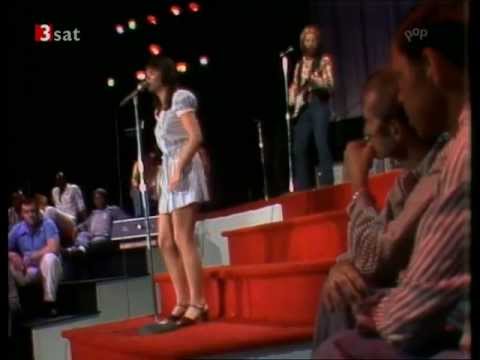
The summer of 1978 placed Linda Ronstadt at the absolute peak of her commercial power. She was, by any measure, the most commercially successful female rock artist in America, and her label, Asylum Records, had built an album-oriented strategy around her that was generating crossover numbers that would have seemed impossible for a rock act even five years earlier. The decision to record Chuck Berry's “Back In The U.S.A.” was consistent with her longstanding practice of finding the right cover material and making it definitively her own.
Ronstadt and the Art of the Cover
Linda Ronstadt's career had always been built partly on her ability to identify songs from multiple traditions, country, pop, rock and roll, R&B, and to inhabit them with a vocal authority that made the material feel as if it had always belonged to her. Her interpretations were not reverent museum pieces; they were full-voiced recontextualizations that changed how listeners heard the originals. Chuck Berry's 1959 original had been a celebration of American mobility and abundance, a returning traveler's jubilant list of the pleasures that awaited. Ronstadt's version retained that celebratory energy while giving it a late-1970s rock production framework that connected the rock and roll tradition to its contemporary descendants.
The Chart Journey of Summer 1978
“Back In The U.S.A.” entered the Billboard Hot 100 on August 19, 1978, at number 72. The subsequent climb was one of the stronger ascending runs of that summer: 72, 54, 44, 30, 26, the track building momentum through the autumn weeks. It reached its peak of number 16 on October 14, 1978, spending 13 weeks total on the chart. A top-20 finish and a sustained 13-week run was precisely the kind of commercial performance that validated the decision to release a classic rock and roll cover as a standalone single.
The Production Context
The production on Ronstadt's version reflected the late-1970s California rock sound that had been developed through her work with producer Peter Asher on albums including Simple Dreams, which was the album from which “Back In The U.S.A.” was drawn. The production approach was clean and direct, with a rhythm section that gave the track a forward propulsion consistent with the original's spirit while updating it for a radio landscape that had evolved considerably since 1959. Ronstadt's vocal delivery had the clarity and confidence that had defined her work throughout the decade, turning Berry's exuberant original into something equally exuberant but distinctly hers.
Simple Dreams and Its Context
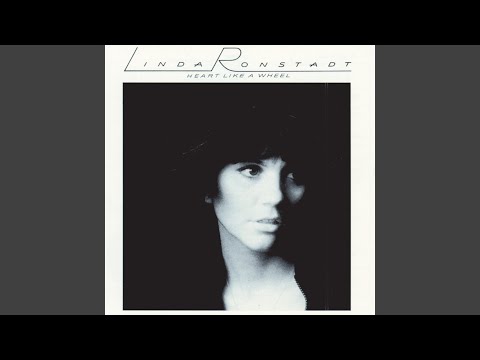
The album Simple Dreams was one of the commercial landmarks of 1977 and 1978, producing multiple charting singles and demonstrating Ronstadt's extraordinary ability to move between different repertoire without losing either commercial effectiveness or artistic integrity. The album's eclectic content, drawing from country, Buddy Holly, Roy Orbison, and Warren Zevon among others, was itself a demonstration of Ronstadt's breadth. “Back In The U.S.A.” fit naturally within this approach, adding Chuck Berry to the list of artists whose work she had transformed through the specific quality of her interpretation.
The Legacy of a Great Cover
The best cover recordings do something that the original cannot: they reveal aspects of the source material that the original performance, however excellent, left implicit. Ronstadt's version of “Back In The U.S.A.” demonstrated that Berry's jubilant list of American pleasures was not locked to any specific moment or production style but could be activated in virtually any era by a singer with the right combination of commitment and joy. Press play and feel the pleasure of a great song finding a great interpreter at the peak of her powers.
The Ronstadt Commercial Machine in Full Operation
The commercial infrastructure around Linda Ronstadt in 1978 was remarkable for its efficiency. Her manager Peter Asher also produced her albums, ensuring an unusual alignment of artistic and commercial judgment that allowed each record to be crafted with both radio and artistic considerations fully integrated from the beginning. The Simple Dreams album cycle, which included “Back In The U.S.A.,” was the product of this aligned approach at its most effective: a record that sounded artistically confident because the people making it had complete authority over its content and presentation, and that sounded commercially confident because those same people understood the radio landscape they were targeting. The 13-week chart run of the single was one piece of evidence for how well that alignment worked.
“Back In The U.S.A.” - Linda Ronstadt's singular moment on the 1970s charts.
02 Song Meaning
America as Abundance: The Meaning Ronstadt Found in Chuck Berry's Vision
Chuck Berry wrote “Back In The U.S.A.” as a list, and the choice of the list as a lyrical form was itself meaningful. Lists in popular song have a particular quality of abundance: they accumulate detail after detail, each item reinforcing the impression that what is being described is rich with specific, particular goodness. A list of American pleasures is a form of inventory, of counting up what is valuable, and the act of counting implicitly argues for the value of what is being counted.
Mobility and the American Promise
The song's central scenario, the traveler returning from elsewhere to find America waiting with all its pleasures intact, is one of the foundational structures of American popular myth. The returning traveler's vision is deliberately uncritical: this is not a song about what America fails to deliver but about what it does deliver, at least in the ideal version that the song constructs. Berry was writing from a specific historical moment when American material abundance was a genuine and recent achievement for many of the song's listeners, and the pleasures he enumerated, hamburgers, skyscrapers, jukebox music, were specific and tangible rather than vague or abstract.
Ronstadt's Interpretive Choices
When Ronstadt recorded the song in 1978, the American context had shifted considerably. The post-Vietnam, post-Watergate atmosphere had complicated the straightforward patriotic celebration that Berry's original embodied. Ronstadt's interpretation navigated this complexity by emphasizing the personal over the political: what the song was celebrating was not America as an abstraction but the specific, physical pleasures of being home, of being in familiar places and eating familiar foods and hearing familiar music. That shift from political to personal patriotism gave the 1978 version a quality that Berry's more confident original moment could not have anticipated.
The Rock and Roll Lineage
Berry's original was one of the canonical statements of rock and roll's relationship to American culture: celebratory, physical, rooted in specific pleasures rather than grand ideas, democratic in its enthusiasms. Ronstadt's 1978 version placed that statement in a different generational context, one in which rock and roll had been the dominant cultural form for nearly two decades and its relationship to American identity was far more complicated than it had been in 1959. By covering Berry's celebration of America, Ronstadt was implicitly making a statement about the continuity of the rock tradition from its founding documents to its late-1970s elaboration.
The Female Voice in a Male Tradition
One of the more interesting dimensions of Ronstadt's cover is the gender dynamics it introduced into a song originally written and performed from a male perspective. Berry's traveler was implicitly male; the pleasures he enumerated were articulated from a male subject position. Ronstadt's version claimed those pleasures from a female perspective, which subtly changed the song's cultural valence. A woman singing about the pleasures of hamburgers, skyscrapers, and jukebox music with the same unguarded joy that Berry had brought to the original was itself a statement about female participation in the American popular tradition, about whose enthusiasms counted as authentic expressions of national feeling.
Joy as a Political Act
In 1978, the simple pleasure of a joyful song about American abundance carried a kind of countercultural charge. The prevailing tone of much serious rock music had become more complicated and more troubled; the straightforward celebration of material pleasure had come to seem naive or ideologically suspect in certain critical circles. Ronstadt's willingness to sing “Back In The U.S.A.” with full-voiced joy was a statement that pleasure was not naive, that the rock and roll tradition's original enthusiasms were worth preserving even in a more complicated cultural moment. That willingness to be simply and genuinely joyful was itself a kind of artistic courage in the late-1970s rock context.
→ More from Linda Ronstadt
View all Linda Ronstadt hits →


→ More from the 1970s File
View all 1970s hits →




Keep digging