The 1970s File Feature
You Make Me Feel Like Dancing
"You Make Me Feel Like Dancing" — Leo Sayer's Disco-Era Triumph A British Voice Finds an American Dance Floor The mid-1970s American pop landscape was in a s…
01 The Story
"You Make Me Feel Like Dancing" — Leo Sayer's Disco-Era Triumph
A British Voice Finds an American Dance Floor
The mid-1970s American pop landscape was in a state of pleasurable confusion. Disco was ascending from the underground clubs of New York to mainstream commercial dominance, and artists who might not have identified primarily as dance music acts found themselves drawn toward its rhythms and its energy. The 1976 holiday season brought with it one of the more unlikely chart-toppers of the era: an exuberant, infectious track from a British singer whose earlier material had skewed toward piano-driven pop balladry. Leo Sayer's "You Make Me Feel Like Dancing" was a departure in direction, but it was a departure executed with such conviction and joy that it carried everything before it.
The Collaboration Behind the Record
Leo Sayer co-wrote "You Make Me Feel Like Dancing" with Vini Poncia, a songwriter and producer who had worked across multiple areas of the pop landscape. The combination produced a track that balanced the rhythmic energy of dance music with melodic strength strong enough to appeal beyond the club context. Richard Perry produced the record, bringing to the session the professional Los Angeles studio approach that had characterized his work with artists including Harry Nilsson and Carly Simon. Perry's production gave the track a polished sound that was simultaneously appropriate for radio and credible in a dance context, a difficult balance to achieve in any era and particularly so at a moment when the pop and disco worlds were viewed by some as incompatible.
The Sound and Its Energy
What makes "You Make Me Feel Like Dancing" irresistible is the quality of Sayer's vocal performance. His high tenor, deployed here with a giddy enthusiasm that sounds utterly convincing, communicates the feeling described in the title before a single word of the lyric registers. The arrangement supports that energy with layered percussion, a tight rhythm section, and horns that arrive at strategic moments to amplify the track's already considerable momentum. The record sounds like someone in the grip of uncontrollable happiness, and that quality of authentic joy is precisely what dance music needs to do its work. You cannot fake the kind of energy Sayer brings to this record; the listener's body responds before the brain has processed what is happening.
Twenty-One Weeks and a Number One
The chart history of "You Make Me Feel Like Dancing" tells the story of a record that built its audience patiently over an unusually extended run. The track debuted on the Billboard Hot 100 on October 23, 1976, at number 68, and proceeded to climb steadily through the final weeks of the year and into January 1977. The peak of number 1 arrived on January 15, 1977, after 21 weeks on the chart, one of the longer climbs to the summit in recent memory for that era. The extended ascent reflected radio adoption spreading across multiple formats, with the record finding audiences on pop stations, adult contemporary formats, and early disco-adjacent programming simultaneously.
Grammy Recognition and Lasting Presence
"You Make Me Feel Like Dancing" received the Grammy Award for Best Rhythm and Blues Song at the 1978 ceremony, recognition that acknowledged the record's quality while also reflecting the Grammy organization's relationship with R&B music during the disco era. The Grammy win added credibility to a record that had already proved its commercial appeal, and it helped establish Leo Sayer as an artist whose work deserved serious attention rather than dismissal as novelty. Decades later, the track remains an immediate reference point for late-1970s pop joy, the kind of record that comes on at a party and empties the walls immediately.
You know what to do: press play on "You Make Me Feel Like Dancing" and see how long you last before you have to get up.
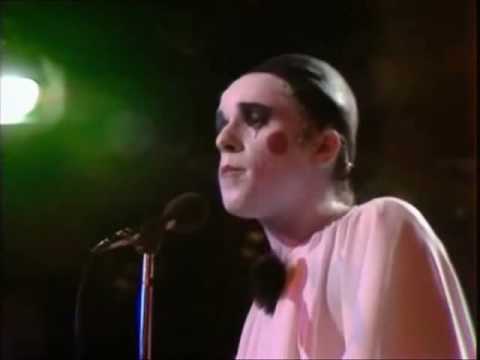
"You Make Me Feel Like Dancing" — Leo Sayer's singular moment on the 1970s charts.
02 Song Meaning
"You Make Me Feel Like Dancing" — Joy as a Radical Proposition
The Song's Emotional Argument
The thesis of "You Make Me Feel Like Dancing" is stated in the title and elaborated through every element of the recording: another person's presence can be so powerfully positive that it generates involuntary physical response. The song is not describing a gentle warmth or a quiet contentment; it is describing something more overwhelming, a happiness so complete that it exceeds the capacity of ordinary expression and manifests instead as physical movement. Leo Sayer's vocal performance embodies this proposition literally, delivering the lyric with a kinetic energy that communicates its content through sound before the words carry it through meaning. The form and the content are the same thing.
Dance Music's Emotional Function
In the mid-1970s, as disco culture moved from underground club scenes to mainstream commercial spaces, one of the debates surrounding it concerned its emotional seriousness. Critics who dismissed dance music as shallow tended to view its emphasis on physical pleasure and immediate sensation as evidence of an absence of depth. "You Make Me Feel Like Dancing" offers an implicit response to that position by revealing the emotional architecture underneath the physical invitation. The desire to dance with someone you love is not a shallow impulse; it is a natural expression of happiness so large it needs a physical outlet. The song understands this and makes it feel true through the quality of its execution.
The Late 1970s Joy Machine
The cultural moment of 1976 and 1977 was marked by a particular kind of popular music hedonism. The political disillusionment of the post-Watergate, post-Vietnam years had not yet curdled into the alienation that would characterize late-1970s punk and post-punk; instead, much of the mainstream popular culture of this specific moment reached toward pleasure and community as responses to collective exhaustion. Dance music, and tracks like "You Make Me Feel Like Dancing" that sat at the edge of the disco wave, served that impulse. The dance floor became a shared space where the ordinary complications of the external world could be suspended for the duration of a song, and the best dance records of this era understood that their function was as much psychological as physical.
Legacy: The Enduring Permission to Feel Good
The track's Grammy recognition as Best Rhythm and Blues Song and its continued presence in nostalgia programming and commercial use across subsequent decades reflect its unusual durability. Not all happy songs age well; some come to seem forced or dated in ways that expose the calculation behind their uplift. "You Make Me Feel Like Dancing" has remained convincing because the joy in it sounds genuine rather than manufactured. Sayer's vocal performance communicates something that seems to have actually been felt, not performed at an emotional state but inhabiting it. That quality of authentic positive affect is both rare and lasting, and it is what has kept this record on rotation for nearly fifty years.
"You Make Me Feel Like Dancing" — Leo Sayer's singular moment on the 1970s charts.
→ More from Leo Sayer
View all Leo Sayer hits →



→ More from the 1970s File
View all 1970s hits →




Keep digging