The 1970s File Feature
Raining In My Heart
"Raining In My Heart" — Leo Sayer's 1978 Pop Revival of a Classic Leo Sayer in His Commercial Prime The late 1970s belonged to Leo Sayer in ways that are som…
01 The Story
"Raining In My Heart" — Leo Sayer's 1978 Pop Revival of a Classic
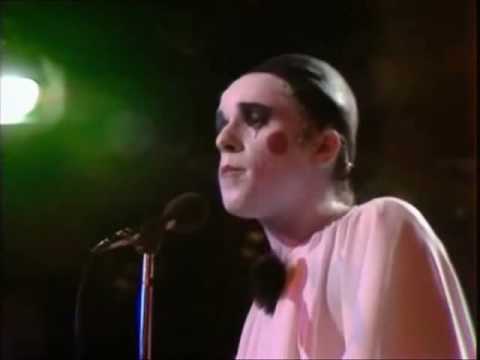
Leo Sayer in His Commercial Prime
The late 1970s belonged to Leo Sayer in ways that are sometimes difficult to appreciate from a distance. The British singer had arrived in America with an irrepressible energy, a theatrical background, and a voice that could move between falsetto and a warmer mid-range with unusual ease. His 1977 number-one hit You Make Me Feel Like Dancing had cracked the American market wide open, and the subsequent number one with When I Need You confirmed that he had genuine staying power on American radio. By 1978, Sayer was in the middle of an exceptionally productive commercial run, releasing material steadily and finding receptive ears at radio stations across the country.
The challenge for any artist in that position is choosing the right material to sustain momentum without repeating themselves. Sayer and his team reached back into the catalog of a Buddy Holly classic for Raining In My Heart, a song that carried all the melodic simplicity and emotional directness that had made the original beloved.
From Buddy Holly to Leo Sayer
Raining In My Heart was written by Boudleaux Bryant and Felice Bryant, the husband-and-wife songwriting team whose catalog included some of the most enduring songs in American pop history. Buddy Holly had recorded the definitive version in 1959, and it had become one of the emotional centerpieces of his final recordings. To revisit it in 1978 required sensitivity to what had made the original resonant while finding a genuinely fresh approach rather than a simple imitation.
Sayer's version leaned into the soft-rock production aesthetic that was dominating American radio in the late 1970s. The arrangement was more lush and orchestrated than Holly's spare original, fitting the song into a contemporary pop framework without losing its core melodic appeal. The production gave the record warmth and radio-readiness while Sayer's vocal delivery brought genuine feeling to the emotional premise.
The Chart Journey
The single entered the Billboard Hot 100 at number 88 on September 30, 1978. Over the following weeks it demonstrated consistent upward movement, climbing steadily through October. The track reached its peak of number 47 on November 4, 1978, having spent seven weeks on the chart in total. That peak placed it solidly in the mid-chart territory, representing genuine radio presence even if it didn't approach the heights of Sayer's biggest American hits.
The chart run coincided with a moment when soft rock and adult contemporary sounds were at their commercial peak in America. Sayer's polished, emotionally accessible approach fit that radio landscape naturally, and Raining In My Heart found its audience within it.
The Soft Rock Landscape of 1978
To place the recording in context, consider what was on American radio in the autumn of 1978. The Bee Gees were still riding the Saturday Night Fever wave, adult contemporary formats were programming a steady diet of melodically rich, emotionally warm material, and the raw edges of punk and new wave were still more of a critical conversation than a commercial reality in the American mainstream. Leo Sayer's sound was perfectly suited to that environment: polished, accessible, built around strong melody and genuine vocal commitment.
Raining In My Heart benefited from both the quality of the Bryant composition and the production sophistication that Sayer's team brought to it. It was a song that felt familiar and fresh simultaneously, which is a rare and valuable quality in any era of pop music.
Sayer's Legacy in America
Leo Sayer's American commercial peak was relatively brief but genuinely substantial. The sequence of hits he generated in the mid-to-late 1970s placed him among the more successful British imports of the era, and recordings like Raining In My Heart demonstrated that his success was built on real musical substance rather than novelty. His voice aged well, and his catalog retained its appeal across the decades that followed.
For a perfect encapsulation of what late-1970s soft rock could do with a great song, press play on this one.
"Raining In My Heart" — Leo Sayer's singular moment on the 1970s charts.
02 Song Meaning
The Meaning Behind "Raining In My Heart" by Leo Sayer
The Metaphor at the Core
Weather as emotional metaphor is one of the oldest devices in popular song. Rain in particular carries layers of meaning that have accumulated across centuries of poetry and music: cleansing, melancholy, renewal, isolation, the indifference of nature to human suffering. Raining In My Heart draws on this tradition with directness and economy. The narrator describes an internal emotional state through external imagery, the contrast between a bright outward reality and the internal rainfall of heartache making the sense of private grief more vivid by juxtaposition.
The Bryant songwriting team understood how to build maximum emotional impact from minimal lyrical means. The song's construction achieves its effect through understatement, letting the central metaphor do the heavy lifting while keeping the language accessible and immediate.
Heartbreak and the Private Self
One of the song's subtler emotional movements is the gap between how the narrator appears to the outside world and how they actually feel. This private-versus-public dimension of grief resonated with audiences in 1959 when Buddy Holly recorded the original, and it remained just as resonant when Leo Sayer revisited the material in 1978. The experience of maintaining composure while carrying internal pain is genuinely universal, cutting across generations and cultural contexts without losing its specificity.
Sayer's vocal approach brought a particular tenderness to this dimension of the lyric. His delivery communicated the effort of that private suffering without overcooking the emotion into melodrama. The restraint in his performance was part of what made the recording effective.
The Late 1970s Emotional Landscape
By 1978, American pop had developed a sophisticated set of conventions for handling romantic vulnerability. The singer-songwriter explosion of the early 1970s had normalized more confessional, emotionally detailed approaches to love and loss. Audiences were accustomed to hearing genuine feeling in their pop music, and they could distinguish between performances that were manufactured and those that communicated something real. Leo Sayer's track benefited from being perceived as genuine, a sincere engagement with an emotionally true subject.
The soft rock format that surrounded the song on radio was sometimes criticized for being too smooth, too emotionally safe. When the material was this good and the performer this committed, the format proved it could carry real emotional weight.
The Legacy of the Bryant Catalog
Boudleaux and Felice Bryant's songs have survived extraordinary changes in the music industry because their constructions are sound at the foundation level. The melodies are memorable, the lyrics economical, the emotional premises clear. Raining In My Heart has been recorded by multiple artists across multiple decades precisely because each generation of performers finds the song's core intact and available for new interpretation.
Sayer's version contributed to that legacy by demonstrating the song's adaptability to soft rock production values, proving that a composition built in 1959 could feel entirely current nineteen years later. This kind of longevity is the truest measure of a song's quality, and the Bryant catalog has passed that test with rare consistency.
→ More from Leo Sayer
View all Leo Sayer hits →



→ More from the 1970s File
View all 1970s hits →




Keep digging