The 1970s File Feature
Thunder In My Heart
Leo Sayer's "Thunder In My Heart": Disco Energy from a Pop Chameleon By the autumn of 1977, Leo Sayer had already demonstrated a remarkable capacity for comm…
01 The Story
Leo Sayer's "Thunder In My Heart": Disco Energy from a Pop Chameleon
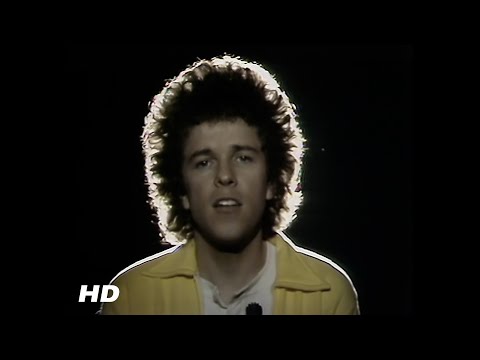
By the autumn of 1977, Leo Sayer had already demonstrated a remarkable capacity for commercial reinvention. The British singer-songwriter had begun his career in the early 1970s as a theatrical rock performer, complete with pierrot costume and elaborate stage presentation, before pivoting toward mainstream pop songcraft and achieving substantial commercial success on both sides of the Atlantic. His 1977 album Thunder in My Heart represented a further evolution, one that engaged seriously with the disco and dance-inflected production styles that were reshaping the commercial music landscape, while retaining the melodic strengths that had carried Sayer's earlier work.
The album was produced by Richard Perry, the Los Angeles-based producer who had worked with an exceptionally wide range of artists including Barbra Streisand, Ringo Starr, Carly Simon, and Nilsson. Perry's production philosophy emphasized technical excellence, commercial sheen, and an instinct for matching the sonic environment to the emotional content of the material. His collaboration with Sayer on Thunder in My Heart produced a set of recordings that positioned Sayer at the intersection of mainstream pop and the energized dance sound of the late 1970s, a commercially astute positioning that suited both the artist's vocal abilities and the market conditions of the moment.
The title track was released as a single and entered the Billboard Hot 100 on October 8, 1977, debuting at number 79. Its ascent through the chart was steady: the song moved to 66, then 46, 42, before reaching its peak of number 38 on November 5, 1977. It spent nine weeks on the chart in total, a solid commercial performance that confirmed Sayer's ability to sustain chart presence in the American market.
The production of "Thunder In My Heart" deployed strings, brass, and rhythm section elements in ways that placed it in conversation with the orchestrated disco productions that were dominating the commercial landscape. The song's arrangement was more muscular and energetic than the quieter pop material that had characterized some of Sayer's earlier American hits, reflecting both the influence of the disco moment and the production preferences of Richard Perry, who was comfortable working at larger sonic scales. Sayer's voice adapted readily to the more demanding rhythmic environment, demonstrating the vocal versatility that had allowed him to navigate multiple stylistic phases without losing the core identity that made him recognizable.
The 1977 American chart landscape was saturated with dance-oriented material. Artists including Donna Summer, the Bee Gees, and Gloria Gaynor were defining the sound of the era, and the competitive environment for any dance-influenced single was correspondingly intense. That "Thunder In My Heart" achieved a peak of 38 in this environment reflected both the quality of the production and the genuine audience that Sayer had built through his earlier American hits, including "You Make Me Feel Like Dancing" (which had reached number one in 1976) and "When I Need You" (which had also topped the chart in 1977).
The song was therefore released at a moment of genuine commercial momentum for Sayer, building on the extraordinary success he had achieved with those two number-one singles. In this context, "Thunder In My Heart" was performing at a somewhat lower level than its immediate predecessors, but a peak of 38 represented a respectable continuation of a chart career that was operating at a high level.
The song's most remarkable afterlife came decades after its original release. In 2006, British DJ Meck created a remix of "Thunder In My Heart" titled "Thunder in My Heart Again" that reached number one in the United Kingdom, introducing the song to an entirely new generation of listeners through the rave-influenced dance music idiom. The ability of the original's melodic and rhythmic foundation to support such a transformation nearly thirty years after its creation testified to the quality of the underlying composition and production. Sayer himself contributed to the remix project, which brought him a level of British chart recognition that exceeded anything he had achieved with the original.
Within the history of 1970s British pop performers in the American market, Sayer occupies an interesting position as someone who achieved genuine crossover success by combining quality songwriting with a willingness to adapt his presentation to the demands of the commercial moment. "Thunder In My Heart" documents one such adaptation, executed with the skill and production support that allowed it to hold its own in one of the most competitive musical landscapes in popular music history.
02 Song Meaning
The Body Electric: What "Thunder In My Heart" Communicates
Leo Sayer's "Thunder In My Heart" belongs to a specific tradition within popular music: the song that uses meteorological or elemental imagery to describe the physical and emotional experience of romantic intensity. Thunder is a sound that the body registers before the mind processes it, a vibration that arrives through skin and bone as much as through the ears. When Sayer placed that word at the center of his song's title and emotional vocabulary, he was reaching for a metaphor that captures something essential about how intense feeling is experienced: as something that happens to the body, not merely to the intellect.
The physiological dimension of romantic emotion is a subject that pop music has addressed from its origins, and "Thunder In My Heart" is a late-1970s contribution to that long conversation. The song's energy, conveyed through its production and through Sayer's vocal performance, mirrors the content of its central metaphor. The track does not describe thunder from a comfortable distance; it enacts it through the dynamism of its arrangement and the urgency with which Sayer delivers his vocal performance. The medium and the message work together to create an experience rather than merely transmit information.
The late 1970s disco and dance context gave the song's central metaphor additional resonance. Disco, at its most effective, was a music of physical experience, of the body moving in response to rhythm and sound. A song about feeling something with the full force of one's physical being was therefore ideally suited to a production style that asked listeners to respond physically to music. The alignment between the song's subject matter and its sonic environment was not accidental; it reflected the commercial intelligence that producer Richard Perry brought to the project.
The experience of thunder in the heart is also, implicitly, an experience of vulnerability. Thunder announces a storm; it signals that something large and uncontrollable is approaching or already present. To feel this in one's heart is to acknowledge that the emotional experience in question is not safely contained but is instead something that overwhelms normal defenses. For a pop song to make this acknowledgment through an upbeat, energetic production is to insist that vulnerability is not incompatible with vitality, that one can be moved and still be dancing.
The 2006 remix by Meck, which brought the song to a new generation through British dance music culture, actually reinforced these meanings rather than replacing them. The rave and dance music tradition of the 1990s and 2000s was deeply concerned with collective physical experience, with the shared bodily knowledge available in a crowd of people responding to music together. The thundering heart, revisited in this context, became a description of what happens when music and community work together to produce something larger than individual experience.
Sayer's willingness to participate in the remix project and the warm reception it received from both new audiences and longtime fans confirmed something that the original had demonstrated in 1977: that the core emotional truth of the song was durable enough to survive substantial transformation of its sonic clothing. The meaning at its center — the experience of feeling moved, physically and emotionally, by something one cannot fully control — is universal enough to travel across decades and production styles without losing its essential character. That universality is the most reliable index of a song's actual quality, and "Thunder In My Heart" has demonstrated it in two distinct musical eras.
→ More from Leo Sayer
View all Leo Sayer hits →



→ More from the 1970s File
View all 1970s hits →




Keep digging