The 1970s File Feature
Groove Me
Groove Me: King Floyd's Southern Soul Masterpiece and Its Journey to the Top of the R B Charts "Groove Me" by King Floyd is one of the landmark recordings of…
01 The Story
Groove Me: King Floyd's Southern Soul Masterpiece and Its Journey to the Top of the R&B Charts
"Groove Me" by King Floyd is one of the landmark recordings of the early 1970s Southern soul movement, a track that emerged from the fertile creative environment of Malaco Studios in Jackson, Mississippi, and reached the top of the Billboard R&B charts while making a significant impression on the broader pop market. Its success helped establish a regional recording infrastructure that would go on to produce some of the most important soul music of the following decade.
King Floyd was a New Orleans-born singer and songwriter who had been working in the music industry for several years before recording the track that would define his career. His early work had not achieved significant commercial traction, and "Groove Me" represented his breakthrough, a recording that captured his particular vocal style and the specific sonic environment of the studio where it was made at exactly the right moment for maximum commercial impact.
The recording was made at Malaco Studios in Jackson, Mississippi, with production by Wardell Quezergue, the New Orleans-based arranger and producer whose contributions to Louisiana and Mississippi soul are among the most important in the genre's history. Quezergue was known for his sophisticated arranging skills and his ability to frame vocalists within horn and rhythm section textures that maximized the emotional impact of their performances. His work on "Groove Me" demonstrated these gifts operating at a high level, constructing an arrangement that was simultaneously funky and tender, dance floor-ready and emotionally intimate.
The track was released in 1970 on the Chimneyville label, a small independent label based in Jackson that had been established specifically to release recordings made at Malaco Studios. The Chimneyville label operated with limited national distribution resources compared to major labels, which made the song's subsequent chart performance all the more remarkable. The track was picked up for national distribution by Atlantic Records, whose involvement gave it the promotional reach necessary to achieve its chart potential.
"Groove Me" rose steadily through the R&B charts following its release, building momentum through radio support and word of mouth in a pattern characteristic of grassroots Southern soul hits. The single reached number one on the Billboard R&B chart, confirming King Floyd's arrival as a genuine commercial force in the genre and validating the Malaco/Chimneyville creative infrastructure that had produced it. The record spent multiple weeks in the upper reaches of the R&B chart, demonstrating that its appeal was sustained rather than merely a brief spike of initial enthusiasm.
On the broader Billboard Hot 100, "Groove Me" also made a substantial impression, reaching the top twenty and confirming the kind of crossover appeal that was essential for Southern soul artists seeking to break beyond the R&B market. The record's performance across both charts demonstrated that its combination of funk-inflected rhythm and Floyd's emotionally expressive vocal style could communicate across demographic lines, reaching both the R&B core audience and the wider pop market simultaneously.
The song's musical character is rooted in the specific sound that Malaco and Quezergue had developed: a spare, rhythm-focused approach that emphasized the interplay between bass, drums, and a carefully placed horn arrangement, with the vocals riding above this foundation rather than being buried within it. This approach drew on both the Memphis soul tradition and the New Orleans funk idiom, combining elements of both into something that felt regional and specific without being inaccessible to listeners outside the South.
Radio response to the track was strong across the Southern United States and spread rapidly to urban radio markets in major northern cities, following the patterns of internal migration that had shaped African American cultural geography through the mid-twentieth century. Southern soul had a ready audience in Chicago, Detroit, New York, and other cities that had received large populations of Southern migrants in the preceding decades, and "Groove Me" traveled this network effectively.
The commercial success of "Groove Me" had lasting consequences for the Malaco recording complex in Jackson. The studio's ability to produce a national R&B number one from a regional base attracted attention from artists and producers across the Southern soul world, and the facility went on to become one of the most important independent recording venues in soul and blues for the following two decades. The label's later success in Southern soul and blues is directly traceable to the credibility that "Groove Me" established for the enterprise.
King Floyd was unable to replicate the commercial heights of "Groove Me" with subsequent releases, a pattern common among artists whose debut breakout is so definitive that it becomes their primary legacy. He continued to record and perform, and his later work retained creative merit, but the broader music market had moved on by the time he attempted to consolidate his position. In the long history of Southern soul, he occupies the position of an artist who made one recording so perfect within its context that it stands apart from everything else in his catalog.
The song's cultural longevity has been considerable. It appears regularly in compilations of early 1970s soul, and its distinctive groove has made it a frequent source of sampling and interpolation in hip-hop and contemporary R&B. The track's influence on the Malaco sound and on Southern soul more broadly is difficult to overstate, and its success at a moment of transition between the classic soul era and the funk-dominated 1970s gave it a pivot-point significance in the genre's history that goes well beyond its chart numbers alone.
02 Song Meaning
The Meaning of "Groove Me": Desire, Dance, and the Language of Southern Soul
"Groove Me" operates within the specific linguistic and emotional tradition of Southern soul, where the language of music and dance becomes a vehicle for expressing romantic and physical desire with a directness that the genre's aesthetic conventions render simultaneously explicit and poetic. The song's central conceit, asking a lover to share in the groove, to enter the shared rhythmic space that the music creates, is both a metaphor for physical intimacy and a literal invitation to dance. The two meanings are not distinguished or separated; they coexist in the song's language with the easy fluidity that characterizes the best Southern soul writing.
King Floyd's vocal approach to the material is crucial to understanding its meaning. His delivery is simultaneously yearning and confident, the vocal quality of a man who is genuinely moved by desire while remaining assured enough to express it directly. This combination of vulnerability and self-possession is characteristic of Southern soul at its most emotionally sophisticated, avoiding both the aggressive posturing of some funk and the excessive self-deprecation of some ballad traditions. The groove of the title is something offered as much as requested, a mutual space rather than a one-sided demand.
The song's metaphorical structure rewards examination. Groove, in its musical sense, refers to the steady rhythmic pulse that makes music move and makes dancers respond involuntarily. To be "in the groove" is to be fully synchronized with the music's fundamental pulse, to have surrendered the ordinary self-consciousness of daily life to a shared physical and emotional flow. When Floyd asks his beloved to "groove" with him, he is asking for precisely this kind of synchronization, a mutual surrender to a shared rhythm that becomes a metaphor for the deeper synchronization of intimacy.
The production reinforces this thematic content with considerable sophistication. The track's spare rhythm section creates exactly the kind of groove it describes, a steady, insistent pulse that pulls the listener into physical response almost involuntarily. The arrangement by Wardell Quezergue places the vocal within this rhythmic environment rather than above it, making Floyd's voice seem to emerge from the groove itself rather than being merely accompanied by it. This formal correspondence between the track's sonic structure and its thematic content gives the song a coherence that transcends the sum of its parts.
The Southern soul context also adds layers of meaning connected to regional identity and cultural specificity. The particular quality of the groove that "Groove Me" establishes is rooted in the specific musical traditions of the Mississippi Delta and the Gulf Coast, drawing on blues, gospel, and New Orleans second-line rhythms in a synthesis that is recognizably regional. When Floyd invites a lover into this groove, he is also invoking a specific cultural inheritance, a shared musical world that belongs to a particular community and carries the weight of that community's experience.
There is a vulnerability at the heart of the song that prevents it from being merely a confident seduction. The plea implicit in the repeated request contains an acknowledgment that the groove cannot be compelled, only invited, that the mutual surrender to shared rhythm requires both parties to be willing. The singer's desire is real and evident, but so is his awareness that desire alone cannot produce the synchronization he seeks. This awareness gives the song an emotional honesty that purely confident seduction songs often lack.
For King Floyd as an artist, "Groove Me" also served as a statement of aesthetic identity. The song's commitment to a particular kind of stripped-down, rhythm-centered Southern soul at a moment when the genre was evolving rapidly in multiple directions represented a deliberate choice about what kind of music was worth making. The track's commercial success validated this choice, but its artistic coherence transcends the commercial outcome, existing as a statement about the enduring value of the groove as an organizing principle for both music and experience.
The song's subsequent life in sampling and interpolation suggests that its core idea, the invitation into a shared groove as the primary vehicle for expressing desire, continues to resonate across generations and genres. Hip-hop and contemporary R&B artists who have drawn on "Groove Me" are not simply recycling a familiar sound; they are returning to a source that got something fundamentally right about the relationship between music, desire, and the body. That return speaks to the song's meaning as much as any formal analysis, confirming that what Floyd and Quezergue created in that Jackson, Mississippi studio in 1970 touched something deep enough to remain useful to artists making music half a century later.
→ More from King Floyd
View all King Floyd hits →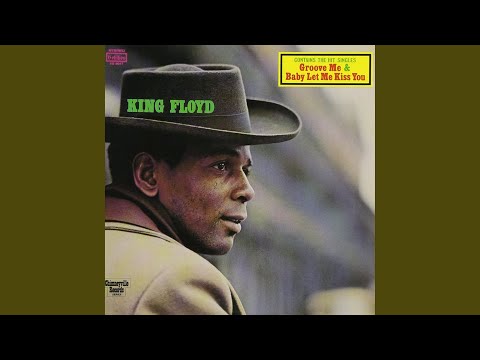
→ More from the 1970s File
View all 1970s hits →




Keep digging