The 1970s File Feature
Do Your Thing
"Do Your Thing" — Isaac Hayes After "Shaft": The Weight of Expectation There are moments in popular music when a single recording changes everything about ho…
01 The Story
"Do Your Thing" — Isaac Hayes
After "Shaft": The Weight of Expectation
There are moments in popular music when a single recording changes everything about how an artist is perceived, and the Shaft soundtrack was one of those moments for Isaac Hayes. By the time Do Your Thing arrived in early 1972, Hayes had already claimed his Academy Award for Best Original Song and demonstrated beyond any reasonable argument that he was one of the most inventive musical minds working in soul and funk. The question was what came after a triumph of that scale, and Do Your Thing was part of his answer.
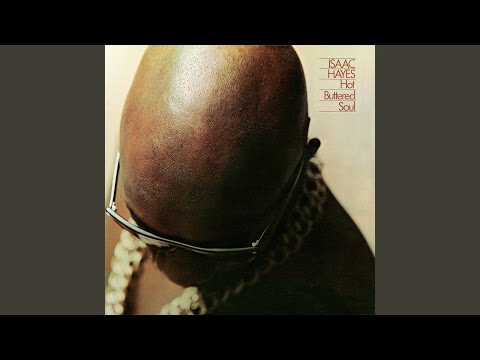
Isaac Hayes had built his reputation primarily as a songwriter and producer at Stax Records in Memphis, where he co-wrote a remarkable run of hit records for Sam and Dave and other artists before stepping forward as a performer himself with the groundbreaking double album Hot Buttered Soul in 1969. That record, with its extended arrangements and cinematic sense of space, had redrawn the boundaries of what a soul album could be. His subsequent work had continued in that experimental direction, combining extended improvisation with orchestral grandeur.
The Track and Its Context
Do Your Thing was released in early 1972, during a period when Hayes was one of the biggest stars in American music. The track appeared as part of the Black Moses double album, which Hayes had released in late 1971. The album's title and presentation were characteristically ambitious: elaborate packaging, a sprawling running time, and musical content that ranged from deeply personal ballads to extended funk workouts. Do Your Thing represented the latter tendency, built on a groove that stretched out in the manner Hayes had been pioneering since Hot Buttered Soul.
The production is quintessentially Hayes: the rhythm section locked in a hypnotic groove, the arrangement building in layers around it, and the vocals alternating between spoken passages and sung sections in a way that gave each performance a narrative quality beyond what conventional song structure usually allowed. Hayes treated his productions as experiences to be moved through rather than songs to be simply heard.
The Chart Journey
The single entered the Billboard Hot 100 on February 26, 1972, debuting at position 69. It climbed steadily through March, rising from 53 to 49 to 43 before continuing its ascent into the top portion of the chart. It peaked at number 30 during the week of April 8, 1972, spending eleven weeks on the chart in total. That peak placed it among Hayes's solid single performances of the period, though his recordings were often experienced primarily through albums rather than through single edits that compressed their extended structures.
The R&B chart performance, where his records typically registered more strongly than on the pop-oriented Hot 100, reflected his core audience's enthusiastic embrace of the new material. Hayes was one of the central figures in what critics would later identify as the classic era of soul and funk, and his audience followed him with remarkable loyalty through the post-Shaft period.
Memphis and the Stax Sound
Hayes's work in the early 1970s is inseparable from the Memphis context that produced him. Stax Records had developed a distinctive approach to soul music that emphasized rhythm, spontaneity, and a slightly rougher, more organic sound than the polished productions coming out of Detroit's Motown. Hayes absorbed that approach during his years as a staff writer and producer at Stax and then transformed it into something larger when he began recording under his own name, adding orchestral elements and cinematic scope to a foundation built on the Memphis groove.
That combination of gritty soul fundamentals and orchestral ambition was what made his productions of this period so distinctive and so influential. Producers who came after him, working in funk, hip-hop, and neo-soul, would return repeatedly to the recordings Hayes made in this era as reference points.
A Legacy of Groove and Ambition
The influence of Hayes's early 1970s recordings on subsequent popular music is substantial. The extended groove structures, the spoken-word passages blending into song, and the cinematic production values he employed became touchstones for producers across several subsequent decades, particularly in hip-hop, where samples from his work have appeared in a vast number of recordings. His approach to treating a groove as a living, evolving entity rather than a static backdrop was genuinely innovative and has proven durable.
For anyone who wants to understand how soul music expanded its formal and emotional possibilities in the early 1970s, Hayes's catalog from this period is essential territory. Do Your Thing is a fine place to enter that world. Let it run its full length and feel the groove find its depth.
"Do Your Thing" — Isaac Hayes's singular moment on the 1970s charts.
02 Song Meaning
"Do Your Thing" — Autonomy, Self-Expression, and the Ethics of Authenticity
Permission as a Political Act
In 1972, the phrase "do your thing" was not merely a piece of slang. It carried a specific ideological charge, rooted in the counterculture's insistence on individual authenticity and the Black freedom movement's assertion of self-determination. When Isaac Hayes built a track around that phrase, he was placing himself within a conversation that was simultaneously personal and political, about the right of individuals to define themselves, to move through the world on their own terms, to resist external prescriptions of who or what they should be.
Hayes's recordings in this period consistently addressed themes of self-possession and dignity, whether through lyrical content or through the structural choices of his productions. The very act of releasing sprawling, extended recordings that refused to conform to radio-friendly lengths was itself a statement about artistic autonomy. A song called "Do Your Thing" was entirely consistent with that stance.
The Groove as Liberation
There is an argument to be made that the musical structure of the track enacts its own meaning. An extended groove that develops organically, that resists the compulsions of conventional song structure, that moves at its own pace and invites the listener to join rather than demanding their attention on a timetable, is itself a form of doing your thing. Hayes's production philosophy, inherited from the Stax tradition but extended into new territory, created space for music to breathe and develop rather than hurrying toward preset conclusions.
That musical spaciousness carried an implicit message about time and freedom: that rushing was not always necessary, that there was value in dwelling in a particular sonic space long enough to feel it fully. This was a meaningful proposition in a culture increasingly organized around efficiency and acceleration.
Black Identity and Self-Definition in 1972
The early 1970s were a period of significant cultural and political self-definition within Black American communities. The Black Power movement, the growth of Black-owned media and cultural institutions, and the emergence of artists like Hayes as unambiguously powerful and autonomous figures in mainstream American culture were all part of a broader assertion of identity and agency. Hayes's presentation during this period, his choice of the name "Black Moses" as an album title and stage persona, his elaborate styling and performance choices, were deliberate claims on visibility and dignity.
A track called "Do Your Thing," arriving in this context, was not politically neutral. It aligned itself with an ethos of self-determination that was specific to its moment even as its language was accessible enough to communicate across audience lines.
The Enduring Relevance of the Message
Across the decades since 1972, the phrase at the heart of the track has not aged out of relevance. The pressure to conform to external expectations, to suppress individual expression in favor of legibility and social approval, has not diminished. Hayes's recording speaks to that pressure from a position of confident resistance, which is part of why his work from this period has continued to find listeners long after the specific political moment that produced it has passed.
The emotional core of the song, which is essentially an encouragement toward authenticity and self-expression, translates across contexts with unusual ease. It is music that invites the listener to take it seriously not as a historical document but as a present proposition about how to be in the world. That quality of ongoing relevance is one of the markers of significant art, and Hayes's recordings from this era have earned that description.
"Do Your Thing" — Isaac Hayes's singular moment on the 1970s charts.
→ More from Isaac Hayes
View all Isaac Hayes hits →

→ More from the 1970s File
View all 1970s hits →




Keep digging