The 1960s File Feature
Walk On By
Walk On By — Isaac Hayes Reinvents a Classic Stax in the Late Sixties, and a Man Finding His Moment By the summer of 1969, Isaac Hayes had spent years as one…
01 The Story
Walk On By — Isaac Hayes Reinvents a Classic
Stax in the Late Sixties, and a Man Finding His Moment
By the summer of 1969, Isaac Hayes had spent years as one of the most important creative forces at Stax Records without receiving commensurate public recognition. He had written and produced some of the most significant soul recordings of the decade alongside David Porter, including songs for Sam and Dave that became standards of the genre. Isaac Hayes was, in the industry's estimation, a hitmaker working behind the scenes. Then he stepped in front of the microphone himself, and everything changed.
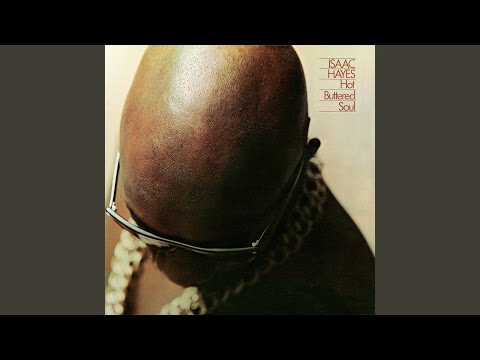
His debut album Presenting Isaac Hayes had arrived in 1967 without making much of a commercial impact. His second, Hot Buttered Soul, was a different proposition entirely: four tracks, extended to lengths that pop radio had never entertained, produced with a grandiose orchestral sensibility that came from Hayes's own vision rather than any formula. Walk On By, one of those four tracks, ran to over twelve minutes. This was not pop songwriting; this was something else, something that required a new vocabulary.
Remaking Bacharach and David
The original Walk on By had been written by Burt Bacharach and Hal David and recorded by Dionne Warwick in 1964. In its original form it was a compact, exquisite piece of uptown pop songwriting: tightly constructed, emotionally precise, built for three minutes of radio airplay. Hayes took this immaculate miniature and expanded it into something almost unrecognizable in scale while preserving what mattered most: the emotional core of loss and restraint.
The arrangement Hayes built around the song begins with a long, slow guitar introduction that creates atmosphere before any recognizable musical material appears. The rhythm section enters gradually, the strings swell at intervals, and Hayes's voice arrives late and takes its time. The transformation demonstrated a principle that would come to define a generation of soul and R&B production: that the journey toward the emotional climax matters as much as the climax itself, that building tension over an extended duration can produce a richer payoff than the most perfectly constructed three-minute pop song.
Charting on the Hot 100
Given its length, the commercial success of the track required an edited single version for radio. The edited version debuted on the Billboard Hot 100 on August 23, 1969 at position 94 and climbed steadily through the fall. It peaked at number 30 on October 25, 1969, spending 12 weeks on the chart in total. For a twelve-minute extended arrangement of a five-year-old Dionne Warwick song, reaching number 30 on the pop chart represented the popular audience's recognition that something extraordinary was happening.
The track's performance on the R&B charts was even more impressive. Hot Buttered Soul as an album reached number one on the R&B album chart and crossed over to significant pop success, establishing Hayes as an artist rather than a behind-the-scenes craftsman. The Walk on By single was the entry point for many listeners into that album and into Hayes's expanded vision of what soul music could be.
The Sound of a Movement Beginning
What Hayes created with this recording was not merely an interpretation; it was a declaration of intent. The production demonstrated what was possible when a Black artist at a soul label was given complete creative control and used it without compromise. Stax Records, facing its own commercial pressures in 1969, allowed Hayes to do something that by any conventional measure should not have worked commercially. That it did, spectacularly, changed what the label and the genre believed was possible.
The recording also pointed toward the orchestral soul and soundtrack work that would make Hayes a cultural icon in the early 1970s. Shaft, released in 1971, would win him an Academy Award for Best Original Song and cement his status as one of the defining artists of that decade. The seeds of that achievement are audible in the sweeping arrangements and unhurried confidence of Walk on By.
A Cornerstone of Soul History
Hot Buttered Soul is now widely recognized as one of the essential albums in the history of American soul music, and this track is central to understanding why. Fifty-plus years after its release, the recording retains its capacity to stop a listener cold, to demand time and attention in an era that has only made those commodities scarcer. Put it on, let the guitar introduction unspool at its own pace, and allow Hayes to remind you that some music is worth every minute it asks for.
"Walk On By" — Isaac Hayes's singular moment on the 1960s charts.
02 Song Meaning
Walk On By — Grief, Restraint, and the Space Between Notes
The Original and What Hayes Did With It
Burt Bacharach and Hal David wrote Walk on By as a song about composure in the presence of pain. Dionne Warwick's 1964 recording expressed this with characteristic precision: a woman asking her former lover not to acknowledge her on the street because she cannot maintain her dignity if he does. The lyric is about the performance of strength in a moment of genuine vulnerability. Isaac Hayes took this emotional premise and expanded it across twelve minutes of slow-burning orchestral soul, exploring not just the stated feeling but everything that surrounds it, everything the original three-minute format left unspoken.
The Pace as Meaning
The most significant artistic choice Hayes made was temporal. By extending the track to more than twelve minutes, he forced the listener to sit inside the emotional situation rather than move through it quickly. The slow, deliberate tempo mimics the way grief actually operates in real time: not as a quick feeling that passes, but as a sustained state that has to be inhabited. The guitar introduction, which arrives before Hayes's voice and establishes the mood with unhurried patience, communicates something about loss that the lyrics alone do not.
This formal decision had real cultural implications in 1969. Soul radio was built on three-minute formats. Extended performances existed in jazz and classical contexts, but not in the Black popular music that Stax represented. Hayes was implicitly arguing that soul music could sustain serious artistic ambition across a longer duration, that it did not need to confine itself to pop conventions in order to reach an audience.
Emotional Register and Cultural Context
In 1969, the mood among many Black American listeners was one of complicated grief. The assassinations of Martin Luther King Jr. and Robert F. Kennedy were one year in the past. The promises of the Civil Rights Movement were encountering the hard limits of structural resistance. Music was one of the spaces where those feelings could be processed, and Hayes offered something that matched the depth of what people were carrying. The weight of the arrangement, the strings and brass and the deliberate pacing, created a musical container large enough for real sorrow.
The song's specific subject, a woman maintaining composure while heartbroken, became in Hayes's hands something more expansive: a meditation on dignity under pressure, on the private cost of public composure, on what it takes to keep moving when everything in you wants to stop.
The Legacy of This Reading
Hayes's version of Walk on By influenced a generation of producers and arrangers who understood that mood, atmosphere, and duration were legitimate artistic tools. The lush orchestrations he pioneered on Hot Buttered Soul can be heard in the work of producers across soul, R&B, hip-hop, and electronic music for decades afterward. Sampling culture would later return to this recording repeatedly, finding in its spacious grooves and sweeping strings a palette that remained fertile long after its original context had passed.
The track peaked at number 30 on the Billboard Hot 100 in October 1969, a commercial validation that an extended, uncompromising vision of soul music could reach a broad audience. That validation mattered for what came after: Hayes's subsequent career, and the subsequent careers of every artist who understood that his example had expanded the possible.
"Walk On By" — Isaac Hayes's singular moment on the 1960s charts.
→ More from Isaac Hayes
View all Isaac Hayes hits →
→ More from the 1960s File
View all 1960s hits →




Keep digging