The 1970s File Feature
If You Don't Know Me By Now
If You Don't Know Me By Now: Harold Melvin, the Blue Notes, and the Sound of Philadelphia Soul Not to be confused with the 1989 number-one cover by Simply Re…
01 The Story
If You Don't Know Me By Now: Harold Melvin, the Blue Notes, and the Sound of Philadelphia Soul
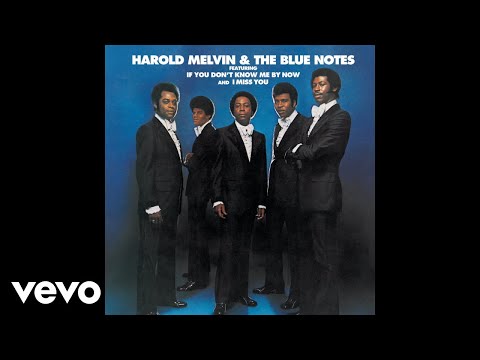
Not to be confused with the 1989 number-one cover by Simply Red, "If You Don't Know Me By Now" as recorded by Harold Melvin and the Blue Notes is the original 1972 version that established the song as one of the defining statements of the Philadelphia International sound. It represents a remarkable convergence of songwriting, production, and vocal performance at a moment when the Philadelphia soul tradition was achieving its fullest artistic expression.
The song was written by Kenny Gamble and Leon Huff, the architect-producers who had founded Philadelphia International Records as a vehicle for their distinctive vision of orchestrated, emotionally sophisticated soul music. Gamble and Huff brought to their songwriting a literary ambition and melodic intelligence that elevated their material above the level of simple pop craft. "If You Don't Know Me By Now" is perhaps their most perfectly realized composition, a song in which the emotional situation, the lyrical expression, and the musical setting achieve a rare unity.
The lead vocal was performed by Teddy Pendergrass, who was at this point the drummer and lead singer of Harold Melvin and the Blue Notes. Pendergrass's voice was one of the most extraordinary instruments in American soul music: a baritone of imposing power and range that could move from tender intimacy to overwhelming emotional intensity within a single phrase. His performance on "If You Don't Know Me By Now" is considered one of the benchmark vocal performances of the early 1970s, combining technical mastery with genuine emotional investment in a way that few recordings have matched.
The production by Gamble and Huff at Sigma Sound Studios in Philadelphia was characteristic of the Philadelphia International approach, rich orchestration arranged by the Philadelphia International house arranger Thom Bell and others, a rhythm section of exceptional precision and warmth, and a production philosophy that placed the human voice at the absolute center of the sonic environment. The string arrangements that frame Pendergrass's vocal provide the track with its distinctive emotional grandeur without overwhelming the intimacy of his delivery.
Released in 1972 on Philadelphia International Records, the single rose to a peak position of number three on the Billboard Hot 100, establishing both the label and Harold Melvin and the Blue Notes as major commercial forces. It also performed strongly on the R&B chart, reaching the top position, confirming that the song connected powerfully with Black audiences while crossing over to mainstream pop radio with equal effectiveness. The combination of chart performance established it as one of the landmark singles of its year.
Harold Melvin himself, the group's nominal leader and a veteran of Philadelphia's vocal group scene, played an important organizational and promotional role in the group while Pendergrass provided the extraordinary vocal talent that drove the recordings. This division of labor, though it would eventually generate tension between the two men leading to Pendergrass's departure for a solo career in 1976, functioned effectively during the group's peak commercial period in the early to mid-1970s.
The song arrived at a particularly fertile moment for the Philadelphia International label, which had been founded only two years earlier but was already establishing itself as the dominant force in soul music. The label's approach consciously positioned itself in relation to Motown's success while developing a distinctly Philadelphia character, more orchestrally elaborate, more explicitly rooted in gospel and jazz influences, and with a lyrical sensibility that tended toward adult emotional situations rather than teenage romance.
"If You Don't Know Me By Now" exemplified this adult orientation. The song concerns the frustrations and misunderstandings that accumulate in a long-term romantic relationship, the gap between how well two people think they know each other and how often misunderstanding still occurs. This was not the subject matter of typical pop or soul singles, which more often addressed the early stages of romantic attraction. Gamble and Huff's willingness to address the complexities of sustained commitment gave the song an emotional weight that resonated particularly strongly with older listeners.
Critical response at the time was uniformly positive, with reviewers recognizing both Pendergrass's performance and the production's achievement. The song was understood immediately as something exceptional, a record that transcended the conventions of its genre while remaining completely accessible. Subsequent critical assessment has only reinforced this view, with the track consistently appearing on lists of the greatest soul recordings of the 1970s and of all time.
The song's cultural trajectory was extended significantly by the Simply Red cover version, which reached number one in the United Kingdom and the United States in 1989, introducing the Gamble and Huff composition to a generation of listeners who might otherwise have been unfamiliar with it. The success of the cover, while artistically distinct from the original, reinforced the foundational quality of the song's construction and sent many listeners back to Pendergrass's definitive version.
02 Song Meaning
Commitment, Frustration, and Intimacy: The Meaning of If You Don't Know Me By Now
"If You Don't Know Me By Now" addresses one of the most complex and under-examined territories in popular song: the experience of sustained romantic commitment and the frustrations that accumulate over time within a relationship that has moved beyond the initial phase of attraction and novelty. This is not a song about falling in love but about the difficulty of sustaining love across the ordinary difficulties of shared life, and that thematic specificity is one of the reasons it has resonated so deeply and durably with adult audiences.
The emotional situation at the heart of the song is a moment of frustrated exasperation in which the narrator turns to a long-term partner and asks, in essence, why the misunderstandings continue after so much shared time and experience. The implicit question underneath the explicit one is whether genuine knowledge of another person is ever fully achievable, whether intimacy ultimately provides the security it promises or whether some essential mystery in the other person always remains. Gamble and Huff do not pose this as a philosophical question but as a raw emotional moment, which is precisely what makes it so effective.
The phrase "by now" does enormous work in the title and throughout the song. It establishes that a significant amount of time has passed, that this is not a new relationship, and that the narrator's frustration is born of accumulated experience rather than early misunderstanding. The "by now" implies that something is overdue, that knowledge should have arrived at this point given everything the two people have shared, and that its continued absence is genuinely painful. This temporal dimension distinguishes the song from simpler expressions of romantic frustration.
Teddy Pendergrass's vocal performance is inseparable from the song's meaning. His voice carries an authority that makes the narrator's exasperation feel like something more than mere impatience. When Pendergrass sings the central plea, it lands with the full weight of genuine emotional investment, the voice of a man who has been fully committed to a relationship and cannot understand why that commitment continues to be met with misunderstanding. The gospel inflections in his delivery give the frustration a quality of moral urgency, as if the narrator is not simply complaining but testifying to a serious failure of human connection.
At the same time, the song contains the seeds of hope and repair. The narrator has not given up on the relationship but is making one more appeal for understanding, arguing that if two people who have shared this much still cannot know each other truly, the problem requires urgent attention. There is an invitation embedded in the frustration, a desire for the other person to finally see what should by now be visible, which gives the song its emotional complexity and prevents it from being simply a lament.
For the Philadelphia International Records catalog, the song represents the label's most fully realized expression of its ambition to create soul music with the emotional depth and sophistication of serious popular art. Gamble and Huff consistently aimed to address the full range of adult emotional experience, not simply the euphoric highs of romantic attraction, and "If You Don't Know Me By Now" demonstrates how effective that ambition could be when it found the right song, the right production, and the right vocal performance working in concert.
The track's continued resonance across more than five decades speaks to the universality of its emotional subject matter. The experience of feeling unknown despite sustained intimacy is one that cuts across demographic boundaries, affecting people regardless of age, background, or relationship configuration. That universality, combined with the extraordinary quality of Pendergrass's performance and Gamble and Huff's production, ensures that the song remains one of the genuinely essential recordings in the history of American soul music.
→ More from Harold Melvin And The Blue Notes
View all Harold Melvin And The Blue Notes hits →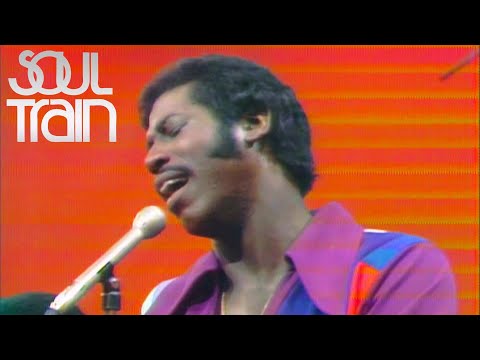


→ More from the 1970s File
View all 1970s hits →




Keep digging