The 1970s File Feature
Bad Luck (Part 1)
Bad Luck (Part 1) — Harold Melvin and the Blue Notes and the Sound of Philly Soul at Its Peak The Philadelphia International Story By 1975, Philadelphia Inte…
01 The Story
Bad Luck (Part 1) — Harold Melvin and the Blue Notes and the Sound of Philly Soul at Its Peak
The Philadelphia International Story
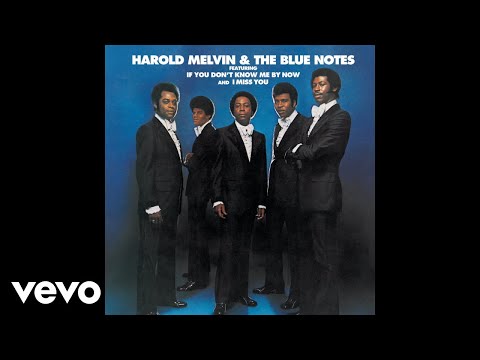
By 1975, Philadelphia International Records had established itself as the most important Black-owned independent label in American pop music. Founded by Kenny Gamble and Leon Huff, with producer Thom Bell also playing a significant creative role in the broader Philadelphia sound, the label had delivered a string of hits that were redefining soul music's relationship to orchestration, sophistication, and emotional depth. Harold Melvin and the Blue Notes were among the label's flagship acts, a group whose recordings combined the kind of architectural production that Gamble and Huff specialized in with a lead vocal presence of rare force and conviction.
That lead vocal presence was Teddy Pendergrass. Pendergrass had taken over the frontman role in Harold Melvin's group in the early 1970s and had rapidly become one of the most powerful singers of his generation. His voice carried a combination of physical authority and emotional nuance that was immediately distinctive on radio. By 1975, Pendergrass was widely recognized as one of the great lead vocalists in soul music, a fact that made Harold Melvin and the Blue Notes recordings something people stopped and listened to rather than simply hearing in the background.
The Track and Its Production
"Bad Luck (Part 1)" was produced by Kenny Gamble and Leon Huff, the architects of the Philadelphia International sound. The track exemplifies what made their productions so distinctive: a dense orchestral arrangement that provided a lush, almost cinematic backdrop for the vocal performance, a rhythm section that was both metronomically precise and deeply grooving, and an overall production aesthetic that treated the record as an emotional experience rather than simply a vehicle for a catchy hook. Gamble and Huff's production style had evolved through the early 1970s into something that influenced virtually every major soul and R&B producer who came after them.
The "Part 1" designation in the title reflected a common practice of the era: releasing an extended track in sections to conform to radio timing requirements while acknowledging the fuller version that existed on the album. Soul and funk records of this period frequently exceeded the four-minute limit that radio programmers preferred, and the part-one structure was a practical solution that had become a genre convention.
The Billboard Hot 100 Run
"Bad Luck (Part 1)" debuted on the Billboard Hot 100 on March 22, 1975, at position 88. The track climbed steadily over the following weeks, eventually reaching a peak of number 15 on June 14, 1975, after 17 weeks on the chart. That was a strong chart performance by any measure, placing the track in the top 20 of the most-consumed popular music in America across a nearly four-month period. On the R&B charts, the track performed even more prominently, which was typical of Philadelphia International material that often outperformed its pop chart position within its primary audience.
The 17-week Hot 100 run reflected the patient, word-of-mouth quality of the song's audience growth. Soul records of this complexity and emotional weight were not necessarily immediate pop hits; they built audiences gradually through repeated radio plays that revealed new layers with each listen. "Bad Luck" rewarded that kind of patient engagement.
Harold Melvin's Role and Legacy
Harold Melvin himself occupied an interesting position in the group's story. As the nominal leader and namesake, he organized and fronted the group in the business and presentational sense, while Pendergrass served as the primary vocal instrument. This dynamic was not unusual in vocal group history, but it created a distinctive biographical question about credit and recognition. Melvin's contribution was real even when it was organizational rather than artistic, and the group's extraordinary run of recordings in the early-to-mid 1970s was partly a function of his ability to maintain the ensemble's stability and direction.
Pendergrass would eventually leave the group in 1976 to pursue a solo career that became one of the most celebrated in soul music history, which lent "Bad Luck" and the other mid-70s recordings a retrospective quality as the final documents of a particular creative configuration at its height.
The Record in Its Moment
The summer of 1975 on radio was a contested landscape, with disco beginning its ascent on one hand and the orchestral soul tradition represented by Philadelphia International facing questions about its continued commercial viability on the other. "Bad Luck (Part 1)" performed well enough to answer those questions for at least another album cycle, demonstrating that the Gamble-Huff-Pendergrass combination still had mainstream commercial power. The track stands today as a document of one of the most precisely calibrated production styles in American music, captured at a moment of full creative maturity.
Turn it up and let the strings come in on that first verse. Then wait for Pendergrass to arrive and feel the room change.
"Bad Luck (Part 1)" — Harold Melvin And The Blue Notes's singular moment on the 1970s charts.
02 Song Meaning
Bad Luck (Part 1) — Fate, Resilience, and the Soul Music of Hard Times
The Theme of Misfortune as Shared Experience
Soul music in the 1970s had a particular gift for finding beauty in difficulty. The best recordings of the era did not shy away from hardship or pretend that life was simpler than it was; they looked at struggle directly and found in it something worth singing about, worth gathering around, worth using as a point of communal identification. "Bad Luck (Part 1)" sits squarely in that tradition. The song's central subject is the experience of misfortune, of a run of bad circumstances that the narrator cannot seem to escape, and the emotional response is neither simple despair nor cheap optimism, but something more nuanced: the acknowledgment of difficulty combined with the continued act of voicing it, which is itself a form of resistance.
In the context of the mid-1970s, when economic pressure was affecting Black communities with particular severity, a song about bad luck resonated with material precision. The abstract experience being described was also a concrete reality for many listeners, which gave the track an emotional authenticity that transcended its musical qualities alone.
Teddy Pendergrass and the Voice as Instrument of Truth
The emotional weight of "Bad Luck (Part 1)" depends significantly on the quality of vocal performance, and Teddy Pendergrass was among the finest instruments available for that purpose in 1975. His voice carried a physical intensity that made emotional claims sound bodily, felt as much as heard. When Pendergrass sang about misfortune, the listener heard something that registered as genuine rather than performed, a quality that distinguished the great soul vocalists from the merely competent ones.
This authenticity of vocal expression was not separate from the formal artistry involved. Pendergrass was a trained and controlled vocalist who understood how to deploy dynamics, how to move between restraint and power in ways that created emotional shape within a performance. The seeming naturalness of his delivery was the product of considerable craft, applied in service of genuine feeling.
The Gamble-Huff Philosophy of Soul Production
Kenny Gamble and Leon Huff approached record production as a form of emotional architecture. Their arrangements were designed to create environments in which the vocal performance could achieve its maximum impact, surrounding the singer with orchestral textures that both supported and amplified the emotional content of the lyric. The Philadelphia International sound in 1975 was at the height of its sophistication, having refined the basic approach through years of recordings into something that was recognizable as a style while remaining flexible enough to serve different kinds of material.
For a song about bad luck, the production made a significant choice by surrounding the lyric with lush, expensive-sounding strings and horns. The contrast between the content, misfortune, struggle, the persistent sense of circumstances working against the narrator, and the musical setting, warm, rich, full, created an emotional paradox that was central to the soul tradition: dignity asserted through artistic quality in the face of conditions that denied it elsewhere.
Social Context of 1975
The mid-1970s were a period of genuine anxiety in America. Economic stagnation combined with inflation created financial pressures that fell disproportionately on working-class communities. The idealism of the 1960s civil rights movement had given way to a more complex and often more frustrating political reality. A song about the persistence of bad luck, released into that atmosphere, spoke to experiences that were widely shared even if they were not always acknowledged in polite public discourse.
Soul music's function as a communal language for shared difficulty is one of its most important cultural contributions. "Bad Luck (Part 1)" participated in that tradition with sincerity and skill, creating a recorded artifact that listeners could use to feel less alone in their own difficult circumstances.
Lasting Significance
Harold Melvin and the Blue Notes left behind a catalog that holds up beautifully. The Philadelphia International recordings of the early-to-mid 1970s represent a peak of a specific approach to soul music production, one that valued craftsmanship, emotional depth, and orchestral sophistication above all else. "Bad Luck (Part 1)" is a strong example of that approach applied to subject matter that gave Pendergrass's extraordinary voice something worthy of its power to work with.
"Bad Luck (Part 1)" — Harold Melvin And The Blue Notes's singular moment on the 1970s charts.
→ More from Harold Melvin And The Blue Notes
View all Harold Melvin And The Blue Notes hits →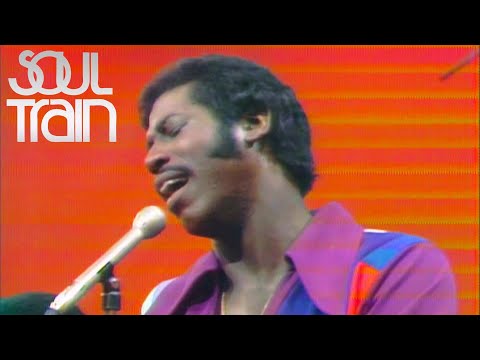


→ More from the 1970s File
View all 1970s hits →




Keep digging