The 1970s File Feature
Your Love
Your Love: Graham Central Station and the Funk Sermon of 1975 Larry Graham and the Bass That Changed Everything Before Graham Central Station, before the thu…
01 The Story
Your Love: Graham Central Station and the Funk Sermon of 1975
Larry Graham and the Bass That Changed Everything
Before Graham Central Station, before the thumping groove of Your Love, there was a bass player in Sly and the Family Stone who was quietly rewriting the rules of what a low-end instrument could do in a pop context. Larry Graham had developed a technique, later dubbed "slap bass" or "thumping and plucking," that transformed the bass guitar from a rhythmic foundation into a percussive lead voice. When he left Sly Stone's band in 1972 and formed Graham Central Station, he had a platform to build an entire band's identity around that innovation.
Graham Central Station arrived as a force in the early-to-mid 1970s funk and soul landscape, a period when the genre was experiencing some of its most creative and commercially potent years. James Brown's influence had radiated outward, George Clinton's Parliament and Funkadelic were constructing elaborate psychedelic funk architectures, and acts like Earth Wind and Fire were proving that sophisticated arrangements and spiritual ambition could coexist with danceable rhythms. Into this conversation came Graham Central Station, propelled by one of the most technically gifted bassists in the history of popular music.
The Recording and Sound of "Your Love"
Your Love came from the band's third album, Ain't No 'Bout-A-Doubt It, released on Warner Bros. Records in 1975. The album represented the band at a commercial peak, balancing the raw funk energy of Graham's bass work with smoother soul production values that could reach R&B radio and crossover into the broader pop market. The track built on a groove that was simultaneously lean and enveloping, driven by Graham's bass technique in a way that made the rhythm feel alive and conversational rather than metronomically mechanical.
The vocal performances throughout the album, including Your Love, demonstrated that Graham Central Station was more than a vehicle for instrumental showboating. The arrangements gave the groove room to breathe while ensuring the song's emotional content registered clearly. This balance between technical virtuosity and accessible songcraft was precisely what the mid-1970s R&B market rewarded.
The Chart Journey Through Summer 1975
The single debuted on the Billboard Hot 100 on August 9, 1975, entering at number 87. The ascent was consistent over the following weeks, the track climbing through the eighties and into the sixties before settling into its commercial peak. The song reached its highest position of number 38 on September 20, 1975, spending a total of nine weeks on the Hot 100. On the R&B charts, where Graham Central Station had a more devoted following, the track performed even more impressively.
The summer of 1975 was dense with competition. Earth Wind and Fire, the Ohio Players, and Kool and the Gang were all active commercial forces, and the crossover market between soul, funk, and pop was intensely contested. The fact that Your Love climbed as high as it did on the Hot 100 reflected both the quality of the track and the band's growing national profile.
A Legacy Anchored in Bass
Graham Central Station continued recording through the decade, but the band never quite recaptured the commercial momentum of the Ain't No 'Bout-A-Doubt It period. Larry Graham himself went on to considerable solo success in the late 1970s and early 1980s, most notably with the hit "One in a Million You" in 1980, which demonstrated his range as a vocalist alongside his instrumental gifts.
The deeper legacy, though, belongs to the bass technique. Graham's thumping and plucking approach influenced virtually every funk bassist who followed, and its echoes can be heard in hip-hop production, contemporary R&B, and the funk revival movements of the 1990s and 2000s. Tracks like Your Love document the technique in its original creative context, embedded in full arrangements where it served the song rather than existing as demonstration for its own sake. Turn up the bass on a good system, and the track still sounds like the future arriving.
"Your Love" — Graham Central Station's singular moment on the 1970s charts.
02 Song Meaning
The Meaning of Your Love by Graham Central Station: Devotion, Groove, and the Language of Funk
Love as Physical Force
Funk has always understood something that smoother genres sometimes forget: that emotion and the body are inseparable, that love is felt in the muscles and the hips before it is processed by the mind. Graham Central Station built their musical identity on that understanding, and Your Love extends it into lyrical territory. The track's subject is devotion, commitment, the overwhelming pull of romantic feeling, but it delivers those sentiments through a groove so physically immediate that the emotional content arrives through the body rather than through the intellect.
The song's central message is straightforward in the best tradition of soul and funk songwriting: love as sustenance, as something without which existence feels incomplete. That theme could read as generic, but the musical delivery transforms it. When Larry Graham's bass makes the sentiment feel urgent rather than abstract, the words gain a weight they might not carry in a different arrangement.
The Spiritual Dimension of Groove
Graham Central Station had connections to the spiritual communities that were a significant part of mid-1970s soul and funk culture. Larry Graham would later become a prominent Jehovah's Witness, and his faith-informed perspective on devotion and love inflected the band's catalog in ways that were more subtle than overt. Your Love sits in a tradition of funk and soul songs where romantic devotion and something approaching the spiritual are not cleanly separated, where singing about love for another person carries undertones of a larger gratitude.
This was not unusual in the genre. Earth Wind and Fire were explicit about the spiritual dimensions of their music. Stevie Wonder's mid-decade albums explored connections between romantic love and cosmic consciousness. Your Love participates in that conversation with less explicit language but a similar emotional register, treating devotion as something that elevates rather than merely satisfies.
Era Color: 1975 and the Meaning of the Groove
The summer of 1975 was a culturally complex moment. The Vietnam War had ended in April, leaving behind a national mood that combined exhaustion with an uneasy relief. In that context, dance music carried a particular social function: it offered release, community, and the pleasure of physical presence in a moment when larger structures felt unstable. The funk and soul of 1975 was not escapism in the dismissive sense but a genuine form of social glue, music that brought people together on dance floors and gave them something to share.
Your Love participated in that function. A track built for movement, it asked nothing of its listeners except that they surrender to the groove. That invitation to surrender was part of its emotional meaning, a temporary relinquishing of the individual worries that 1975 had accumulated, replaced by collective movement and the simple affirmation that love, physical and emotional and possibly spiritual, remained available.
Why Devotion Songs Endure
Songs about love and devotion have been the backbone of popular music across every decade, and their resilience points to something fundamental about what listeners ask music to do. Your Love endures in the Graham Central Station catalog because it combines the universality of its emotional subject with a musical execution that remains distinctive. The bass playing that anchors the track, Graham's signature slap-and-pop technique deployed in service of the song, gave the expression of devotion a physical urgency that purely lyrical delivery could not have achieved. Feeling loved should feel like that groove: warm, insistent, and impossible to ignore.
→ More from Graham Central Station
View all Graham Central Station hits →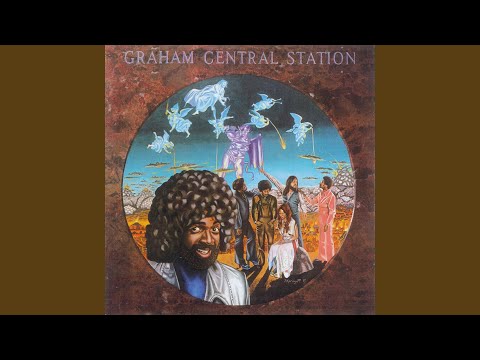
→ More from the 1970s File
View all 1970s hits →




Keep digging