The 1970s File Feature
The Jam
The Jam — Graham Central Station (1976) Graham Central Station was the vehicle through which Larry Graham, one of the most influential bassists in the histor…
01 The Story
The Jam — Graham Central Station (1976)
Graham Central Station was the vehicle through which Larry Graham, one of the most influential bassists in the history of popular music, established his post-Sly and the Family Stone artistic identity. Graham had been a founding member and the bass player for Sly and the Family Stone, where he developed the slap-and-pop bass technique that would define funk bass playing for decades. After departing from that group amid the internal dysfunction and commercial decline of the early 1970s, Graham formed Graham Central Station and signed with Warner Bros. Records, building a tighter, more controlled funk ensemble around his own singular musical vision.
"The Jam" was released in 1976 on Warner Bros. and represented the band operating at the peak of their commercial and artistic powers. The track exemplified everything that Graham Central Station did best: the bass-forward groove that placed Larry Graham's instrument at the center of the arrangement rather than in supporting service of horns or vocals, the collective rhythmic precision of an ensemble that had been touring and recording together long enough to function as a single organism, and the declarative energy that characterized the best funk recordings of the era.
The timing of the release placed the track in the middle of the funk era's commercial peak, a period when artists like James Brown, Parliament-Funkadelic, Earth, Wind and Fire, and Kool and the Gang were competing for dominance of a genre that had become one of the dominant forces in Black popular music. Graham Central Station occupied a specific position within this landscape: less theatrically elaborate than Parliament-Funkadelic, more guitar and bass focused than Earth Wind and Fire, and shaped more than any of their peers by the specific genius of a single musician whose instrument was the bass rather than the voice or the guitar.
Larry Graham's slap bass technique, which he developed during his years with Sly Stone, was the foundational element of the Graham Central Station sound. The technique involved using the thumb to slap the lower strings percussively and the fingers to pop the upper strings, creating a rhythmic and melodic complexity from a single instrument that had previously required both a bassist and a percussionist to achieve. Graham's development and popularization of this technique was one of the most consequential contributions to popular music production in the 1970s, and "The Jam" showcases it at full power.
The album from which the track came continued the band's run of consistent album releases for Warner Bros. throughout the mid-1970s. Their debut album Release Yourself had been released in 1974 and established their commercial profile, followed by Ain't No 'Bout-A-Doubt It in 1975, which produced their biggest commercial success with "Your Love" reaching the R&B charts. By 1976, the band had developed a deep catalog and a devoted audience that valued them as one of the premier live funk acts in the country.
The live experience of Graham Central Station was central to their reputation. Their concerts were known for extended improvisational passages, audience participation, and the kind of raw physical energy that Larry Graham generated through his bass playing. "The Jam," as a recording, captures some of that live energy while imposing the discipline of the studio environment, creating a track that is simultaneously controlled and electrifying. The title's reference to jamming was not incidental: the track's structure owed something to the extended live performance tradition that made their concerts events rather than mere entertainment.
The broader cultural context of mid-1970s funk was one of enormous creative ferment and commercial ambition. Black popular music had moved decisively away from the integrationist crossover strategies of the Motown era and toward more assertively Black musical forms that prioritized community expression over mainstream accessibility. Graham Central Station was part of this movement, making music that was uncompromising in its rhythmic complexity and bass-forward aesthetic even as it sought and achieved commercial success on the R&B charts.
Graham Central Station's influence on subsequent popular music has been substantial and well documented. The slap bass style that Larry Graham pioneered became one of the defining sounds of late 1970s and 1980s funk and R&B, adopted and extended by players including Marcus Miller and Bootsy Collins. The band's recordings, including "The Jam," have been widely sampled in hip-hop productions, extending their sonic footprint into yet another generation of popular music and ensuring that Larry Graham's contributions to the rhythmic vocabulary of popular music continued to circulate in forms he could not have anticipated when the recordings were first made.
02 Song Meaning
Meaning and Musical Identity of "The Jam"
"The Jam" by Graham Central Station functions as both a musical performance and an artistic declaration. The title announces the piece's relationship to the improvisational tradition within Black American music, where the jam session represents a space of musical democracy and collective creativity, a space in which individual virtuosity serves the collective groove rather than individual display. The track's relationship to this tradition is central to understanding what it meant to the musicians who made it and to the audiences who received it.
Larry Graham's bass is the organizing principle of the recording in a way that reflects a philosophical position about how funk music should work. In many funk productions of the era, the bass occupied a supporting role within a larger ensemble structure that might privilege horns, keyboards, or a lead vocalist. Graham's approach inverted this hierarchy, placing the bass at the center and constructing the rest of the arrangement around it. This was not merely a stylistic preference but an assertion that the bass, as the instrument most directly responsible for the physical sensation of groove, deserved the creative and sonic prominence that it had historically been denied in popular music production.
The piece also carries meaning as a statement about collective musicianship. Graham Central Station as an ensemble was notable for the degree to which all members were expected to perform at an exceptionally high level. The band's name itself, placing Larry Graham's identity at the center, might suggest a hierarchy, but the actual music was always a product of collective precision and collective energy. "The Jam" showcases this ensemble quality, with the rhythm section, horns, and vocals all functioning as interdependent elements of a single rhythmic and emotional argument rather than as separate voices competing for attention.
In the context of mid-1970s Black popular music, the track's aesthetic carried political implications that were not stated but were nonetheless present. Funk music of this era, whether produced by George Clinton's Parliament-Funkadelic empire, James Brown's various ensembles, or Graham Central Station, was operating within a cultural framework shaped by Black Power politics, Afrocentric consciousness, and the assertion of Black cultural autonomy. The insistence on rhythmic complexity, on musical forms rooted in African and African American traditions rather than European harmonic conventions, and on technical mastery that demanded respect on its own terms, all carried meaning in a social context where Black artistic achievement was often dismissed or appropriated.
The jam as a form within this context was specifically meaningful as an expression of musical freedom and collective joy. Jazz jam sessions had historically been spaces where Black musicians could develop and share ideas outside the constraints of the commercial recording industry. By invoking this tradition in a 1976 funk context, Graham Central Station was connecting their work to a longer history of Black musical self-determination and community expression.
Larry Graham's personal musical journey from Sly and the Family Stone to Graham Central Station also provides interpretive context for "The Jam." The Family Stone period, for all its extraordinary musical creativity, had ended in acrimony, addiction, and commercial decline. Graham Central Station represented a fresh start, a disciplined and functional musical organization built around Larry Graham's values and vision. In this light, "The Jam" can be heard as a declaration of musical health and collective purpose, the sound of musicians who trusted each other and found joy in their shared craft without the toxicity that had characterized the later years of the Family Stone experience.
→ More from Graham Central Station
View all Graham Central Station hits →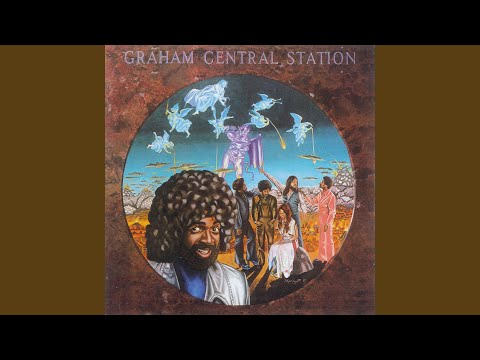
→ More from the 1970s File
View all 1970s hits →




Keep digging