The 1970s File Feature
Can You Handle It?
The Story Behind Can You Handle It? by Graham Central Station In the spring of 1974, funk was splintering into ever more inventive tributaries, and few bandl…
01 The Story
The Story Behind "Can You Handle It?" by Graham Central Station
In the spring of 1974, funk was splintering into ever more inventive tributaries, and few bandleaders were pushing the bass-forward, endlessly percussive edge of the genre harder than Larry Graham, the man widely credited with inventing the slap-and-pop bass technique during his years with Sly and the Family Stone. "Can You Handle It?" arrived as an early statement from Graham Central Station, the band he formed after leaving Sly's group to lead his own outfit at last.
A Bassist Steps Into the Spotlight
Graham had already changed the sound of popular music once, developing the thumb-slapping bass style that became foundational to funk while playing alongside Sly Stone in the late 1960s and early 1970s. Striking out with Graham Central Station gave him full creative control for the first time, and the band's early records, including "Can You Handle It?," put his percussive, elastic bass playing front and center rather than in service of someone else's vision for the group.
A Groove Engineered for the Dance Floor
The track is built almost entirely around rhythm, Graham's signature slap bass interlocking with tight horns and call-and-response vocals in an arrangement that leaves plenty of room for the pocket to breathe. The song's title, posed as a challenge, matches its musical attitude: a band daring listeners to keep up with a groove that shifts and syncopates with real confidence throughout. It is dance music built by musicians who understood rhythm as a genuinely sophisticated craft rather than mere accompaniment.
A Solid Showing on the Hot 100
"Can You Handle It?" entered the Billboard Hot 100 on May 4, 1974, and climbed steadily over the following weeks, reaching a peak position of number 49 during the chart week of June 15, 1974. The single spent a total of eight weeks on the chart, a solid showing for a young band still establishing its identity apart from Graham's more famous former group.
An Early Marker in a Foundational Funk Catalog
Graham Central Station would go on to score bigger hits later in the decade, but "Can You Handle It?" remains an important early marker of the band finding its own voice, distinct from but clearly descended from the innovations Graham had brought to Sly and the Family Stone. Revisit it now and the through-line to funk's later evolution, from disco to eventually hip-hop's rhythmic backbone, becomes obvious. Graham would go on to influence generations of bassists who studied his technique closely, and this early single captures him still sharpening the approach that would later be sampled and imitated across multiple genres of popular music, from disco through modern hip-hop production many decades afterward, long after the band itself had faded from the charts and Graham had moved on to other projects, including a long stint alongside Prince. Press play and feel exactly how much groove a single, well-placed bass line can carry.
"Can You Handle It?" — Graham Central Station's singular moment on the 1970s charts.
02 Song Meaning
The Meaning Behind "Can You Handle It?"
"Can You Handle It?" functions less as a story than as a direct challenge, its title doubling as both a romantic dare and a musical one: can the listener keep pace with a groove built to test rhythmic endurance from start to finish. That dual meaning, romantic confidence mirrored by musical confidence, sits at the heart of the song.
Confidence as the Central Theme
The lyrical content leans into a swaggering self-assurance, a narrator questioning whether a potential partner can match his intensity and energy. That kind of playful, boastful confidence was a common thread throughout funk's lyrical tradition in the 1970s, less concerned with vulnerability than with projecting charisma and command, both romantically and physically.
The Body as the Message
Because the song's real substance lives in its rhythm, much of its meaning is communicated physically rather than verbally, through Larry Graham's slapping bass technique and the band's tight, interlocking arrangement. The challenge posed in the title is answered by the music itself: a groove so demanding and inventive that simply dancing to it becomes its own kind of response to the dare being issued.
Funk's Assertion of Black Musical Innovation
Graham's bass technique represented a genuine technical innovation within Black American music, and songs like this one served as a showcase for that innovation, asserting a kind of musical mastery that doubled as cultural pride. The confidence in the lyric mirrors the confidence embedded in the playing itself, a band fully aware of the ground it was breaking rhythmically at the time.
Why the Challenge Still Lands
The song's appeal lies in that combined dare, romantic and physical at once, delivered over a groove complex enough to make good on its own boast. Listeners were not just being asked a question; they were being handed a genuine rhythmic challenge, and the record's enduring reputation among funk enthusiasts, built on an eight-week chart run that peaked at number 49, reflects how well it delivers on both fronts, still sounding like a dare few dance floors could fully answer even decades later.
→ More from Graham Central Station
View all Graham Central Station hits →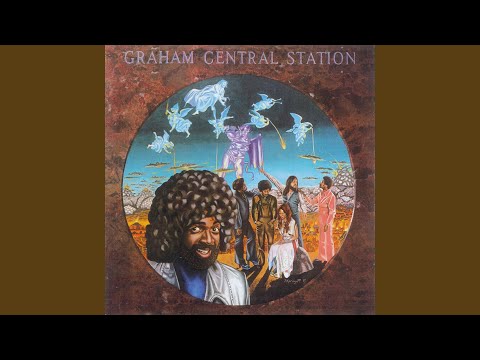
→ More from the 1970s File
View all 1970s hits →




Keep digging