The 1970s File Feature
Walk On By
Walk On By — Gloria Gaynor's Brief 1970s Hot 100 Appearance Before Gloria Gaynor became the undisputed queen of disco survival, before the thunderous opening…
01 The Story
"Walk On By" — Gloria Gaynor's Brief 1970s Hot 100 Appearance
Before Gloria Gaynor became the undisputed queen of disco survival, before the thunderous opening piano chord of "I Will Survive" became one of the most recognized sounds in the history of popular music, she was a working soul and R&B singer navigating a New Jersey music scene that demanded versatility and stamina in equal measure. Her career in the early 1970s was one of gradual accumulation: building an audience at clubs, refining a vocal approach that combined considerable power with genuine emotional intelligence. "Walk On By", her 1975 take on the Bacharach-David classic, represents a moment from that journey when she was reaching toward the wider commercial recognition that would soon arrive in spectacular fashion.
The Weight of the Original
Covering Burt Bacharach and Hal David's "Walk On By" in 1975 meant stepping into the considerable shadow of Dionne Warwick's definitive 1964 recording, which had reached number 6 on the Hot 100 and became one of the best-known pop ballads of the decade. That original is a deeply interior song, intimate and restrained in a way that matched Warwick's particular gifts perfectly. Gloria Gaynor brought an entirely different energy to the material, an approach that leaned into her strength as a more extroverted, full-voiced performer. The interpretive choice was to make the song her own rather than imitate what had come before.
Soul Covers in the Mid-Seventies
The practice of revisiting classic pop and soul material was common in the mid-1970s, as the industry explored what familiar songs could become in the hands of a different generation of singers. Disco's rise had given these reworkings a structural home: slower, more emotionally complex originals could be rebuilt around different rhythmic frameworks, extended for dancefloor use, or simply reinterpreted by a voice with a different kind of authority. Whether Gaynor's version stayed close to the ballad form or incorporated elements of the emerging disco aesthetic, her vocal presence would have been the dominant feature of any arrangement.
A Single Week on the Billboard Hot 100
"Walk On By" debuted on the Billboard Hot 100 on June 28, 1975, entering and peaking at number 98. The single spent just one week on the chart, a brief commercial footprint that stands in sharp contrast to the massive success that was coming for Gaynor just a few years later. Chart history is full of these moments, when an artist who would eventually achieve significant recognition is seen on the data in a form so modest it seems almost impossible to square with what followed.
The Prelude to Survival
The extraordinary thing about this record's context is where it sits in Gloria Gaynor's timeline. She was already considered a fixture in the emerging disco scene by 1975, with club audiences who knew and responded to her work enthusiastically. "Walk On By" may not have connected with the pop mainstream on this attempt, but the audience she was building in clubs and on the soul circuit was precisely the one that would carry "I Will Survive" to number 1 in 1979. The brief Hot 100 appearance represents a chapter in the education of a major artist, not a footnote to failure.
The Context That Makes the Chart Entry Remarkable
What you are looking at when you encounter Gloria Gaynor on the Hot 100 in 1975 is a singer who is roughly three and a half years away from the record that will define her legacy. The gap between number 98 for one week and a number-1 record that becomes a cultural touchstone is remarkable by any measure. "Walk On By" earns its place in the discography precisely because of that gap. The 179,000 YouTube views it has accumulated tell the story of listeners who know the full arc and want to hear every chapter of it.
Listen to it knowing what is coming, and you will hear an artist in the process of becoming exactly who she needed to be.
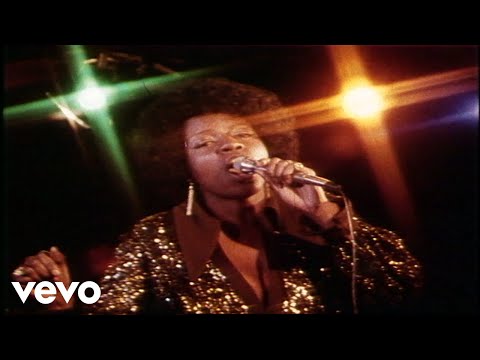
"Walk On By" — Gloria Gaynor's singular moment on the 1970s charts.
02 Song Meaning
The Meaning Behind "Walk On By" by Gloria Gaynor
Some songs carry so much accumulated meaning by the time a new artist records them that interpretation becomes a kind of conversation with the past. Burt Bacharach and Hal David's "Walk On By" was, by 1975, one of the most emotionally legible songs in the American popular canon. Its premise is stark and specific: a narrator who has recently lost a love asks that, if their former partner should happen to see them in public, the kindest thing they can do is pretend not to notice. The grief is raw enough that public encounter would break whatever composure remains. That is a precise and devastating emotional setup, and it loses none of its power in retelling.
The Dignity of Private Grief
The central insight of the lyric is that grief requires privacy to be survivable. The narrator is not asking to be avoided forever; they are asking for a specific mercy in a specific moment, the mercy of not being seen in their most vulnerable state. This is an emotionally sophisticated request, one that acknowledges both the ongoing pain of loss and the importance of maintaining some outward composure in a world that does not always make space for public suffering. The song understands something true about how people actually move through heartbreak, which is why it has retained its power across decades and multiple interpretations.
What Gloria Gaynor Brought to the Material
When Gloria Gaynor approached this song in 1975, she brought a vocal presence shaped by gospel and soul traditions that deal with endurance as a primary value. Her instrument was built for the long form, for the sustained note, for the emotional journey that unfolds over the full length of a performance rather than in any single precise phrase. Whether the arrangement gave her room to expand that approach or kept closer to the song's intimate original shape, her voice would have given the narrator's request for privacy a paradoxical quality: asking not to be seen while being impossible to ignore. That tension is not a problem in the interpretation; it is the interpretation.
Bacharach and David's Enduring Architecture
The durability of "Walk On By" as a song derives substantially from the architecture that Bacharach and David built into it. The melody moves in unexpected directions that consistently feel inevitable on arrival, and the harmonic language carries a sophistication that rewards repeated listening without ever becoming inaccessible. These qualities mean that nearly any capable singer who comes to the song with genuine emotional engagement will find something in it to illuminate. The song is designed to support interpretation, which is why it has survived so many of them.
The Mid-Seventies Emotional Landscape
By 1975, the cultural mood in America was one of exhaustion and recalibration. The optimism of the early decade had been complicated by Watergate, by economic uncertainty, by the drawn-out conclusion of Vietnam. In this environment, a song about the difficulty of maintaining composure after loss, about asking the world for just a little mercy while you try to hold yourself together, landed in a particularly resonant place. The personal was political in ways that were rarely explicit in pop music but were felt in the emotional frequencies that songs like this one occupied.
A Song Built to Last
"Walk On By" has outlasted every specific cultural moment it has passed through because its emotional subject is permanent. People will always lose loves they did not want to lose, and the specific grace it asks for, the grace of being allowed to grieve without an audience, will always be something human beings need from each other. Gloria Gaynor singing it in 1975 is one chapter in a long story that the song keeps telling, in whatever voice happens to carry it next.
→ More from Gloria Gaynor
View all Gloria Gaynor hits →


→ More from the 1970s File
View all 1970s hits →




Keep digging