The 1970s File Feature
Happy
Eddie Kendricks After the Temptations: The Solo Years and "Happy" Few voices in the history of American soul music carried the particular ethereal quality th…
01 The Story
Eddie Kendricks After the Temptations: The Solo Years and "Happy"
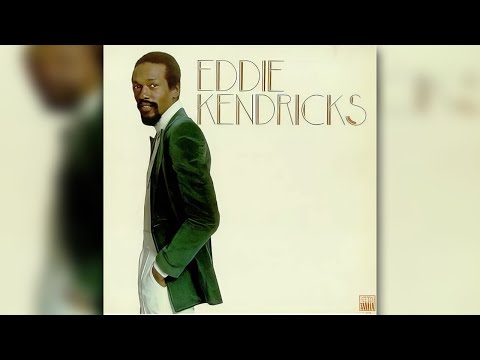
Few voices in the history of American soul music carried the particular ethereal quality that Eddie Kendricks possessed. His falsetto, among the most distinctive in the Motown canon, had anchored some of the Temptations' most beloved recordings through the 1960s and into the early 1970s. When Kendricks departed from the group in 1971, he carried that voice into a solo career that would produce genuine commercial triumphs before settling into a period of more modest chart returns. "Happy," released in 1975, belongs to that later phase: a funk-inflected record that entered the Billboard Hot 100 on October 11, 1975, debuting at number ninety-seven and climbing to its peak of number sixty-six on December 20, 1975, during a chart run of thirteen weeks.
The arc of Kendricks' solo career before "Happy" had included some remarkable peaks. His 1973 single "Keep On Truckin'" had reached number one on the Hot 100, a commercial achievement that placed him among the most successful former Motown artists navigating the post-Motown landscape. "Boogie Down" followed in 1974 with another number-one performance, cementing Kendricks' reputation as a solo artist capable of crossover success on his own terms. Both of those singles were produced by Frank Wilson and Leonard Caston for Motown, and they leaned into the emerging funk and proto-disco idiom with considerable skill.
By 1975, however, the musical landscape was shifting with unusual speed. Disco was consolidating its commercial dominance, funk was evolving in directions shaped by George Clinton's Parliament-Funkadelic operation and the increasingly elaborate productions coming out of Philadelphia, and the radio environment that had been so hospitable to Kendricks' brand of groove-oriented soul was becoming more competitive. "Happy" entered this context as a product of that transitional moment, carrying the rhythmic energy of early funk while maintaining the melodic clarity that had always been Kendricks' greatest asset.
The song was recorded during Kendricks' tenure at Motown, a label relationship that had defined his professional life from his earliest years with the Temptations. The Motown production infrastructure, though increasingly decentralized from its original Detroit base as the company shifted operations toward Los Angeles, still provided Kendricks with capable musical collaborators. The arrangement on "Happy" reflected the period's aesthetic preferences: prominent bass lines, syncopated rhythmic patterns, and a production texture that suited both radio play and the increasingly powerful sound systems of the dancefloor.
Thirteen weeks on the Hot 100 represented a respectable showing, though the peak of sixty-six placed "Happy" well below the commercial heights of Kendricks' earlier solo triumphs. The R&B chart performance told a different story: among Black radio listeners who had followed Kendricks since his Temptations days, the record found a warmer and more sustained reception. This split between pop and R&B chart performance was becoming increasingly common in the mid-1970s as format fragmentation accelerated and radio programmers made increasingly distinct decisions about which records crossed over and which remained within their home genre.
Kendricks' situation in 1975 also reflected a broader pattern affecting many artists who had achieved their greatest success in collaborative ensemble contexts. The solo career offered creative freedom and individual recognition but required the artist to become both performer and brand simultaneously, a different challenge from the shared identity of group membership. The Temptations had been one of Motown's most carefully curated acts, with their image, repertoire, and presentation managed with precision. As a solo performer, Kendricks had to navigate those decisions with less institutional support, even while remaining on the Motown roster.
"Happy" is best understood as a document of transition: an artist with extraordinary vocal gifts working within an evolving genre landscape, achieving moderate commercial success while the music industry reorganized itself around him. The falsetto remained immaculate, the groove remained functional, and the chart performance, while modest by his earlier standards, confirmed that Eddie Kendricks retained a meaningful audience through the mid-decade period. His subsequent career would see further personnel and label changes, but in late 1975, "Happy" represented a confident if not spectacular entry in the catalog of one of soul music's most genuinely distinctive vocal talents.
02 Song Meaning
The Pursuit of Joy: What "Happy" Meant for Eddie Kendricks
"Happy" arrives in Eddie Kendricks' catalog at a particular inflection point, and that timing shapes how the record asks to be understood. After the exhilarating commercial success of "Keep On Truckin'" and "Boogie Down," Kendricks was navigating the question that follows any artist's peak: how to sustain momentum when the cultural currents that elevated you are already shifting toward something new. The song's title and emotional register suggest a kind of deliberate affirmation, a declaration of contentment addressed as much to the artist's own circumstances as to any romantic subject.
Lyrically, the track operates within the conventions of mid-1970s soul, where romantic happiness and physical euphoria were treated as overlapping states rather than distinct emotional categories. The dancefloor and the bedroom existed in the same emotional geography for this genre; music that made the body move was understood to be music about feeling good, and feeling good encompassed intimacy, community, and physical pleasure without sharp distinctions between them. Kendricks, whose falsetto had always carried a quality of yearning even in its most jubilant moments, uses this ambiguity skillfully.
The falsetto itself is the primary carrier of meaning in any Kendricks performance. That voice had signified aspiration throughout the Temptations era: it reached upward, stretched toward something just beyond comfortable reach. In "Happy," the falsetto is deployed in a mode of arrival rather than longing. The emotional register is settled and warm, communicating that the object of desire has been obtained, the difficult work completed, the reward received. This is a subtle but significant shift from the yearning that characterized many of the Temptations recordings where Kendricks' voice had been most memorably deployed.
There is also a practical dimension to the song's meaning within Kendricks' career narrative. By 1975, his identity as a solo funk and groove artist was fully established, and "Happy" participates in the consolidation of that identity. The record confirms that Kendricks' departure from the Temptations had been the correct choice, not merely for commercial reasons but because the solo context allowed him to lean fully into the rhythmic and sensory pleasures of mid-decade soul without the competing voices and thematic demands of group performance.
The song's chart position, settling at number sixty-six on the Hot 100 while performing more strongly on R&B formats, tells its own story about meaning and audience. The listeners who connected most deeply with "Happy" were those who had followed Kendricks through the full arc of his career, who understood the voice not merely as an instrument but as a continuing narrative. For those listeners, hearing that voice express uncomplicated happiness carried an additional layer of resonance: this was the sound of a man who had taken a significant risk in leaving one of Motown's premier groups and had found, at least for a season, genuine satisfaction on the other side of that choice. Whether the happiness was romantic, professional, or some combination of both, the sincerity of the performance made the question somewhat beside the point.
→ More from Eddie Kendricks
View all Eddie Kendricks hits →
→ More from the 1970s File
View all 1970s hits →




Keep digging