The 1970s File Feature
Could It Be Forever
"Could It Be Forever" — David Cassidy and the Machinery of Teen Stardom The Phenomenon Behind the Pop Imagine a television set in early 1972, a Friday night,…
01 The Story
"Could It Be Forever" — David Cassidy and the Machinery of Teen Stardom
The Phenomenon Behind the Pop
Imagine a television set in early 1972, a Friday night, an audience of young viewers pressed close to watch The Partridge Family. At the center of that household-name show stood David Cassidy, whose face was already plastered across the bedroom walls of millions of American teenagers. The music that came out of that cultural machinery was not incidental; it was the primary product, and the songs released under Cassidy's name sold on the back of an adulation that had few precedents in the history of pop celebrity. Could It Be Forever arrived in February 1972 directly into that storm.
Cassidy's position in early 1972 was extraordinary in its commercial dimensions. The Partridge Family had launched in 1970 and immediately turned him into a phenomenon that outgrew the show itself. The screaming audiences at his concerts, the magazine covers, the fan mail volumes that overwhelmed record label logistics, all of it fed back into the commercial machinery that produced and promoted his recordings. Could It Be Forever was released into an environment where even modest material would have sold; that the song was genuinely appealing made its reception all the more assured.
Teen Pop and Its Production Logic
The pop recordings associated with David Cassidy during this period reflected the production values of early 1970s mainstream pop: smooth, melodically accessible, emotionally uncomplicated, radio-friendly in the most literal sense. The songs were engineered for maximum accessibility, built around Cassidy's warm, light tenor and designed to deliver an immediate emotional hit without requiring extended listening. Could It Be Forever followed that template, a question posed to a romantic partner that carried the breathless uncertainty of young love.
The question in the title carried genuine emotional stakes for the teenage listeners consuming it. Could this feeling last? Could this connection be permanent? These were questions that a generation of young people, many of whom had grown up watching their parents' marriages navigate the social upheavals of the 1960s and early 1970s, were asking about love with real intensity. Cassidy's version of asking them felt safe, warm, and aspirational.
The Billboard Hot 100 Run
The track debuted on the Billboard Hot 100 on February 19, 1972, entering at position 66. Its chart movement was steady, climbing through the 50s and 40s over subsequent weeks. By April 1, 1972, the song peaked at number 37 on the Hot 100, spending a total of 9 weeks on the chart. A peak of number 37 on the Hot 100, which measured sales and airplay across all genres, represented solid performance for a teen pop release competing against harder rock and sophisticated soul simultaneously.
The song also performed significantly on format-specific charts where teen pop had cleaner competition, a typical pattern for Cassidy releases during this period. His audience was large and purchasing; the Hot 100 number captures only part of the commercial reality of the song's impact.
Cassidy's Complicated Legacy
David Cassidy was one of the best-selling artists of the early 1970s, a fact that serious music criticism of the era often found inconvenient. The machinery of teen pop was frequently dismissed as commercial manufacture, and the music created for and around it was subjected to a kind of critical snobbery that subsequent decades have partially corrected. What remained true regardless of critical reception was the genuine emotional experience of the listeners who responded to it, millions of young people for whom these songs were the soundtrack of first feelings.
Cassidy himself spent much of his later career seeking to be understood beyond the teen-idol frame, performing more serious material and working in theater. Could It Be Forever belongs to the earlier chapter, the years when his commercial power was at its unquestioned peak.
A Window Into the Teen Pop Era
Listening to Could It Be Forever now is an act of time travel into a very specific cultural moment: the bedroom walls, the fan magazines, the particular kind of adulation that the early 1970s pop industry had learned to industrialize. The song itself is warmer and more melodically satisfying than the dismissive critical consensus of the era suggested. Put it on and hear a generation asking the same question that every generation asks, in the voice that 1972 assigned to that question.
"Could It Be Forever" — David Cassidy's singular moment on the 1970s charts.
02 Song Meaning
The Meaning Behind "Could It Be Forever" by David Cassidy
The Question at the Center of Young Love
A song built around a single question is taking a risk: the question must feel genuinely weighted, genuinely uncertain, or the whole structure collapses into rhetorical decoration. Could It Be Forever avoids that collapse because the uncertainty in its central question was entirely authentic to the experience of its core audience. Adolescent love is defined by exactly this uncertainty, the hope that the intensity of the present moment might somehow extend into permanence, paired with the knowledge, often half-conscious, that most first loves do not last.
Cassidy's performance of that uncertainty was gentle rather than anguished, which suited his audience's emotional register and the song's melodic warmth. The question was not being asked in desperation but in the breathless hope of someone who cannot quite believe their good fortune and wants it confirmed.
Pop Music as Emotional Rehearsal
One function of teen pop that cultural critics have increasingly recognized is its role as emotional rehearsal: giving young people language and imagery for feelings they are experiencing for the first time. Songs like this one served as scripts for emotional situations that teenagers lacked vocabulary for, helping them articulate and process the intensity of early romantic feeling. This is not a trivial function; it is one of popular music's most enduring and most undervalued contributions.
The early 1970s audience for Cassidy's music was navigating adolescence during a period of significant social change, when many of the emotional scripts provided by previous generations felt unreliable. Pop songs that offered simple, warm, aspirational frameworks for romantic feeling were meeting a real need.
The Permanence Instinct
The lyric's appeal to "forever" taps into one of romantic love's most persistent instincts: the desire to freeze a perfect moment, to make it permanent, to shield it from time's erosion. This desire is universal across cultures and historical periods, which is why songs built on variations of the theme keep finding new audiences generation after generation. Cassidy was not inventing a new emotional territory; he was mapping an ancient one in the idiom of his era.
What made the song work in 1972 was the specific combination of that universal instinct with the particular warmth of the production and performance. The music sounded like the feeling it was describing, bright and a little overwhelmed, reaching toward something it could not quite hold.
Legacy in the Teen Pop Tradition
The songs David Cassidy released in the early 1970s belong to a lineage that runs from the earliest pop idol recordings forward through decades of teen-targeted music. Each generation produces its version of this form, and Cassidy's recordings represent one of that tradition's commercial high-water marks. The fact that millions of young people responded so intensely to this music is itself a form of evidence about what it was offering them emotionally.
Looking back, the song's appeal to permanence in the context of the teen pop phenomenon carries a gentle irony. Nothing in the fan culture surrounding Cassidy in 1972 was permanent; the fever broke, as it always does. But the feelings that fed it were entirely real, and a song like this one was their honest expression.
→ More from David Cassidy
View all David Cassidy hits →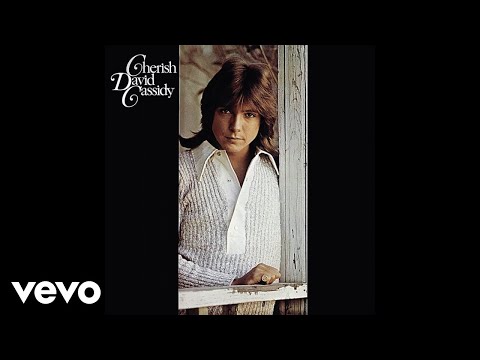
→ More from the 1970s File
View all 1970s hits →




Keep digging