The 1970s File Feature
Cherish
David Cassidy's "Cherish": Teen Idol Meets Classic Pop In the autumn and winter of 1971, David Cassidy achieved one of the more significant chart performance…
01 The Story
David Cassidy's "Cherish": Teen Idol Meets Classic Pop
In the autumn and winter of 1971, David Cassidy achieved one of the more significant chart performances of his career with his cover of "Cherish," a recording that debuted on the Billboard Hot 100 on November 6, 1971, at number 87 and climbed rapidly to a peak of number 9 during the week of December 25, 1971. The song spent twelve weeks on the chart, with its Christmas-week peak arriving at a moment when Cassidy had become one of the most prominent teen idols in American popular culture. This is Cassidy's cover of the song, not The Association's celebrated 1966 original.
The timing of this recording requires context. "Cherish" was not a new song in 1971. The Association had taken it to number one on the Hot 100 in 1966, where it spent three weeks at the top and became one of the defining soft-pop recordings of the mid-1960s. By 1971, it was already a recognizable standard, a song with five years of cultural familiarity behind it. Cassidy's decision to cover it was a deliberate choice to connect his emerging solo identity to an established melodic legacy rather than to attempt entirely new material.
David Cassidy had risen to extraordinary visibility through his role as Keith Partridge on The Partridge Family, the ABC television series that premiered in September 1970. The show featured a fictional family pop group, and the commercial recordings released under the Partridge Family name were genuine chart successes. But Cassidy's record label, Bell Records, also released solo material under his own name, allowing him to develop a parallel identity outside the television context. "Cherish" was released as a solo single, credited to David Cassidy, not to The Partridge Family.
The rise through the chart was exceptionally rapid for a 12-week run. From 87 at debut, the record jumped to 40 in just its second week, then 29 in week three, 18 in week four, 13 in week five, and continued climbing through the following weeks to its eventual peak of 9. Such swift upward movement reflected the extraordinary promotional infrastructure that surrounded Cassidy in late 1971: The Partridge Family was at the height of its television popularity, Cassidy's face was on the cover of teen magazines with striking regularity, and his fan base was among the most passionate in pop music.
The broader cultural phenomenon of David Cassidy in 1971 and 1972 was one of the more intense examples of teen idol worship in the rock era. His popularity rivaled that of earlier idol figures like Fabian and Frankie Avalon, but occurred in a media environment that included both network television and a robust teen magazine industry that could sustain and amplify fan enthusiasm at a scale those earlier figures had not experienced. Cassidy's concerts were notable for the intensity of audience response they generated, with screaming and fainting among his predominantly young female fan base becoming routine occurrences.
The choice of "Cherish" as a solo vehicle was musically and commercially astute. The song's melodic sweetness and emotional accessibility were well-matched to Cassidy's appeal: a young man with genuine vocal ability and enormous visual appeal, performing material that emphasized tenderness and romantic feeling over complexity or challenge. The Association's original had demonstrated the song's capacity to reach a very large audience, and Bell Records could reasonably anticipate that a version delivered by one of the most visible young performers in the country would find a similar reception.
Producer Wes Farrell oversaw much of Cassidy's Bell Records output, and the production sensibility on "Cherish" balanced commercial accessibility with enough musical substance to avoid the dismissive categorization that some critics applied to teen idol recordings. The arrangement gave Cassidy a setting in which his vocal qualities could be clearly heard, which was essential for an artist whose credibility as a genuine singer rather than simply a television personality was something he actively cultivated.
The peak of 9 on the Hot 100 represented Cassidy's best solo chart performance up to that point and remains one of the defining achievements of his chart career. For a twelve-week run ending in the week of Christmas 1971, the song documented the full force of his cultural moment, a moment that would continue building through 1972 before the inevitable commercial cycle turned, as it always does, toward the next generation of idols.
02 Song Meaning
Tenderness and Longing: The Meaning of David Cassidy's "Cherish"
David Cassidy's cover of "Cherish" carried a meaning shaped by both the song's intrinsic emotional content and the specific context of its performance by one of 1971's most visible romantic figures for a young audience. The song, originally written by Terry Kirkman of The Association, is a meditation on a particular kind of love that the singer recognizes as unrequited or unattainable, not because the beloved is cruel or indifferent but because the feeling is simply not mutual. The tenderness of that recognition, held without bitterness or accusation, gives the song its distinctive emotional character.
The title word itself is key. To "cherish" is not simply to love in the transient or volatile sense but to hold something precious, to value it with a kind of protective care that goes beyond ordinary feeling. When the narrator of "Cherish" declares that he cherishes the person being addressed, he is claiming a depth and quality of feeling that he simultaneously acknowledges may never be returned. The song lives in the space between that depth of feeling and its impossibility of fulfillment.
For David Cassidy's audience in 1971, predominantly teenage girls experiencing the kind of intense romantic longing that characterizes adolescence, the song's emotional scenario had obvious resonance. The object of unrequited or impossible love is a nearly universal experience at that life stage, and a beloved public figure performing a song about precisely that kind of feeling created a particular emotional circuit: the singer is cherished by the audience, the singer sings about cherishing someone he cannot have, and the audience recognizes their own longing in his. The triangulation of these relationships gave the record an emotional charge that pure narrative analysis might miss.
The musical setting reinforced this emotional dynamic. The arrangement was gentle and melodically enveloping, creating a sonic atmosphere of warmth and softness that matched the lyric's tenderness. There was nothing in the production that suggested anger, frustration, or resentment, only a kind of luminous sadness that made the feeling described seem beautiful rather than painful. The Association's original had established this emotional texture in 1966, and Cassidy's cover honored that texture while bringing his own vocal presence to bear on the material.
Cassidy's vocal delivery was central to the record's meaning. He possessed a genuinely pleasing voice: clear, warm in the middle register, capable of expressiveness without strain. On "Cherish," he sang with a restraint that suited the song's emotional quality, not reaching for drama but sustaining a quality of sincere feeling throughout. For an audience inclined to project romantic significance onto his performances, that sincerity was crucial; it allowed the emotional scenario the song described to feel real rather than performed.
The choice to cover "Cherish" rather than an original composition also carried meaning. It connected David Cassidy as a recording artist to an established tradition of pop songwriting, demonstrating that his musical identity was rooted in genuine appreciation for melodic craft rather than simply in the commercial machinery of teen idol promotion. That the song had already proven its capacity to generate deep emotional response in a mass audience made it a vehicle well-suited to an artist whose own relationship with mass audiences was defined by precisely that kind of emotional intensity.
In 1971, with the song peaking at number 9 on the Hot 100 during Christmas week, the emotional meaning of "Cherish" landed with the full force of Cassidy's cultural moment behind it. The combination of a genuinely beautiful song, a performer who embodied the romantic feelings his audience was experiencing, and the amplifying effect of his television presence created a commercial and emotional resonance that the chart position only partially captures.
→ More from David Cassidy
View all David Cassidy hits →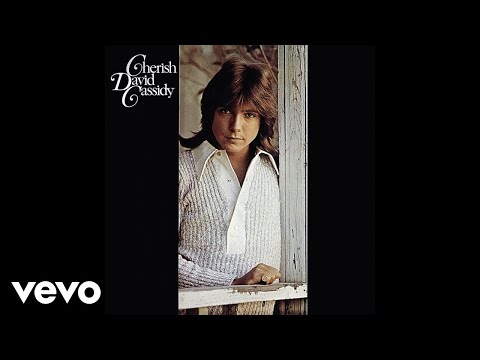

→ More from the 1970s File
View all 1970s hits →




Keep digging