The 1970s File Feature
I'd Rather Love You
"I'd Rather Love You" — Charley Pride and a Moment on the Pop Crossover Map The Singular Position of Charley Pride In 1971, Charley Pride was one of the most…
01 The Story
"I'd Rather Love You" — Charley Pride and a Moment on the Pop Crossover Map
The Singular Position of Charley Pride
In 1971, Charley Pride was one of the most commercially successful country artists working in American music, and he occupied that position while navigating a set of social circumstances that no other major star in the genre had faced. Pride was a Black man who had built an enormous career in a genre defined by its association with white Southern working-class culture, and he had done so not by minimizing that fact but simply by being good enough that audiences found their way past it. By the time "I'd Rather Love You" appeared on the Billboard Hot 100, he had already earned multiple number 1 hits on the country charts and had established himself as a genuine institution in Nashville.
The Hot 100 appearance for "I'd Rather Love You" represented the pop crossover dimension of Pride's commercial reach. Country artists who connected strongly enough with mainstream pop audiences could generate Hot 100 activity even from primarily country-oriented releases, and Pride's warm, approachable vocal style had the kind of broad appeal that crossed genre lines naturally.
The Sound and the Setting
The Nashville Sound that defined much of Pride's recorded output was itself a kind of commercial crossover tool: the orchestrated, polished production approach developed at RCA Nashville and other studios deliberately smoothed away the rougher edges of traditional country in pursuit of a more broadly appealing sound. "I'd Rather Love You" worked within that tradition, featuring the kind of warm, strings-inflected production that had become associated with the more commercially successful end of the country market by the early 1970s.
Pride's voice sat comfortably at the center of that sound. His baritone carried both warmth and authority, capable of conveying tenderness without sentimentality and conviction without aggression. The combination of elegant production and a naturally gifted vocal instrument made his records consistently appealing to listeners who might not have defined themselves as country music fans but found themselves drawn to the particular emotional quality his recordings offered.
A Brief Run on the Hot 100
The chart life of "I'd Rather Love You" on the Billboard Hot 100 was brief but documented. Debuting on March 13, 1971, at position 86, the record spent three weeks on the chart and reached its peak of number 79 on March 27, 1971. That modest Hot 100 presence reflected the reality that Pride's primary commercial home was the country chart, where his singles regularly achieved far greater success. The Hot 100 appearance served as a marker of crossover interest rather than a reflection of his full commercial weight, which was much more accurately captured by his country chart performances.
On the country chart, Pride had been accumulating number 1 hits since the late 1960s, and that foundation of country chart success was what gave his recordings enough overall commercial velocity to generate Hot 100 activity even at relatively low chart positions. The pop chart appearances were a byproduct of genuine country dominance rather than a separate promotional push.
Pride in the Early 1970s Country Landscape
The early 1970s were a period when the relationship between country music and mainstream pop was under active negotiation. The "outlaw country" movement was beginning to gather momentum as a reaction against the Nashville Sound's commercial polish, while the more mainstream wing of the genre continued to pursue the kind of broad pop appeal that Pride had always embodied. Pride sat comfortably in the mainstream tradition, producing work that was unmistakably country in its emotional and melodic sensibility while remaining accessible to the widest possible audience.
His presence on the country charts during this period was not just commercially significant; it was culturally important in ways that the chart numbers alone cannot convey. Pride was demonstrating, by his continued success, that genre identity and racial identity were separable categories, that a Black artist could inhabit and excel within a musical tradition defined by its association with white Southern culture without that requiring either artist or audience to pretend the contradiction away.
A Legacy Larger Than Any Single Record
In the context of Charley Pride's career, "I'd Rather Love You" is one point in a much larger constellation of achievement. But each point in that constellation matters, because together they built the case for a singular career that had broken through barriers that most people in the music industry of the 1960s and 1970s would have considered impermeable. Press play and hear an artist operating with quiet confidence in a world that offered him every reason to doubt.
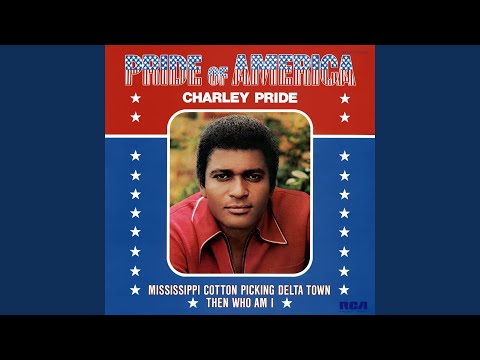
"I'd Rather Love You" — Charley Pride's singular moment on the 1970s charts.
02 Song Meaning
"I'd Rather Love You" — Preference, Devotion, and the Country Romantic Ideal
The Grammar of Romantic Priority
The phrase "I'd rather" is a small grammatical construction with significant emotional weight. It implies a choice, a comparison, and a preference all simultaneously, and in the context of a love song it establishes the romantic object as something chosen over alternatives rather than simply encountered. "I'd Rather Love You" built its emotional foundation on exactly that grammar: the deliberate, considered decision to love, expressed as something the narrator has actively evaluated and actively chosen.
That framing elevated the song above simpler declarations of affection, positioning love as a preference with agency rather than an overwhelming force that the narrator has no control over. Country music's romantic tradition has often favored the latter model, describing love as something that happens to people rather than something they choose. "I'd Rather Love You" offered a subtly different proposition.
Charley Pride's Emotional Register
Pride's vocal approach to this material was characteristic of his broader interpretive style: warm, unpretentious, and emotionally honest without ever becoming excessive. He did not oversell the sentiment or reach for vocal effects that might have called attention to his technique at the expense of the lyric's content. The restraint was itself a form of expressiveness, suggesting a narrator so certain of the feeling described that elaborate performance would be unnecessary and perhaps counterproductive.
This quality of vocal restraint aligned naturally with a broader tradition in country music that valued authenticity over showmanship, that measured a singer's credibility partly by their apparent inability to pretend. Pride was extraordinarily gifted at projecting that quality, which made his love songs feel less like performances and more like honest accounts of recognizable emotional experience.
The Country Romantic Tradition
Country music in the early 1970s maintained a distinctive approach to romantic subject matter: more likely than rock to take domestic life and committed love seriously, more willing to engage with the quotidian details of ongoing relationships rather than focusing exclusively on falling in or out of love. The genre's romantic imagination tended toward the long view, treating devotion and fidelity as worthy of celebration in ways that the more volatile emotional landscapes of rock and pop often could not accommodate.
"I'd Rather Love You" fit within that tradition while bringing to it the particular warmth and directness that characterized Pride's best work. The sentiment was timeless enough to transcend the specific cultural moment of its production, expressing something about romantic preference and deliberate commitment that would have been recognizable to listeners in any decade.
Race, Genre, and the Universality of the Message
One of the quieter arguments embedded in Charley Pride's career was that emotional experience did not belong to any particular racial or cultural group, and that a Black artist could express the specific emotional vocabulary of country music with as much authenticity as any white contemporary. "I'd Rather Love You" demonstrated this not through any explicit statement but simply through the quality of the performance: a vocal delivery that communicated genuine feeling within a musical tradition that was not, by demographic convention, supposed to belong to him.
That demonstration had cultural resonance beyond anything the chart numbers could capture. Listeners who heard Pride's voice on their car radios or home stereos in 1971 were receiving a quiet lesson in the irrelevance of racial categories to musical authenticity, delivered without lectures or manifestos, just through the evidence of the music itself.
A Small Window into a Large Career
The brief Hot 100 appearance of "I'd Rather Love You" offers a small but genuine glimpse into the scope of Charley Pride's appeal at the height of his commercial powers. An artist who dominated the country chart as thoroughly as he did in the early 1970s was bound to generate some pop crossover activity, and this song was one of the vehicles for that crossover. The modest chart showing on the pop side of the ledger should be understood as a footnote to a country career of extraordinary significance, a reminder of how far his voice was traveling even when the mainstream pop world was only half listening.
"I'd Rather Love You" — Charley Pride's singular moment on the 1970s charts.
→ More from Charley Pride
View all Charley Pride hits →
→ More from the 1970s File
View all 1970s hits →




Keep digging