The 1970s File Feature
Mississippi Cotton Picking Delta Town
Mississippi Cotton Picking Delta Town: Charley Pride's Ode to Southern Roots By the time Charley Pride released "Mississippi Cotton Picking Delta Town" in 19…
01 The Story
Mississippi Cotton Picking Delta Town: Charley Pride's Ode to Southern Roots
By the time Charley Pride released "Mississippi Cotton Picking Delta Town" in 1974, he had already dismantled one of country music's most stubborn barriers. As a Black man performing in a genre that had been almost exclusively the domain of white artists, Pride had not merely survived in Nashville but had conquered it, accumulating a string of number-one hits on the Billboard country charts and winning the Country Music Association's Entertainer of the Year award in 1971. Against that backdrop, a song explicitly rooted in the Mississippi Delta carried weight far beyond its three-minute running time.
Pride was born in Sledge, Mississippi, in 1934, one of eleven children in a sharecropping family. The Delta, with its flat cotton fields, its brutal summer heat, and its intertwined legacies of blues and country music, was the landscape that shaped him before he ever picked up a microphone. "Mississippi Cotton Picking Delta Town" brought that formative geography directly into his recording career, offering listeners an autobiographical portrait dressed in the language of country nostalgia.
The song was released on RCA Victor, the label that had been Pride's recording home since the mid-1960s and the home of his greatest commercial successes. RCA Nashville had built an infrastructure of veteran musicians and producers around Pride, and the recording sessions for the track reflected the polished, string-accented sound that had become the house style for his biggest records. The production leaned on the warmth that Nashville studios of the era excelled at, layering acoustic guitar, fiddle, and light orchestration to create an atmosphere of comfortable, unhurried memory.
The single was a meaningful commercial entry in Pride's catalog. It reached the top five on the Billboard Hot Country Singles chart, continuing his remarkable run of chart success through the early to mid-1970s. During this period Pride was one of the most consistent performers in country music, and the song added to a body of work that eventually included more than two dozen number-one country singles across his career. The fact that a song so openly rooted in the Black experience of the rural South could find such a receptive audience on country radio in 1974 was itself a statement about Pride's unique standing in the genre.
Pride's vocal delivery on the track was characteristically assured. His baritone, one of the most recognizable in country music, gave the lyrical imagery of small-town Southern life a lived-in authenticity that no amount of studio polish could manufacture. Listeners who knew Pride's biography understood they were hearing something genuine rather than a marketing exercise in regional identity.
The cultural context of 1974 gave the song additional resonance. The United States was still working through the reverberations of the civil rights movement, and the South as a concept carried charged political meaning. For Pride to sing warmly and proudly about his Mississippi origins, to claim that landscape without apology or qualification, was an act that resonated differently for different segments of his audience. White country fans heard an affirmation of shared regional values; Black listeners heard a man who had transcended institutional barriers while refusing to erase where he came from.
Pride's relationship with RCA Nashville during this period was one of the most productive artist-label partnerships in country music history. Producer Jack D. Johnson, who worked with Pride on numerous recordings, helped shape the sonic environment of the track, balancing the homespun subject matter with a polished production approach that kept Pride's material accessible to mainstream country radio.
The song arrived during a broader moment of nostalgia in American popular culture. The early 1970s saw country music leaning heavily into themes of rural authenticity as a counterweight to urban modernity, and "Mississippi Cotton Picking Delta Town" fit comfortably within that trend while simultaneously complicating it. A Black artist celebrating the Deep South was not the image that most country music marketing of the era relied upon, which made Pride's success all the more striking.
Over the subsequent decades, the track has been recognized as one of the more personally revealing entries in Pride's catalog, a moment where the autobiographical and the commercial aligned with unusual directness. Pride continued recording and performing until shortly before his death in December 2020, and his long career never entirely shed the significance of those early breakthroughs. "Mississippi Cotton Picking Delta Town" stands as one of the recordings that captures both the man's roots and the scale of the cultural ground he crossed in making them part of country music's canon.
02 Song Meaning
Claiming the Delta: Pride, Place, and Memory in Mississippi Cotton Picking Delta Town
At its core, "Mississippi Cotton Picking Delta Town" is a song about belonging. It describes the landscape and rhythms of small-town Mississippi life through the lens of fond memory, mapping the particular geography of a childhood spent in a sharecropping community. The imagery centers on cotton fields, the physical labor that shaped generations of Delta families, and the intimate social world of a rural town where everyone knew everyone else. For Charley Pride, born in Sledge, Mississippi, in 1934, these were not borrowed images pulled from a country music songbook but the actual textures of early life.
The emotional register of the song is one of warm, uncomplicated affection. There is no bitterness toward the poverty or the racial hardships that defined Black life in the Mississippi Delta during the mid-twentieth century. Instead, the lyrical focus rests on community, on the sense of rootedness that comes from knowing a specific patch of earth deeply. This selective emphasis is not denial but rather a choice about which truths to carry forward. The song performs the act of loving a place without pretending that place was simple or uncomplicated.
Charley Pride's decision to record a song so explicitly tied to his own biography marked a departure from the somewhat more generic subject matter of many of his earlier hits, which tended to address universal country themes of love, loss, and longing. Here the autobiographical impulse took priority, and the result was a song that functioned almost as a public statement of identity. Pride was telling his audience, and perhaps also Nashville itself, exactly who he was and where he came from, on his own terms.
The title's specificity is part of its rhetorical power. The phrase "cotton picking" carries multiple registers of meaning. In its most literal sense it describes the agricultural labor that dominated the Delta economy during Pride's childhood. But the phrase also carries vernacular weight as an expression of emphasis or exasperation in Southern idiom, and its use in the title gives the song a colloquial energy that grounds it firmly in the voice of someone who grew up speaking that language.
Within Pride's broader catalog, the song occupies a distinct position as one of his most geographically and culturally specific recordings. His other major hits often operated at a level of emotional abstraction that made them easily identifiable for a wide country audience. This track, by contrast, demanded that listeners enter a particular world and accept it on its own terms. The fact that it succeeded commercially, reaching the top five on the country singles chart, suggests that Pride's audience was willing to make that imaginative journey.
The song also participates in a long tradition of place-based songs in American roots music. Country music has always been deeply attached to geography, from the hills of Kentucky to the plains of Texas, and blues music made the Mississippi Delta itself into one of the most mythologized landscapes in American song. Pride's recording sits at the intersection of those two traditions, claiming the Delta as country music territory while doing so from the perspective of a Black Mississippian. That positioning was quietly radical in the context of 1974 country radio.
For listeners encountering the song today, its significance lies partly in what it chose not to do. It did not sentimentalize suffering, did not perform bitterness, and did not adopt the posture of triumph over adversity. It simply described a place with love and specificity, and in doing so it asserted that the Mississippi Delta, in all its complicated history, belonged to Charley Pride as much as it belonged to anyone. That assertion, delivered in his warm baritone over polished Nashville production, was the song's quiet but durable argument.
→ More from Charley Pride
View all Charley Pride hits →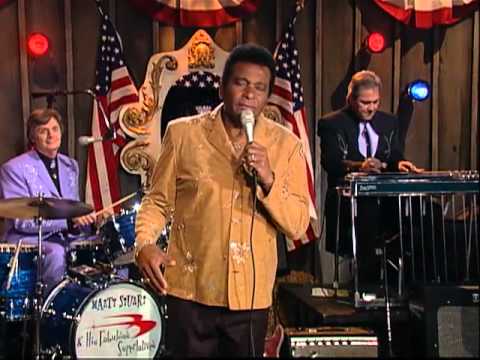
→ More from the 1970s File
View all 1970s hits →




Keep digging