The 1960s File Feature
(I'm So) Afraid Of Losing You Again
A Country Pioneer's Tender Confession: The Making of "(I'm So) Afraid Of Losing You Again" By the time Charley Pride released "(I'm So) Afraid Of Losing You …
01 The Story
A Country Pioneer's Tender Confession: The Making of "(I'm So) Afraid Of Losing You Again"
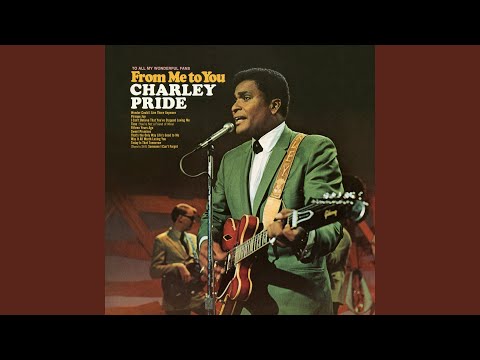
By the time Charley Pride released "(I'm So) Afraid Of Losing You Again" in 1969 on RCA Victor, he had already accomplished something that the Nashville establishment had long considered improbable: he had become a genuine country music star despite being Black in a genre whose audience and industry were almost entirely white. The song arrived at a pivotal moment in his career, deepening his already remarkable foothold on the country charts and confirming that his vocal gifts transcended any demographic boundary the industry might have imagined.
Pride had come to country music through a circuitous route, spending years as a baseball player in the minor leagues before his voice caught the attention of producer Jack Clement and, soon after, Chet Atkins at RCA Victor. His first singles in 1966 were shipped without a photograph, with some radio programmers unaware of his race until they heard him perform in person. The initial shock that greeted his live appearances gave way, station by station and market by market, to genuine enthusiasm. By 1969, Pride had multiple top-ten hits behind him, and his ascent to country music's first rank was no longer in question.
"(I'm So) Afraid Of Losing You Again" was written by Dallas Frazier and A.L. "Doodle" Owens, a prolific songwriting team who understood the emotional grammar of traditional country music. The song is built around a lover's anxious tenderness, the fear that happiness is fragile and that love, once lost, might be lost again. It was the kind of lyric that suited Pride's rich baritone perfectly, his voice capable of conveying vulnerability without sacrificing authority.
Recorded at RCA's Nashville studios with the polished production approach that defined the Nashville Sound of the era, the track featured the lush string arrangements and close vocal harmonies that Chet Atkins and his team had refined over the preceding decade. The Nashville Sound had been designed to broaden country music's appeal, and in Pride's hands it served that purpose with singular effectiveness, carrying his voice to listeners who might never have identified as traditional country fans.
The song was released as a single in 1969 and climbed to number one on the Billboard country singles chart, becoming one of the defining records of Pride's early career. It was not his first number one, but it was among the songs that cemented his reputation as a consistent hitmaker rather than a novelty. The record demonstrated that his chart success was structural, rooted in a real connection with country audiences, rather than the product of curiosity or the passing interest of a media moment.
Pride's success in this period was genuinely groundbreaking. He would go on to win the Country Music Association's Entertainer of the Year award in 1971 and Male Vocalist of the Year in consecutive years, becoming the first Black artist to receive those honors. His ascent reshaped, at least partially, how the industry thought about race and audience. "(I'm So) Afraid Of Losing You Again" belongs to the sequence of recordings that made that ascent real and undeniable.
Culturally, the song arrived during a period of enormous turbulence in American life, a time when questions of race and belonging were being fought over in the streets, in Congress, and in the courts. Pride's quiet conquest of Nashville operated on a different register, country music's version of barrier-breaking that was less confrontational but no less significant. His refusal to sing anything other than straight country, his insistence on being judged by the quality of his voice alone, was in its own way a form of dignity and persistence.
The song has endured as one of Pride's most recognized recordings from that fertile period. It appears on compilation albums tracing his early RCA years and is regularly cited by country music historians as an example of the Nashville Sound at its most emotionally effective. For a generation of country fans, it remains inseparable from the sound of Pride's voice in its prime, warm and precise and capable of making vulnerability sound like strength.
In retrospect, "(I'm So) Afraid Of Losing You Again" captures exactly what made Charley Pride exceptional: the ability to inhabit a lyric so fully that the song's emotional content overwhelmed any external consideration. Whatever the listener brought to it, whatever they knew or did not know about its singer, the record made its case on purely musical terms, and it won.
02 Song Meaning
Love Held Lightly: The Emotional Architecture of "(I'm So) Afraid Of Losing You Again"
At its core, "(I'm So) Afraid Of Losing You Again" is a song about the particular terror that follows reconciliation. The narrator is not in the early flush of falling in love, where the world seems infinite with possibility. He is in the more complicated emotional territory that comes after loss, after estrangement, after whatever rupture separated two people and then allowed them to find each other once more. Having experienced that loss, the return of happiness does not feel like security but like exposure, a happiness that is precious precisely because it has already proved vulnerable.
The emotional logic is one that country music has always understood with special clarity. Country songwriting at its best deals in the textures of ordinary emotional life, the fears and tender hopes of people who have been around long enough to know that things fall apart. Dallas Frazier and Doodle Owens were among the most skilled practitioners of that craft, and in this lyric they located an emotional state that listeners recognized immediately: the way that getting back what you lost does not simply restore innocence but replaces it with a heightened awareness of how much there is to lose.
The song's narrator holds his love carefully, perhaps too carefully, haunted by the memory of losing her before. There is a quality of hypervigilance in the emotional posture, a constant monitoring of the relationship for signs of danger. This is not a heroic emotion, and the song does not pretend otherwise. It is honest about the way past pain reshapes present experience, turning what should be a simple joy into something weighted with remembered grief.
Charley Pride's voice was ideally suited to carry this particular emotional freight. His baritone had a warmth that could make vulnerability feel like intimacy rather than weakness. When he sang about fear, the fear sounded real and recognizable rather than melodramatic. The interpretive skill he brought to the lyric was the product of a performer who had learned, through years of performance in front of skeptical audiences, exactly how much emotional color to apply to each phrase.
Within Pride's catalog, the song occupies a significant position as one of the early recordings that established the emotional range he would bring to his work throughout the 1970s. He was not simply a technician with an exceptional instrument. He was an interpreter, someone who could take a lyric written by someone else and make it feel autobiographical, make it feel as though the words had been waiting for his voice to give them their proper weight.
The song's meaning extends beyond its immediate emotional content. For listeners aware of Pride's biography, there is an additional layer in which the fear of losing something precious has a broader resonance. Pride had fought for his place in country music against formidable resistance. He knew what it was to work for acceptance and to understand that acceptance, once granted, remained conditional. The tenderness of the song, its anxious care for something almost lost, carries that broader meaning without ever becoming a statement, without ever departing from the personal and the romantic.
That capacity to operate on multiple registers simultaneously, to be both a straightforwardly effective country love song and something more resonant when placed in biographical context, is part of what gives the recording its lasting power. It does not require knowledge of Charley Pride's story to work as a piece of music. But for those who bring that knowledge to it, the song becomes richer, more layered, more quietly moving.
→ More from Charley Pride
View all Charley Pride hits →
→ More from the 1960s File
View all 1960s hits →




Keep digging