The 1970s File Feature
Long Ago Tomorrow
"Long Ago Tomorrow" — B.J. Thomas and the Sound of Gentle Country-Pop A Voice That Fit the Moment The fall of 1971 had a particular quality to its radio prog…
01 The Story
"Long Ago Tomorrow" — B.J. Thomas and the Sound of Gentle Country-Pop
A Voice That Fit the Moment
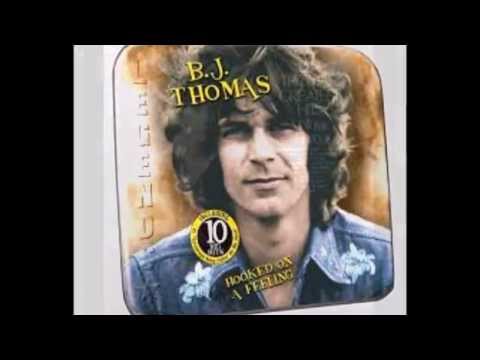
The fall of 1971 had a particular quality to its radio programming that is easy to forget now. The tumultuous years of the late 1960s were settling into something less fevered, and the pop mainstream was moving toward softer textures, more personal lyrical content, and production that favored warmth over edge. B.J. Thomas was perfectly positioned for this moment. The Texas singer had spent the 1960s building a career that straddled the line between country feeling and pop accessibility, and by 1971 he had accumulated enough chart history to understand exactly what his strengths were and how to deploy them.
Thomas had reached the peak of his mainstream visibility in 1969 with Raindrops Keep Fallin' on My Head, the Burt Bacharach and Hal David composition that accompanied Butch Cassidy and the Sundance Kid and reached number one on the Hot 100. That song's overwhelming success created both an opportunity and a challenge: it established Thomas as a major pop name but also created an expectation that proved difficult to match with subsequent releases. The years that followed saw him navigating that particular post-peak challenge that many artists face after a career-defining moment.
The Recording and Its Context
"Long Ago Tomorrow" appeared in late 1971, drawing from the well of country-influenced soft pop that was Thomas's natural habitat. The track had a melodic gentleness that fit the era's appetite for accessible, emotionally comfortable music, the kind of record that radio programmers in 1971 understood immediately and could slot into programming between the day's harder rock cuts as a palate cleanser. Thomas's voice, warm and unpretentious, was well suited to material that asked listeners to settle in rather than sit up.
The title itself, with its temporal double-layering, pointed toward the kind of reflective lyrical territory that was particularly common in early 1970s pop. Songs about time, memory, and the relationship between past and future defined a significant strand of the era's music, from singer-songwriter introspection to country-influenced pop to the emerging soft rock genre. Thomas occupied a position somewhere between these categories, which gave him flexibility but also meant he never quite anchored himself to any single format's core audience.
The Chart Journey
The single debuted on the Billboard Hot 100 on November 6, 1971, entering at position 86. Its climb through the chart over the following weeks was steady if unspectacular: 85, then 81, then 72 as November wore on. The pace picked up in December, with the track moving to 65 and continuing upward. By December 18, 1971, "Long Ago Tomorrow" reached its peak position of number 61, completing a seven-week chart run that placed it solidly in the mid-chart territory where Thomas had spent much of his career.
A peak of 61 on the Hot 100 was representative of Thomas's situation in the early 1970s: talented and well-regarded, with genuine radio appeal, but unable consistently to break into the upper tier of chart positions that his biggest records had briefly inhabited. Seven weeks on the chart indicated sustained radio pickup rather than a simple promotional push, suggesting that the song had genuine listener appeal that kept program directors returning to it through the holiday season.
Thomas's Career in the Post-Raindrops Years
Understanding "Long Ago Tomorrow" requires understanding the unusual career trajectory that B.J. Thomas was navigating in 1971. After the massive success of Raindrops Keep Fallin' on My Head, he had released a series of records that performed respectably without recapturing that peak. The early 1970s were a period of significant personal difficulty for Thomas, which he has discussed publicly in later years, and those difficulties are part of the biographical context for this period's recordings.
His artistic identity was genuinely complex: a country sensibility filtered through pop ambition, with a gospel undertone that would become more pronounced in his later career after he recorded Christian music in the late 1970s. The thread connecting these phases was a vocal quality that communicated emotional sincerity even in relatively unchallenging material. Thomas never sounded like he was performing; he sounded like he was simply delivering what the song asked for, which is rarer and more valuable than it appears.
A Legacy of Quiet Consistency
B.J. Thomas continued recording and performing across five decades, accumulating a catalog that spans pop, country, and gospel and includes multiple chart entries across multiple formats. "Long Ago Tomorrow" is a relatively minor entry in that catalog, but it captures something true about where Thomas was as an artist in late 1971: capable, professional, emotionally present, and in search of material that could channel his particular talents toward a chart moment comparable to the one he had achieved two years earlier.
The record also captures a specific moment in American pop when softness was a virtue rather than a limitation, when radio programmers actively sought music that felt gentle and accessible, and when a singer like Thomas could place himself at the center of the format through sheer reliability of execution. Put on "Long Ago Tomorrow" and you will hear exactly that: a skilled singer doing honest work in a tradition he understood deeply.
"Long Ago Tomorrow" — B.J. Thomas's singular moment on the 1970s charts.
02 Song Meaning
The Themes and Legacy of "Long Ago Tomorrow" by B.J. Thomas
Time's Double Pull
The phrase "long ago tomorrow" puts two incompatible temporal frames into direct collision, and that collision is the conceptual heart of what the song is reaching toward. "Long ago" is the past, fixed and finished; "tomorrow" is the future, unwritten and open. To put them together is to suggest that time itself is not the clean linear sequence that daily experience implies. There are moments in life when the future feels as distant as the remote past, when what should be a tomorrow feels as inaccessible as something that happened decades earlier. That emotional experience is the territory this song occupies.
Early 1970s country-influenced pop had a particular gift for this kind of compressed temporal reflection. The era's singer-songwriter movement was exploring introspection and personal history with a seriousness that pop music had not always granted itself, and even artists working in more conventional pop frameworks absorbed that influence. Thomas's recording arrived at a moment when listeners were receptive to songs that used simple poetic language to approach complex emotional experiences without becoming abstract or inaccessible.
Reflection and Regret in American Pop
Reflective songs about what might have been, what was lost, and what the future holds are a permanent feature of the popular music landscape, but they take different shapes in different eras. The early 1970s version of this theme tended toward a certain gentleness, a melancholy that was aware of itself but not performative about it. Thomas was well suited to this register, since his vocal style inclined naturally toward understatement and emotional honesty rather than dramatic display.
The country music tradition that informed Thomas's singing had always been comfortable with this kind of reflective sadness, treating loss and regret as natural human experiences worth addressing directly rather than softening into abstract romantic language. The pop framework he was working in required a slightly different balance, one that maintained accessibility while preserving the emotional authenticity that country music valued. The song found that balance in its construction, offering enough emotional openness to connect with a broad radio audience while retaining the genuine feeling that made it more than simply pleasant background sound.
The Role of Nostalgia in 1971
The cultural atmosphere of late 1971 was saturated with a particular kind of backward-looking sentiment. The 1960s had been so eventful, so dramatically transformative, that the early years of the new decade were inevitably shaped by reflection on what those years had meant and what had been lost when their energy dissipated. For many listeners, songs about time and memory carried additional layers of meaning connected to specific historical experiences: the anti-war movement's partial exhaustion, the assassinations that had marked the decade, the sense that a period of dramatic social change was settling into something less legible.
Pop music in this context served a genuinely important emotional function, giving listeners language for processing the relationship between a recent past that felt both vivid and remote and a future that seemed uncertain. Thomas's recording, with its title's elegant compression of those two temporal frames, offered a small but real piece of that emotional work.
Thomas's Enduring Place in Pop History
B.J. Thomas built a career over decades that few other artists of his generation matched in terms of sustained quality across multiple formats. His country recordings, his gospel work, and his pop singles all drew from the same essential vocal gift and the same emotional intelligence. "Long Ago Tomorrow" is one data point in a long and consistent body of work, a mid-chart pop single from a year that found him navigating the complex aftermath of extraordinary success with professionalism and genuine feeling.
The song's seven-week chart run speaks to the kind of real radio traction that only genuine listener response can sustain. Program directors do not keep a record on their rotations for seven weeks out of obligation; they do it because enough listeners respond to justify the airtime. Thomas earned that response through a vocal performance that communicated what the lyric was asking for with complete honesty and not a moment of self-conscious artifice. In the end, that is what makes records like this one worth returning to.
→ More from B.J. Thomas
View all B.J. Thomas hits →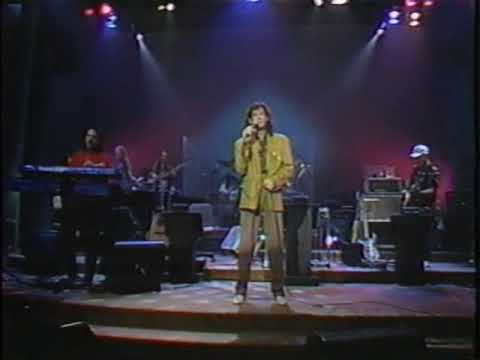
→ More from the 1970s File
View all 1970s hits →




Keep digging