The 1960s File Feature
Raindrops Keep Fallin' On My Head
Raindrops Keep Fallin' On My Head: From a Hollywood Screenplay to the Top of the Charts Few songs in the history of American popular music have traveled as u…
01 The Story
Raindrops Keep Fallin' On My Head: From a Hollywood Screenplay to the Top of the Charts
Few songs in the history of American popular music have traveled as unusual a path from conception to cultural permanence as "Raindrops Keep Fallin' On My Head." Written by the legendary songwriting partnership of Burt Bacharach and Hal David specifically for the 1969 film Butch Cassidy and the Sundance Kid, the song was not designed as a conventional single but as a piece of cinematic mood-setting, accompanying a lighthearted bicycle sequence featuring Paul Newman and Katharine Ross. Yet from that modest narrative function, it grew into one of the defining pop records of its era.
The songwriting process itself reflected Bacharach and David's unusually sophisticated approach to pop composition. Bacharach, who also served as the film's musical director, composed a melody that resisted the standard verse-chorus architecture of mainstream radio hits. The melody moves with a relaxed, syncopated confidence, and David's lyric built on that rhythmic looseness to create something that feels simultaneously carefree and quietly profound. The song celebrates a stubborn refusal to let circumstances dictate inner weather, and Bacharach set it in a key and tempo that enforced that emotional buoyancy at every turn.
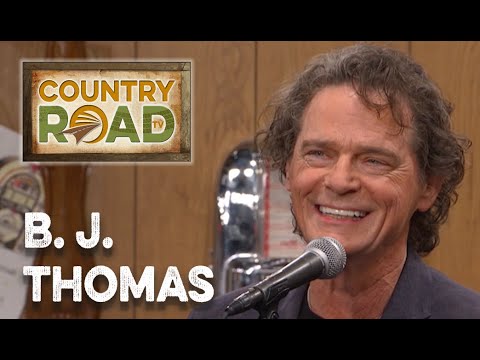
The producers initially approached several major artists about recording the vocal. Ray Stevens was among those considered. Bob Dylan was reportedly offered the song as well. Ultimately, the assignment went to B.J. Thomas, a Texas-born pop singer who had already scored a substantial hit in 1966 with a recording of Hank Williams's "I'm So Lonesome I Could Cry" and had followed it with the successful "Hooked on a Feeling" in 1968. Thomas's warm, easy baritone was considered a natural fit for Bacharach's rolling melodic construction.
The recording session took place under Bacharach's close supervision, with the producer insisting on the spacious, orchestral sound that had become his signature. The single was released in November 1969 on Scepter Records, the New York independent label that had already built a strong track record with Thomas. The timing was calculated to coincide with the film's wide release and Oscar campaign season, and the strategy proved exceptionally effective.
"Raindrops Keep Fallin' On My Head" reached number one on the Billboard Hot 100, holding that position for four weeks between late 1969 and early 1970. Its ascent was steady rather than explosive, benefiting from the film's massive commercial success and the saturation of radio airplay that accompanied it. Butch Cassidy and the Sundance Kid became one of the highest-grossing films of 1969, and the song's repeated appearances within the picture gave casual listeners multiple opportunities to connect with it before they ever heard it on the radio.
At the 42nd Academy Awards ceremony held in April 1970, the song won the Oscar for Best Original Song, defeating four other nominees and cementing its status as not merely a pop hit but a legitimate artistic achievement in the context of film scoring. Bacharach and David accepted the award, and the victory added substantially to the cultural weight of the recording. For B.J. Thomas, it represented a career-defining moment, permanently associating his name with a song that would outlast virtually everything else in his catalog.
The commercial aftermath was significant. The single sold over one million copies in the United States alone, earning gold certification. It appeared on the Billboard Hot 100 for a total of twenty-one weeks, demonstrating a staying power that went well beyond typical pop single cycles of the period. International markets responded similarly, with the song charting prominently in the United Kingdom, Canada, and Australia, among others.
Critical response at the time was generally warm, though some observers noted that the song's breezy accessibility sat in deliberate contrast to the increasingly political and experimental currents running through rock music in 1969. That contrast was arguably part of its appeal. Against the backdrop of Woodstock, the Manson murders, and the Vietnam War's escalating toll on American public life, a song about cheerfully refusing to be brought down by bad weather offered something that many listeners evidently found nourishing.
Bacharach and David's collaboration was already producing an extraordinary run of hits by 1969, including work with Dionne Warwick, Dusty Springfield, and Tom Jones. "Raindrops" sat comfortably within that body of work in terms of craft and sophistication but stood slightly apart in its cinematic origin and its ultimate reach. The film's co-director, George Roy Hill, reportedly had strong opinions about the scene in which the song appears, wanting the sequence to feel anachronistic and playful, and the song's slightly out-of-time quality, neither firmly country, nor rock, nor soul, served that intention perfectly.
Over the decades that followed, the song became a standard of American pop repertoire. It was recorded by dozens of artists across multiple genres, used extensively in advertising, and repeatedly licensed for film and television productions seeking a shorthand for sunny optimism or nostalgic warmth. Thomas himself continued recording and performing through subsequent decades, and though he explored gospel music extensively later in his career, "Raindrops" remained the cornerstone of his public identity. The song's position in the popular memory of the late 1960s and early 1970s is secure, representing both the commercial peak of the Bacharach-David partnership and one of the more successful marriages of pop songcraft to cinematic storytelling in Hollywood history.
02 Song Meaning
The Quiet Defiance at the Heart of "Raindrops Keep Fallin' On My Head"
"Raindrops Keep Fallin' On My Head" presents itself with such disarming ease that its underlying emotional argument is easy to miss on first encounter. Hal David's lyric constructs a persona who is caught in the rain, unable to make the sun appear simply by wishing for it, and yet refuses to submit to unhappiness. The song is not about denial. It is not about pretending difficulty does not exist. It is, more precisely, about the deliberate choice to remain emotionally free regardless of circumstance, a stance that carries more weight than simple cheerfulness might suggest.
The central metaphor of rain functions throughout the lyric as a stand-in for all forms of misfortune or misalignment between desire and reality. The narrator acknowledges that things are not going his way, admits freely that he cannot change the external situation, and then pivots decisively toward a declaration of psychological independence. This is a posture that resonates across a surprisingly wide range of listener experiences, which helps account for the song's remarkable durability across generations.
Burt Bacharach's musical setting reinforces the lyrical stance through specific compositional choices. The melody does not strain or soar dramatically. It moves with an almost conversational naturalness, as though the narrator is speaking these reflections aloud in a relaxed moment rather than delivering them as a theatrical confession. The orchestral arrangement adds warmth without adding weight, and the overall sonic texture keeps the emotional register squarely in the territory of gentle resolution rather than triumphant climax.
Within B.J. Thomas's catalog, the song occupies a singular position. Before "Raindrops," Thomas had demonstrated a facility for warm, accessible pop and a credible connection to country music's emotional vocabulary. The song drew on both qualities without being reducible to either. Thomas's vocal delivery emphasizes the lyric's conversational quality, treating the potentially grandiose declaration of emotional independence as something almost modest and matter-of-fact. That understatement is central to why the performance works as well as it does.
The song's appearance in Butch Cassidy and the Sundance Kid added a specific cinematic layer of meaning that persisted in cultural memory long after the film's initial release. The bicycle scene it accompanies is deliberately whimsical and anachronistic, a moment of pure lightness inserted into a story that ends in tragedy. In that context, the song takes on a faintly elegiac quality in retrospect: the characters' refusal to be brought down by circumstances echoes their larger narrative arc, in which good humor and camaraderie persist even as the forces aligned against them grow insurmountable.
The lyric also carries a thread of self-awareness that elevates it above pure optimism. The narrator explicitly acknowledges the situation, admits talking to the sun about it, and notes that the sun has its own plans. There is a comic self-deprecation built into the logic of the lyric that prevents it from sliding into saccharine territory. Hal David's gift for grounding emotional declarations in specific, slightly absurd details is on full display here, and it gives the song a human texture that more conventionally inspirational material often lacks.
For listeners encountering the song in late 1969 and early 1970, the emotional offer it made, namely the possibility of maintaining inner freedom in the face of circumstances one cannot control, carried particular resonance against the turbulent social backdrop of the period. The song did not address that turbulence directly, but its posture of cheerful resilience functioned as a kind of emotional counterpoint to the anxiety and anger that saturated much of the era's popular culture. That relationship between form and cultural moment is part of what made the song feel so necessary to so many people at a specific point in American life.
→ More from B.J. Thomas
View all B.J. Thomas hits →
→ More from the 1960s File
View all 1960s hits →




Keep digging