The 1970s File Feature
(Hey Won't You Play) Another Somebody Done Somebody Wrong Song
"(Hey Won't You Play) Another Somebody Done Somebody Wrong Song" — B.J. Thomas at the Summit An Unlikely Title, an Undeniable Groove Country music and pop ra…
01 The Story
"(Hey Won't You Play) Another Somebody Done Somebody Wrong Song" — B.J. Thomas at the Summit
An Unlikely Title, an Undeniable Groove
Country music and pop radio have always maintained a complicated relationship, and in the mid-1970s that relationship was producing some of the era's most interesting crossover successes. B.J. Thomas was already a certified hitmaker by 1975, a Texas-born singer whose 1969 recording of "Raindrops Keep Fallin' on My Head" had topped the charts and won an Academy Award for Best Original Song from the film Butch Cassidy and the Sundance Kid. He had the pop credentials, the voice, and the willingness to work across genre lines. When he recorded a song with the longest title ever to reach number one on the Billboard Hot 100, it seemed like exactly the kind of ambitious swing that a singer at his level could afford to take.
"(Hey Won't You Play) Another Somebody Done Somebody Wrong Song" debuted on the Hot 100 on February 1, 1975, entering at number 99. Over the following 18 weeks, it made its way steadily upward, reaching its peak position of number one on April 26, 1975, where it remained for one week. The full 18-week chart run reflected both the track's broad commercial appeal and the competitive nature of the spring 1975 chart landscape.
The Song's Creation
The track was written by Chips Moman and Larry Butler, two figures deeply embedded in the Nashville and country-pop recording worlds. Chips Moman was the legendary producer and songwriter whose American Sound Studios in Memphis had been the site of some of the most significant recordings of the late 1960s, including sessions with Elvis Presley. By 1975, Moman was working extensively in Nashville, and his collaboration with Larry Butler on this track reflected the creative energy flowing between Memphis and Nashville in that period.
The production leans into the warm, countrypolitan style that characterized much of the mid-1970s pop-country crossover: lush string arrangements layered over a solid rhythm section, with Thomas's voice given plenty of space to maneuver. The arrangement avoids the harder honky-tonk edges of traditional country in favor of a smoothness that allowed the track to function equally well on pop and country radio stations, a calculated and commercially successful decision.
B.J. Thomas's Career Arc by 1975
Thomas had navigated a complicated personal life alongside his commercial career throughout the late 1960s and early 1970s. He had converted to Christianity in 1976, just after this recording's peak, but by early 1975 he was in the midst of a professional period defined by careful song selection and a consistent recording output that kept him visible on the charts. His voice had a distinctive warmth and an emotional directness that worked particularly well on material that sat at the intersection of country sentiment and pop production values.
The success of "Another Somebody Done Somebody Wrong Song" represented the commercial peak of Thomas's post-"Raindrops" career, a second number one hit that demonstrated his staying power at a time when many artists who had reached the top of the charts in the late 1960s were struggling to maintain relevance. Winning the Grammy Award for Best Male Country Vocal Performance in 1976 for this recording further underscored the quality of the performance and the track's cross-genre appeal.
Country Tradition and the Heartbreak Song
The title itself is a piece of playful self-awareness about a country music tradition so well-established it had become its own category. Country music has always been a literature of heartbreak, loss, betrayal, and the particular kind of American stoicism that involves facing pain honestly while reaching for the next drink and the next jukebox selection. The phrase "somebody done somebody wrong" captures that tradition in miniature, acknowledging that the territory has been covered before while simultaneously requesting that it be covered again.
That self-referential awareness gives the song an additional dimension. It invites the listener into a shared understanding of country music's emotional repertoire, winking at the tradition even while deploying it sincerely. The affection for the genre's conventions is genuine, and that affection is part of what made the song so broadly embraceable. It was country for people who loved country and for people who simply loved a good melancholy groove.
The Record That History Footnotes for Its Title
The track's distinction as the holder of the longest title to reach number one on the Hot 100 has become its most frequently cited trivia fact, and while it is a genuine distinction, it somewhat obscures what actually made the record successful: the quality of the song, the warmth of the production, and the caliber of Thomas's vocal performance. Trivia sticks because it is memorable, but the song endured because it was good at being what it was.
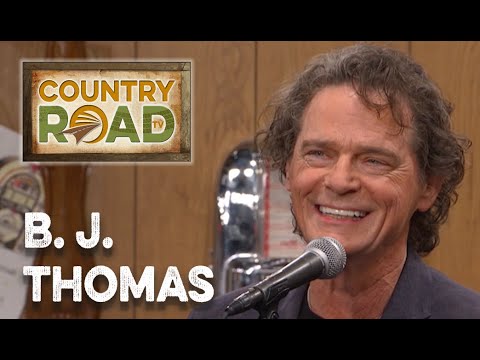
Turn up the volume and let B.J. Thomas walk you through exactly why country-pop crossover worked so well in 1975. Press play and the Spring of that year opens right up.
"(Hey Won't You Play) Another Somebody Done Somebody Wrong Song" — B.J. Thomas's singular moment on the 1970s charts.
02 Song Meaning
"(Hey Won't You Play) Another Somebody Done Somebody Wrong Song" — Heartbreak, Humor, and Country's Self-Knowledge
The Genre That Knows Itself
Country music's relationship with its own conventions has always been more sophisticated than casual listeners might assume. The genre has produced songs that celebrate its own tropes, parody them, and examine them with genuine philosophical seriousness. The title "(Hey Won't You Play) Another Somebody Done Somebody Wrong Song" operates in this self-aware register, functioning simultaneously as a straightforward request for comfort music and as a gentle acknowledgment that the request itself is part of a pattern so well-established it has become its own genre category.
There is something quietly intelligent about a song that names what it is doing while doing it. The narrator wants to hear another heartbreak song because the emotional resonance of that genre of music matches the emotional reality they are currently living. The request is honest, the self-awareness is genuine, and the affection for the tradition being invoked is unmistakable. Country music's audience in 1975 received that knowing nod with the warmth it deserved.
The Jukebox as Emotional Technology
The song centers on a social ritual that was central to country music culture through most of the twentieth century: the jukebox. In bars, diners, and roadhouses across America, the jukebox was the mechanism by which people selected the soundtrack for their emotional state. Playing a sad song when you were sad was not self-indulgence; it was a form of emotional recognition, the comfort of having your interior life accurately represented in sound.
The request to "play another somebody done somebody wrong song" is, at its core, a request for this kind of recognition. The narrator is hurting and wants music that acknowledges that hurt without sentimentalizing it or offering false consolation. Country music's tradition of unflinching emotional honesty is precisely what makes it the right genre to fulfill that request, and the song understood its own place in that tradition.
Heartbreak as Shared Human Territory
The grammatically indefinite construction, "somebody done somebody wrong," is part of the lyric's charm and part of its universality. By describing the injury in general rather than specific terms, the song makes its emotional territory available to anyone who has experienced betrayal or loss of any kind. The somebody who was wronged could be the listener; the somebody who did the wrong could be anyone. The generality is an invitation rather than a vagueness, opening the song's emotional space to the widest possible range of personal application.
This was sophisticated songwriting from Chips Moman and Larry Butler, two professionals who understood exactly how much commercial and emotional work a well-chosen phrase could do. The title became the chorus, the chorus became the hook, and the hook became the song. Economy and precision in the service of emotional breadth.
Countrypolitan and the Mid-1970s Pop Crossover
The production style that emerged from Nashville in the 1970s, sometimes called countrypolitan, represented a conscious effort to smooth country music's edges for broader commercial appeal. Lush string arrangements, polished vocal production, and a general softening of the genre's harder sonorities characterized the style. B.J. Thomas's recording fits squarely in this tradition, its warm production values serving the emotional accessibility that made it viable on both country and pop radio.
Critics who regarded countrypolitan as a dilution of country music's authentic character had a point, but they also sometimes missed what was valuable in the style. At its best, countrypolitan production could amplify rather than undermine the emotional content of a song, giving it the sonic warmth needed to reach listeners who might have been put off by harder country sounds. "Another Somebody Done Somebody Wrong Song" worked because Thomas's vocal sincerity ensured that the production supported rather than replaced genuine feeling.
"(Hey Won't You Play) Another Somebody Done Somebody Wrong Song" — B.J. Thomas's singular moment on the 1970s charts.
→ More from B.J. Thomas
View all B.J. Thomas hits →
→ More from the 1970s File
View all 1970s hits →




Keep digging