The 1970s File Feature
Saturday Night
Saturday Night: How the Bay City Rollers Conquered America With a Spelling Chant "Saturday Night" by the Bay City Rollers is one of the more improbable succe…
01 The Story
Saturday Night: How the Bay City Rollers Conquered America With a Spelling Chant
"Saturday Night" by the Bay City Rollers is one of the more improbable success stories in 1970s pop music history. A song built partly around a crowd-participation spelling chant, it became the defining anthem of a Scottish group that briefly achieved levels of teenage adulation comparable to Beatlemania, and it reached the summit of the American pop charts at a moment when the British Invasion was a distant memory and no British pop group had recaptured that kind of US mass market penetration for years.
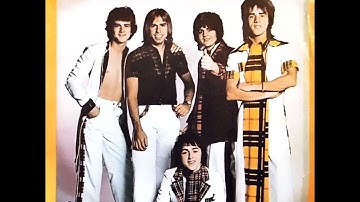
The Bay City Rollers formed in Edinburgh, Scotland, in the late 1960s and spent several years developing their sound and image before breaking through commercially. The group's lineup in their commercial peak period centered on Les McKeown as lead vocalist, with brothers Alan and Derek Longmuir on bass and drums respectively, Stuart Wood on guitar, and Eric Faulkner on guitar and violin. Their look, featuring tartan-trimmed clothing, wide-legged trousers, and the distinctive half-mast trouser style that became associated with their fanbase, was as much a part of their commercial identity as their music.
"Saturday Night" was written by Bill Martin and Phil Coulter, the Scottish songwriting partnership who were among the most commercially successful British pop composers of the era. Martin and Coulter had already demonstrated their gift for anthemic, singalong pop construction, and "Saturday Night" represented their formula at its most distilled and effective. The track was designed explicitly to function as a communal experience, with the spelling chant functioning as the kind of audience participation element that would guarantee audience engagement at live performances and radio sing-along moments.
The song was originally recorded and released in the United Kingdom in 1973, where it reached the British charts but did not yet become the phenomenon it would later represent. It was re-recorded and re-released, with the version that became a global hit produced with a sharper, more radio-ready sound. The track was released in the United States on Arista Records, the label founded by Clive Davis that was becoming one of the most commercially potent forces in American pop music during the mid-1970s.
The timing of the American release was propitious. By late 1975 and early 1976, "Rollermania" had spread from the United Kingdom to the United States, with the group attracting screaming teenage audiences whose enthusiasm generated the kind of media coverage that money could not buy. Teen magazines devoted cover after cover to the group's members, and their concerts were scenes of the kind of feverish adolescent devotion that had not been seen in America since the early years of the Beatles.
"Saturday Night" reached number one on the Billboard Hot 100 in early 1976, becoming the group's sole American chart-topper and one of the signature pop singles of that year. The song's achievement was particularly notable given the competitive landscape of the mid-1970s American charts, which featured everything from disco's rising tide to the soft rock and singer-songwriter movements that had dominated the early part of the decade. That a Scottish teen pop act could cut through this diverse competitive environment and reach the summit demonstrated both the universality of the song's appeal and the genuine scale of the Rollermania phenomenon in the United States.
The song's chart run in America extended well beyond its week at number one, as it continued to receive substantial airplay and remained a consistent presence on radio playlists during the peak months of the group's American popularity. Album sales for the group's American releases rose dramatically in the wake of the single's success, and the Bay City Rollers briefly occupied a position in the American teen consciousness that few foreign acts had achieved since the British Invasion groups of the 1960s.
Television appearances were central to the song's American breakthrough. The group performed on major US television programs that reached the kind of mass audience that could convert a hit single into a genuine cultural moment, and their appearances generated viewer responses of remarkable intensity. The screaming that greeted their television performances was documented extensively in news coverage of the time, which treated the phenomenon with a mixture of bemusement and genuine journalistic curiosity.
Critically, "Saturday Night" was not widely celebrated as a work of great sophistication, and most serious rock critics of the era were dismissive of the Bay City Rollers as a manufactured commodity. This critical hostility, however, did nothing to diminish the song's commercial achievement or the genuine enthusiasm of its audience. The song functioned as intended, as an efficient delivery mechanism for a specific kind of communal pop joy, and it executed that function with considerable effectiveness.
The song's cultural footprint has remained surprisingly durable in the decades since its release. It has appeared in films, television programs, and advertising campaigns that draw on 1970s nostalgia, consistently recognized as one of the definitive sounds of its era. The spelling chant, in particular, has become one of those pop culture touchstones familiar even to people who were not alive when the song was first a hit, circulated through the mechanisms of cultural transmission that keep certain hooks alive long after their commercial moment has passed.
For the Bay City Rollers, "Saturday Night" represented both their greatest achievement and, in retrospect, the peak from which their commercial trajectory would eventually decline. The group was unable to sustain the intensity of Rollermania indefinitely, and the cycle of teen pop that had elevated them to number one ultimately moved on to other objects of adolescent devotion. But the song itself endures as a document of a specific moment in pop history when a Scottish group's anthemic simplicity captured the imagination of American teenagers at a scale that remains remarkable in retrospect.
02 Song Meaning
The Meaning of "Saturday Night": Teenage Anticipation and the Rituals of Youth
"Saturday Night" by the Bay City Rollers is a song whose meaning is almost entirely transparent, and that transparency is precisely the point. It is a celebration of Saturday night as a concept, a ritualized expression of the anticipation and freedom that the end of the working or school week represents for young people. The song does not complicate this theme or interrogate it; it simply delivers it with maximum enthusiasm and minimum resistance, which is the appropriate formal response to its subject matter.
The emotional register of the song is one of uncomplicated joy. Saturday night, in the mythology that this song participates in, is the time when normal constraints are lifted, when youth can express itself freely, when the social possibilities of weekend freedom become available. The song's celebratory simplicity is not a limitation but a formal choice that matches the nature of its subject: pure anticipation is a pure emotion, and a song that tried to make it complex would be false to the experience it is describing.
The spelling chant that structures the song's most memorable moment is a fascinating piece of musical psychology. Spelling out "Saturday" letter by letter invites audience participation in a direct and almost primal way, transforming the act of listening into the act of joining. This communal dimension was central to the Bay City Rollers' live performances, where the chant became a ritual act of collective identification, a signal that this audience shared both the song and the particular kind of youthful exuberance it expressed. The chant turns listeners into participants, which is one of the oldest tricks in the anthology of popular music and one that never entirely loses its effectiveness when executed at the right tempo and with the right level of energy.
For the Bay City Rollers' specific audience, overwhelmingly composed of adolescent girls in the mid-1970s, Saturday night also carried resonances connected to the particular social freedoms available to teenagers. Dating, dancing, gathering with friends, attending concerts and parties, these were Saturday night activities, and the song's celebration of the night implicitly celebrated all of them. The music was the soundtrack to a social life that its listeners were either experiencing or anticipating experiencing, and that connection between the song and lived experience was part of its commercial potency.
The song also participates in a long tradition of pop music that takes the week's structure as its subject. From earlier rock and roll celebrations of Friday night freedom through subsequent generations of weekend anthems, popular music has consistently returned to the calendar's rhythms as a source of communal meaning. "Saturday Night" is among the most iconic entries in this tradition, not because it is the most sophisticated but because it is perhaps the purest, reduced to its essential emotional content with all complication removed.
The group's particular image in this period, the tartan accessories, the carefully styled hair, the visual presentation designed to appeal to a teenage audience, gave the song a specific social context that amplified its meaning for its original listeners. The Bay City Rollers represented a specific fantasy of youthful male attractiveness, and "Saturday Night" was the anthem that these particular young men were singing. For the screaming teenagers in their audience, the song was not just about Saturday night in general but about Saturday night in their particular presence, which gave it an additional layer of meaning that pure musical analysis cannot entirely capture.
The song's staying power in the cultural memory suggests that its simple celebratory themes have genuine durability. Saturday night retains its symbolic charge in popular culture; the end of the week continues to represent freedom, social possibility, and the temporary suspension of obligation. Each generation discovers these themes as if for the first time, and the songs that express them most directly tend to circulate longest through the mechanisms of nostalgia and reuse.
In the context of the Bay City Rollers' catalog, "Saturday Night" is the song that most completely captures the group's essential commercial proposition: maximum energy, minimum complexity, communal participation, and an unambiguous emotional payload delivered with absolute conviction. These qualities were not accidents but achievements, the product of songwriters and performers who understood exactly what their audience wanted and executed the delivery of that thing with considerable skill.
The meaning of "Saturday Night" is therefore the meaning of pure pop at its most functional: a song that knows what it is trying to do, does it without equivocation, and succeeds in creating the specific emotional experience it promised. That is not a trivial achievement, and it explains why the song has survived long after the specific cultural moment of Rollermania has become historical rather than contemporary.
→ More from Bay City Rollers
View all Bay City Rollers hits →
→ More from the 1970s File
View all 1970s hits →




Keep digging