The 1970s File Feature
I Only Want To Be With You
I Only Want To Be With You — Bay City Rollers on the American Charts in 1976 Tartan Fever Crosses the Atlantic There is something almost physics-defying abou…
01 The Story
I Only Want To Be With You — Bay City Rollers on the American Charts in 1976
Tartan Fever Crosses the Atlantic
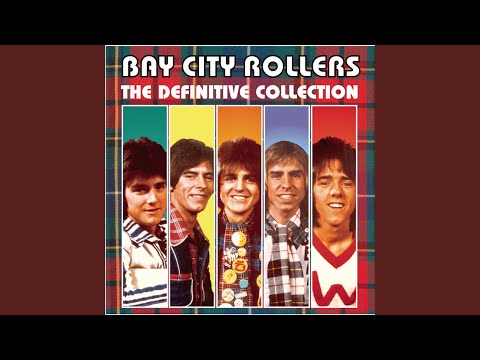
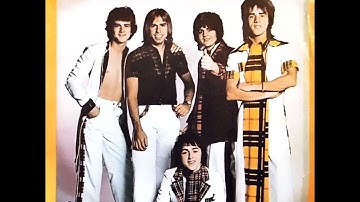
There is something almost physics-defying about the way Rollermania moved. By the time Bay City Rollers arrived in America in 1975 and 1976, the British press had already written the group off as a teen fad with a built-in expiration date, yet there the Rollers were, filling arenas across the United States and generating the kind of screaming that news cameras could not resist. The Edinburgh five-piece had built their following on sharp, unpretentious pop instincts and an image carefully constructed around tartan scarves and high-water trousers, a look that was simultaneously silly and irresistible. They were not trying to be the Rolling Stones. They were entirely committed to being themselves, and millions of teenagers found that commitment more compelling than any amount of artistic credibility could have been.
Bay City Rollers consisted of Les McKeown, Eric Faulkner, Stuart "Woody" Wood, Alan Longmuir, and Derek Longmuir, a group that had been working British charts since the early 1970s under the guidance of manager Tam Paton. Their 1975 breakthrough in the US with "Saturday Night" had established that American audiences were just as susceptible to their charms as British ones, and the follow-up campaign was aimed at consolidating that position.
Covering a Classic
I Only Want to Be with You was not a Rollers original. The song had been written by Mike Hawker and Ivor Raymonde and first recorded by Dusty Springfield in 1963, becoming one of her signature early performances and a genuine standard of the era. The Bay City Rollers' version drew on that pedigree while translating the material into their own brightly colored pop idiom. Their recording updated the arrangement to fit the bubblegum-influenced mid-1970s pop landscape while preserving the song's core appeal: a direct, uncomplicated declaration of devotion that needed no irony to land.
The production matched the band's established sound, bright and energetic with prominent rhythm guitar and harmonies stacked to create that wall-of-cheer effect that defined their best singles. This was music designed to be heard through a transistor radio in a bedroom or blasting from a gymnasium speaker system at a school dance, and it delivered exactly what both environments required.
Sixteen Weeks and a Peak at Number 12
The single entered the Billboard Hot 100 on September 4, 1976, debuting at position 83. Its trajectory over the following weeks was impressively steady, moving from 54 to 35 to 23 to 19 as autumn deepened. The climb continued through October, and the track reached its peak position of number 12 on October 23, 1976, spending a total of 16 weeks on the chart. That run demonstrated genuine and sustained audience engagement rather than a flash of novelty interest that quickly faded.
By the standards of Rollermania, number 12 was a respectable if not spectacular result for the United States; their biggest American hit, "Saturday Night," had reached the top of the chart. But I Only Want to Be with You proved the band could sustain commercial presence across multiple chart cycles rather than depending on a single breakthrough moment.
Pop at the Height of the Teen Idol Cycle
The mid-1970s teen idol phenomenon of which Bay City Rollers were the most prominent British example had a very particular cultural logic. The excesses of classic rock were largely invisible to the 12-to-16 demographic; what that audience wanted was music that felt personal and approachable, delivered by young men who looked like they might actually exist in the same world as their fans. The Rollers excelled at projecting exactly that combination of attainability and excitement. Their look was easy to imitate with a pair of scissors and some plaid fabric from a craft store.
The American television program Saturday Night Live and the dedicated fan magazine circuit amplified the group's visibility considerably, and a generation of American teenagers received their pop education partly through the Rollers' catalog.
The Dusty Springfield Connection and What It Reveals
Covering a Dusty Springfield song was an interesting choice that revealed something about the Rollers' musical instincts. Springfield's original had been a sophisticated piece of early 1960s pop, more nuanced emotionally than its surface sheen suggested, and by choosing to record it the band implicitly aligned themselves with a lineage of quality British pop craft. The connection between the two versions spans more than a decade of British pop history, from the early Motown-influenced sound of 1963 to the tartan-draped enthusiasm of 1976, and both versions found their audiences with considerable force.
Whatever the critics said about them, the numbers told a different story. Put on this recording today and the sheer unguarded energy of it cuts through decades of accumulated cynicism. That is what good pop music is supposed to do.
"I Only Want To Be With You" — Bay City Rollers' singular moment on the 1970s charts.
02 Song Meaning
I Only Want To Be With You — Longing Made Irresistibly Simple
The Power of the Direct Statement
Some love songs bury their meaning under metaphor and ambiguity, trusting that complexity will signal emotional seriousness. I Only Want to Be with You takes the opposite approach, stating its central feeling with a directness that leaves nowhere to hide. The lyric is essentially a single, unhedged declaration: no matter what else is happening, the only thing that matters is proximity to the person who has captured the singer's attention. There is no qualification, no romantic negotiation, no acknowledgment that wanting something this badly might be inconvenient. That unguarded simplicity is precisely the source of its power.
Mike Hawker and Ivor Raymonde wrote the original song in 1963, and the emotional core they created proved durable enough to survive a thirteen-year gap between its Dusty Springfield premiere and the Bay City Rollers recording. Good pop songs often work this way: they identify a feeling so universal and so honestly rendered that no particular era can claim exclusive ownership of them.
Teenage Devotion as Emotional Legitimacy
Critics frequently dismiss teen pop as lightweight by definition, operating on the assumption that music aimed at young people cannot carry genuine emotional weight. The audience for the Bay City Rollers version of this song complicated that dismissal considerably. For a 14-year-old listener in 1976, the feeling described in this song was as real and consuming as any emotion an adult might claim for their more "serious" musical preferences. The desire for constant companionship with someone you care about does not require decades of life experience to feel overwhelming.
The Rollers gave that feeling a perfect vehicle. Their performance was energetic and enthusiastic in ways that matched the emotional intensity of teenage infatuation, and the song's directness meant that listeners could receive it without any interpretive effort. You hear it; you feel it; you understand exactly what it is about.
British Pop Craft Across Two Decades
The arc from Dusty Springfield's 1963 original to the Bay City Rollers' 1976 cover maps the evolution of British pop with unusual clarity. The original emerged from the wave of excitement generated by American rhythm and blues influences filtered through a specifically British sensibility, while the cover came out of a tradition of commercially focused teen pop that had learned from decades of watching what worked on both sides of the Atlantic. Both recordings share a commitment to melodic clarity and emotional immediacy, values that transcended the very different production environments in which each was made.
Ivor Raymonde's original arrangement for Springfield was orchestral and relatively lush; the Rollers' version stripped that back in favor of guitar-driven energy. The song's skeleton proved strong enough to support both approaches without losing its essential character.
Why the Song Endures
A cover version that outlasts its chart run and continues to attract listeners across generations is doing something right at the level of the song itself rather than merely the performance. I Only Want to Be with You endures because the feeling it describes is genuinely perennial. Devotion, the pull toward another person, the way that pull can feel more important than anything else in a given moment, is not a dated emotion. The approximately 1.9 million YouTube streams of the Rollers recording represent listeners from long after 1976 who found their way back to something they recognized at a gut level.
The song also benefits from the way the Rollers performed it: with enough sincerity that it never collapses into self-parody, and with enough energy that it never feels mournful. It is music about wanting something and believing, entirely, that the wanting is worth it.
→ More from Bay City Rollers
View all Bay City Rollers hits →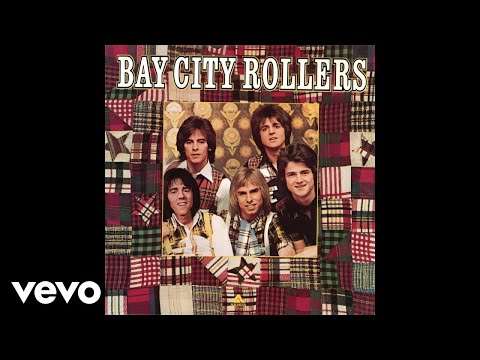
→ More from the 1970s File
View all 1970s hits →




Keep digging