The 1970s File Feature
Since I Don't Have You
"Since I Don't Have You" — Art Garfunkel's Solo Reinvention The Solo Years Begin There is something quietly audacious about a solo artist choosing to open a …
01 The Story
"Since I Don't Have You" — Art Garfunkel's Solo Reinvention
The Solo Years Begin
There is something quietly audacious about a solo artist choosing to open a chapter of their career with a cover of a beloved classic. Art Garfunkel, who had spent the early part of the 1970s carefully establishing himself apart from the Simon and Garfunkel legacy through acting roles and judicious recording choices, was by 1979 in a particular phase of his musical identity. His solo discography had already produced notable moments, including his recording of "I Only Have Eyes for You" which reached number eighteen on the Hot 100 in 1975. The question was what came next.
Garfunkel's version of "Since I Don't Have You" appeared on his 1979 album Fate for Breakfast. The original song had been written and recorded by the Skyliners, a Pittsburgh doo-wop group, in 1959. That original version had reached number twelve on the Billboard Hot 100, a genuine hit from the early rock and roll era distinguished by its elaborate orchestration and the soaring falsetto vocals at its center. Garfunkel's attraction to the material made complete sense: the song demanded a certain kind of vocal purity and emotional restraint that suited his gifts perfectly.
A Voice Made for This Material
Art Garfunkel's voice has always been described in terms of its crystalline quality, a tenor capable of tremendous delicacy without losing presence. The original "Since I Don't Have You" had built its emotional impact around the contrast between the loss described in the lyrics and the almost painfully beautiful manner in which those lyrics were delivered. Garfunkel understood this dynamic intuitively. His recording preserved the song's central tension between emotional devastation and sonic elegance, updating the production for the late 1970s while honoring the essence of what made the song work.
The arrangement on Fate for Breakfast brought contemporary production values to material that was two decades old, a balancing act that the pop landscape of 1979 made possible. That year saw a genuine range of sounds on the charts, from disco to soft rock to new wave, and a polished, orchestrated pop ballad from a major artist could still find its audience.
The Billboard Journey
"Since I Don't Have You" debuted on the Billboard Hot 100 on June 9, 1979, entering at position 88. It climbed steadily through the summer weeks, reaching its peak position of 53 on July 14, 1979. The single spent a total of eight weeks on the chart, a modest but respectable run that confirmed Garfunkel's continued commercial presence in the pop market even in the absence of Paul Simon.
The chart performance placed the single in the middle tier of pop success for that year, not a blockbuster but a genuine chart entry from an artist whose previous work had set a very high bar. For context, Garfunkel was competing on the same charts with the dominant forces of 1979, including disco acts and mainstream pop, which made any showing a meaningful achievement.
The Art of the Faithful Cover
What the recording demonstrated, perhaps more than anything else, was Garfunkel's curatorial instinct. He had a gift for finding songs that showcased his voice without overwhelming his particular emotional register. His interpretive approach to "Since I Don't Have You" treated the original with genuine respect while still making the performance distinctly his own. The phrasing, the breathing, the moments of restraint: these were choices, not accidents, and they revealed a sophisticated understanding of what separates a cover from a recreation.
Fate for Breakfast has sometimes been categorized as one of the lesser entries in Garfunkel's solo catalog, but "Since I Don't Have You" stands as a genuine highlight of that record and of his 1970s solo work more broadly. It is a song that demonstrates how a great voice, given the right material, can transcend the question of whether the performance is original or borrowed.
A Song That Earns Its Second Life
Revisiting Garfunkel's version today, the performance sounds more impressive than the surrounding critical consensus about that era of his career might suggest. The voice is at the center of everything, precisely placed, never straining, always communicating. For anyone who has heard the original Skyliners recording and wants to understand what Garfunkel brought to the tradition, this cover provides a compelling answer. Put on your headphones and let that voice do what it does best.
"Since I Don't Have You" — Art Garfunkel's singular moment on the 1970s charts.
02 Song Meaning
The Meaning of "Since I Don't Have You" as Performed by Art Garfunkel
Grief as Subtraction
The lyrical architecture of "Since I Don't Have You" is built on a particular kind of emotional accounting. The narrator catalogs all the things that have lost their meaning, joy, laughter, the capacity for dreams, now that the loved one is gone. Each verse strips something away, performing absence through a kind of accumulation in reverse. The power of the song comes not from dramatic declarations of pain but from this quiet arithmetic of loss, the way love's departure hollows out the ordinary pleasures of daily life one by one.
This approach to heartbreak, cataloging what remains absent rather than describing the wound directly, gives the song an unusual emotional texture. It speaks to the experience of grief as a kind of numbing, a dimming of the world's color and warmth. The listener recognizes the territory even without experiencing the specific circumstances described.
Why Garfunkel's Voice Transforms the Material
Art Garfunkel brought a particular quality to the song's emotional message. His vocal delivery consistently suggested composure, even when the lyrical content described devastation. That tension between the controlled beauty of the voice and the disorder of the emotional content is what makes his version distinctly affecting. The original Skyliners recording had a similar quality, which explains Garfunkel's attraction to it. He understood that the song worked best when the singer appeared to be holding something back, when the polish of the performance implied the effort required to maintain dignity in the face of loss.
Doo-Wop Themes in a Changing Landscape
The song's origins in late 1950s doo-wop meant that its emotional vocabulary was in some ways deliberately simple and universal. Doo-wop as a genre specialized in expressions of romantic longing, delivered with vocal harmonies designed to convey sincerity and collective feeling. By 1979, those emotional themes had not changed, though the sonic context had shifted considerably. Garfunkel's version served as a bridge between eras, reminding listeners that the feelings described in pre-rock pop had not become obsolete simply because the production styles around them had evolved.
The late 1970s were a period when nostalgia for earlier musical eras was both commercially viable and culturally significant. The doo-wop revival had found audiences, and artists across the pop spectrum were reaching back into American music's past for material that felt timeless rather than dated.
The Lasting Resonance
Decades on, the song has been covered by many artists and continues to appear in films and television productions that need to evoke a particular quality of romantic longing. Its emotional logic is clear enough that almost any listener can follow it without needing to know its history. The experience of love's absence making the world feel smaller and quieter is genuinely universal. Garfunkel's 1979 recording remains one of the more accomplished versions in the song's long interpretive history, a meeting of voice and material that feels, in retrospect, almost inevitable.
→ More from Art Garfunkel
View all Art Garfunkel hits →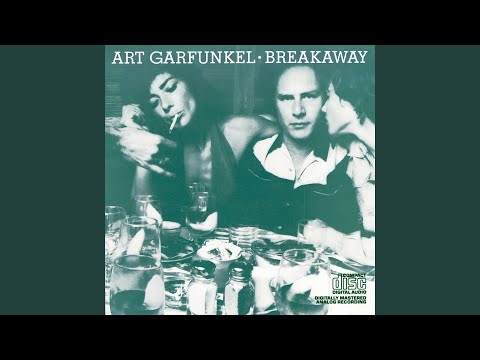
→ More from the 1970s File
View all 1970s hits →




Keep digging