The 1970s File Feature
I Only Have Eyes For You
I Only Have Eyes For You — Art Garfunkel The Voice That Needed No Partner By the mid-1970s, a certain question hung in the air around Art Garfunkel: could th…
01 The Story
I Only Have Eyes For You — Art Garfunkel
The Voice That Needed No Partner
By the mid-1970s, a certain question hung in the air around Art Garfunkel: could the voice that helped define a generation of folk-pop survive on its own, away from the songwriting partnership with Paul Simon that had produced some of the most celebrated recordings in American pop history? The answer, delivered across a series of solo albums, was a qualified and interesting yes. Art Garfunkel was never the kind of solo artist who commanded full creative authority over his records in the way that Simon did, but he was something perhaps more specific: one of the finest interpretive voices in popular music, capable of taking a song from anywhere in the American songbook and finding its emotional center.
"I Only Have Eyes For You" was a demonstration of that talent operating at a high level. The song itself was old enough to feel timeless. Written by Harry Warren and Al Dubin, it had been a popular standard since 1934, associated for many listeners primarily with the Four Flamingos' doo-wop version from 1959, which had itself been a significant hit. For Garfunkel to revisit the song in 1975 was to engage with layers of American musical history, to take a melody that already carried associations with romance films and postwar nostalgia and reimagine it through the lens of 1970s production.
The Sound of 1975
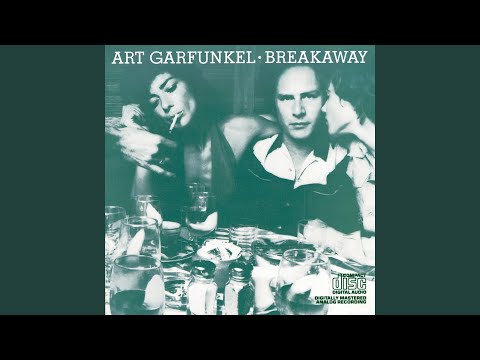
The recording appeared on Garfunkel's album Breakaway, one of the most commercially successful solo efforts of his career. The production sensibility of Breakaway reflected the mid-1970s trend toward sophisticated, richly arranged pop that sat comfortably between adult contemporary radio and the more upmarket end of the Top 40. Strings, careful vocal processing, and arrangements that prioritized warmth and clarity over any kind of sonic experiment characterized the album's sound.
On "I Only Have Eyes For You," Garfunkel's tenor floated over a production that respected the song's vintage charm while updating its sonic texture for contemporary ears. The result occupied a curious middle ground: clearly a product of its production era, yet reaching back to a melodic tradition that predated rock and roll entirely. That combination proved broadly appealing to an audience that had grown up on the Beatles and Simon and Garfunkel but retained appetite for the kind of melodic sophistication the old standards embodied.
Seventeen Weeks on the Hot 100
The single debuted on the Billboard Hot 100 on August 23, 1975, entering at number 87. Its chart run lasted 18 weeks, and the song reached its peak position of number 18 on November 29, 1975, a solid commercial performance for a cover of a forty-year-old standard. The record found particular traction on adult contemporary radio, where its combination of vocal beauty and nostalgic warmth fit perfectly between the soft rock and pop ballads that dominated that format in the mid-decade period.
The British chart performance was even more notable. In the United Kingdom, the single reached number one, demonstrating that Garfunkel's appeal extended well beyond the American market and that British listeners had an appetite for the kind of warmly nostalgic pop the record represented. That transatlantic success added another dimension to the song's commercial story.
Garfunkel as Interpretive Artist
The success of "I Only Have Eyes For You" reinforced a particular identity for Garfunkel in his solo years. Where Paul Simon pursued original composition with restless creative ambition, Garfunkel carved out a niche as a curator and interpreter of songs, bringing his extraordinarily distinctive voice to material from across the spectrum of American and British pop. That role carried its own creative risks: the interpretive artist is always vulnerable to comparisons with earlier versions and accusations of insufficient originality. Garfunkel's voice was distinctive enough to sidestep those criticisms, because the experience of hearing him sing anything was its own specific pleasure regardless of the material's origin.
His version of "I Only Have Eyes For You" stands as one of the more successful examples of the 1970s standard-revival genre, a recording that brought new listeners to an old song while giving existing fans of the standard a genuinely fresh perspective on familiar material. Press play and hear a voice that could make any melody feel like it was written specifically for it.
"I Only Have Eyes For You" — Art Garfunkel's singular moment on the 1970s charts.
02 Song Meaning
I Only Have Eyes For You — Themes and Legacy
Love as Total Absorption
The emotional premise of "I Only Have Eyes For You" is about as complete as a love song can be: the outside world ceases to exist in the presence of the beloved. Crowds dissolve, surroundings blur, even stars become indistinct, because the person singing has oriented their entire perceptual field toward a single other person. The song describes devotion as a kind of beautiful tunnel vision, romantic obsession rendered in warm, dreaming terms rather than anxious or possessive ones. The feeling it captures is the specific daze of new infatuation, when the brain genuinely struggles to process anything that is not the object of its fixation.
What keeps the theme from cloying is the gentleness of the imagery. The song does not demand anything from its subject. It simply reports the state of the singer's experience, a report that happens to be entirely flattering to the person it addresses. That one-sidedness, the song offering total attention without requesting reciprocation, is part of its long appeal.
The Standard and Its Journey Through Time
Written in 1934, the song had already traveled through multiple eras of American popular music by the time Art Garfunkel recorded it in 1975. The Four Flamingos' doo-wop arrangement from 1959 had given it a second life and a new generation of associations. Each reinvention of the song added a layer of cultural meaning without erasing what came before, so that by the mid-1970s the melody carried connotations spanning four decades of American romantic life.
Garfunkel's version arrived at a moment when the standard pop song was being reconsidered by a generation of listeners who had grown up with rock but were developing more eclectic tastes as they aged. The mid-1970s saw considerable appetite for what might be called sophisticated nostalgia, material that reached back to an earlier, arguably simpler style of romantic expression while being produced with contemporary technical resources.
Garfunkel's Voice and the Song's Emotional Register
There is an argument to be made that "I Only Have Eyes For You" could only have worked as well as it did in the 1970s through a voice of Garfunkel's particular character. His tenor had an inherent purity and slight detachment that prevented the song's total-devotion theme from becoming cloying. The emotional temperature of his performance was warm but not desperate, which matched the song's own emotional logic: this is bliss, not urgency. A more overtly passionate vocal style would have tipped the material toward melodrama; Garfunkel's floating tone kept it in the realm of genuine feeling.
That tonal quality made the record suitable for an unusually wide demographic range. Older listeners recognized the melody and found Garfunkel's treatment respectful of the song's tradition. Younger listeners heard a beautiful voice performing beautiful material and needed no historical context to appreciate it.
Romantic Idealism Across Eras
The song's endurance across more than four decades of American pop history points to something consistent in human emotional experience. The particular form of romantic absorption it describes does not belong to any decade; it is a universal state that most people have experienced and that almost everyone finds recognizable when it is described. Songs that map emotional universals with sufficient precision tend to survive the cultural contexts of their original composition, and this is one of the clearest examples of that principle in the Great American Songbook. Garfunkel's version kept the song alive for another generation, ensuring that its specific vision of love as total presence remained part of the pop cultural inheritance.
→ More from Art Garfunkel
View all Art Garfunkel hits →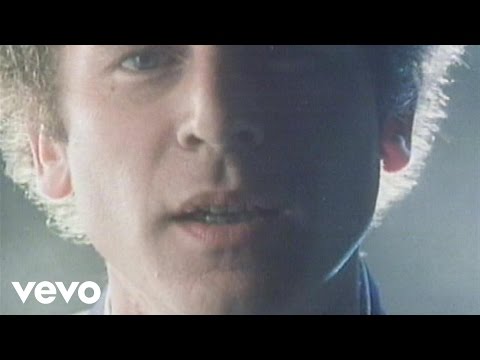
→ More from the 1970s File
View all 1970s hits →




Keep digging